


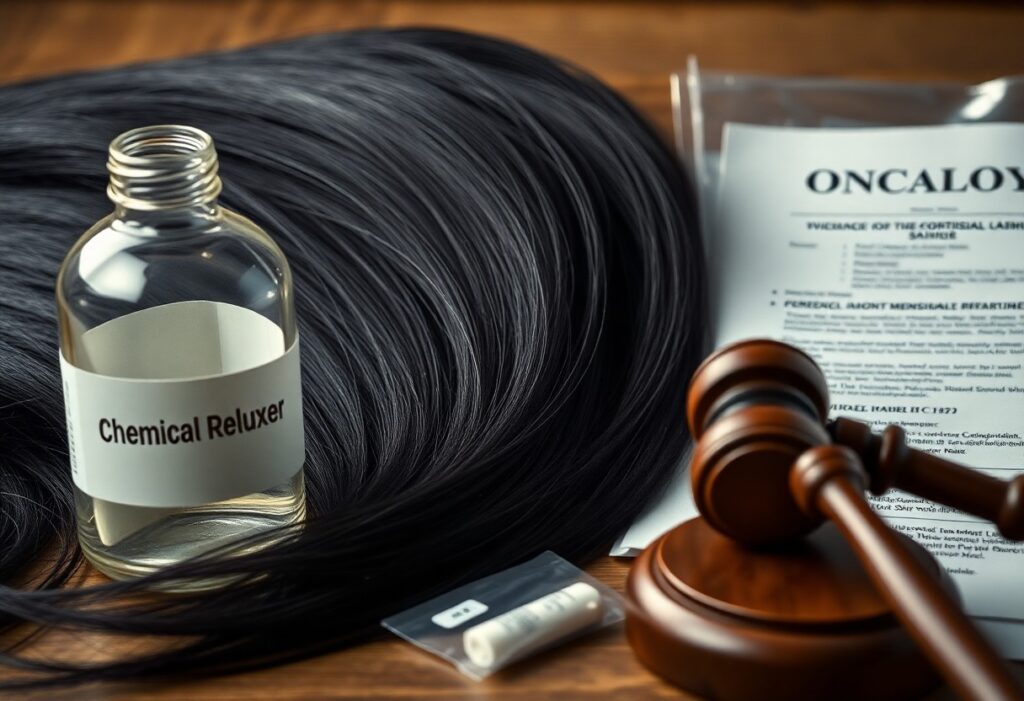
It’s important that you understand emerging evidence linking some hair relaxers to increased cancer risk and other long-term health harms; you should track product ingredients, reported studies, and how repeated exposure can elevate your risk. If you’ve experienced illness, explore legal recourse and potential compensation from Chemical Hair Relaxer Lawsuits through ongoing lawsuits and settlements, consult qualified counsel, preserve medical records, and discuss exposure history with your doctor to protect your rights and health.
Key Takeaways:
- Litigation alleges repeated use of chemical hair relaxers-commonly among Black women-may be associated with higher risks of uterine, ovarian, breast cancer and other long‑term health harms; epidemiological evidence shows some associations but is not uniformly conclusive.
- Claims typically assert defective design, inadequate testing, and failure to warn about hazardous ingredients (e.g., formaldehyde/formaldehyde‑releasers, strong alkalis); plaintiffs rely on toxicology, ingredient disclosures, and population studies to establish causation.
- Legal outcomes hinge on proving causation and timely filing; cases pursue compensatory and sometimes punitive damages through individual suits and multidistrict/class actions, with many resolved by settlement.
Chemical composition, use, and regulation
Common active ingredients and contaminants (lye/alkalis, guanidine compounds, formaldehyde, phthalates, heavy metals)
You’ll encounter two main chemistries: strong alkalis like sodium hydroxide (lye) and “no‑lye” guanidine systems, both designed to break hair disulfide bonds; concentrations vary by product and strength. Tests have also detected formaldehyde or formaldehyde‑releasers in some smoothing/relaxing formulations, traces of phthalates, and low levels of heavy metals (lead, cadmium, arsenic) in certain market surveys, raising concerns about cumulative exposure.
Typical application patterns and exposure pathways (salon vs. at‑home, frequency, scalp absorption, inhalation)
Clients typically get relaxers every 6-12 weeks, while stylists may perform multiple treatments daily, increasing chronic exposure. You absorb chemicals via the scalp, through skin contact, and by inhaling fumes during mixing, application, and neutralization; treatment sessions commonly last 20-45 minutes, concentrating exposure for both client and worker.
When you’re treated repeatedly, the scalp’s thin skin and any micro‑abrasions can increase percutaneous uptake; studies report higher systemic markers in frequent users and salon workers. Heating, blow‑drying, or using formaldehyde‑releasing smoothing agents can spike airborne concentrations, and workplace controls (ventilation, PPE) materially reduce inhalation risk for you and your stylist.
Labeling, warnings, industry standards, and regulatory history (FDA, OSHA, international comparisons)
You should know the regulatory patchwork: the FDA treats relaxers as cosmetics and generally does not require premarket approval, while OSHA enforces workplace limits (formaldehyde PEL 0.75 ppm TWA, 2 ppm ceiling). Internationally, regulators in the EU and Canada apply stricter ingredient limits or bans, and jurisdictions like California require Proposition 65 cancer warnings for listed chemicals.
Regulatory roles and limits
| Agency/Region | Role / Notable limits |
|---|---|
| FDA (U.S.) | Cosmetic regulation; no routine premarket approval, labeling and safety responsibility on manufacturer |
| OSHA (U.S.) | Workplace exposure limits (formaldehyde: 0.75 ppm 8‑hr TWA, 2 ppm ceiling) |
| EU | Stricter ingredient lists and bans; some preservatives/contaminants restricted more tightly than U.S. |
| California (Prop 65) | Requires consumer warnings when products expose you to listed carcinogens (e.g., formaldehyde) |
You’ll find that product labels often list ingredient names but not concentrations, and professional products may carry minimal consumer warnings while advising “for professional use”. Enforcement gaps mean many manufacturers self‑certify safety; voluntary industry standards and salon training therefore play a large role in protecting you and workers.
Labeling and warning practices
| Label/Warning | Typical content and implications for you |
|---|---|
| Ingredient lists | Names usually listed but concentrations omitted, limiting your ability to assess dose |
| Precautionary statements | Often warn about skin/eye contact and ventilation; few labels warn about long‑term cancer risks |
| Professional‑only labeling | Shifts responsibility to salons; you may receive less consumer‑facing information |
| Regulatory warnings | Where required (e.g., Prop 65) you’ll see explicit cancer/exposure warnings on packaging or point‑of‑sale |
Scientific evidence linking relaxers to cancer and long‑term health effects
Key epidemiological studies and their findings (breast, uterine/endometrial, ovarian, other cancers)
When you review large cohorts-like the Black Women’s Health Study (≈59,000 participants) and the Sister Study (≈50,000)-results are mixed: some analyses report modestly elevated risks for hormone‑sensitive cancers in long‑term or frequent chemical relaxer users, while others find no association. Several papers show relative risk estimates clustered around ~1.2-1.5 for select exposures and end points, but findings vary by tumor type, product frequency, and age at first use.
Toxicology and biological plausibility (carcinogenic mechanisms, endocrine disruption, genotoxicity)
You should note that relaxers contain agents such as sodium hydroxide, thioglycolates, formaldehyde‑releasing compounds, and cosmetic contaminants (phthalates, parabens). Mechanistically, dermal absorption and scalp injury can increase internal dose, and biomonitoring studies show higher urinary phthalate metabolites among frequent users, supporting plausible endocrine and genotoxic pathways linked to hormone‑sensitive cancers.
Digging deeper, experimental work demonstrates multiple plausible mechanisms: some relaxer constituents or contaminants act as endocrine disruptors with partial estrogenic activity in receptor assays; formaldehyde and certain impurities produce DNA adducts and oxidative damage in vitro; repeated scalp inflammation or chemical burns can drive chronic proliferation and mutagenesis locally, and systemic metabolism by CYP enzymes can create reactive metabolites.
Exposure routes include dermal absorption, inhalation during application, and inadvertent ingestion, and animal data plus human biomonitoring together strengthen biological plausibility even where epidemiology is inconsistent.
Strengths, limitations, and gaps in the evidence base (confounding, exposure measurement, cohort limitations)
You need to weigh strengths-large prospective cohorts and some biomonitoring-against major limitations: self‑reported product use, limited historical formulation data, potential confounding by race, hair practices, and socioeconomic status, and often small case counts for specific cancers, all of which complicate causal inference and effect-size precision.
For example, cohorts like BWHS capture frequency and product type but rarely record batch formulations or ingredient concentrations over decades, so you face substantial exposure misclassification. Confounding remains a concern because product use correlates with other risk factors (age at menarche, parity, access to care).
Many studies lack long latency follow‑up, have limited racial/age diversity, or insufficient biospecimens; therefore, you need better prospective biomonitoring, standardized exposure metrics (age at first use, cumulative dose), and mechanistic bridging studies to close current gaps.
Legal theories and bases for claims
Product liability claims: design defect, manufacturing defect, failure to warn
You can pursue product liability on several fronts: a design defect claim targets the formulation itself (for example, products containing or releasing formaldehyde, which IARC lists as carcinogenic), a manufacturing defect claim alleges contamination or incorrect concentrations during production, and a failure to warn claim argues labels omitted known long-term risks; courts often analyze whether a reasonably prudent consumer would have avoided the product had adequate warnings existed.
Negligence, breach of warranty, and misrepresentation/fraud claims
Negligence actions claim the manufacturer failed to test, monitor, or warn about risks, while breach of express or implied warranty arises when advertising promises safety or fitness that the product does not deliver; misrepresentation or fraud claims focus on false safety statements or suppression of adverse data, often supported by consumer ads, test reports, and post-market complaint patterns.
For negligence, you must show duty, breach, causation, and damages-typical evidence includes epidemiological studies, preclinical toxicity data, adverse event logs, and internal communications uncovered in discovery; breach of warranty uses the product label and marketing as proof of the promise, and fraud requires scienter, so emails or memos demonstrating knowledge of risk can be dispositive. Statutes of limitation and state warranty laws shape timing and available remedies, so jurisdictional analysis matters early in case assessment.
Damages available: medical expenses, lost wages, pain and suffering, punitive and wrongful death claims
Compensatory damages typically cover past and future medical expenses, lost wages and diminished earning capacity, and non-economic harms like pain and suffering; you can also seek punitive damages when the defendant acted with reckless indifference, and in fatal cases pursue wrongful death awards for survivors and estate-based recovery.
Damage calculations often rely on medical billing records, life-care plans, and economist testimony to project future treatment costs and lost income; juries may use multiplier or per diem approaches for non-economic harms, but many states impose statutory caps on non-economic or punitive awards-affecting potential recovery.
For punitive damages you must prove malice or conscious disregard, and wrongful death claims can include funeral expenses, loss of consortium, and statutory survivor claims, so aligning experts and choosing the right causes of action maximizes your options.
Litigation mechanics and procedural considerations
Case organization: individual lawsuits, class actions, and multidistrict litigation (MDL)
You’ll typically see individual lawsuits when injury, diagnosis date, and damages vary widely; class actions are less common because hair relaxer claims involve individualized causation and medical histories. When many plaintiffs converge, courts often use an MDL to consolidate discovery and run bellwether trials – these can encompass anywhere from dozens to hundreds of cases and shape settlement leverage and legal strategy.
Evidence collection: medical records, purchase/exposure history, product testing, and chain of custody
You must secure complete medical records via HIPAA authorizations and subpoenas, collect receipts, salon logs, photos and product lot numbers, and preserve samples for laboratory analysis; maintaining an unbroken chain of custody for each sample and test report is crucial to admissibility and to withstand expert and Daubert scrutiny.
In practice you’ll want documented timelines: obtain medical records from first exposure through diagnosis and any oncology, dermatology, or fertility visits; capture purchase proofs (receipts, credit-card records), salon appointment books, and contemporaneous social-media posts. For product testing, use validated analytical methods (e.g., GC-MS or LC-MS/MS for aldehydes/endocrine-active compounds) with blind replicates and certified labs.
Chain-of-custody forms, photo documentation of packaging and lot numbers, and preserved unopened retail samples bolster credibility. Expert toxicologists and epidemiologists commonly opine on dose, exposure frequency, latency, and comparative risk – weak testing protocols or gaps in custody routinely trigger successful evidentiary challenges.
Statutes of limitations, jurisdictional differences, venue selection, and pretrial motions
You’ll face varying statutes of limitations (commonly between 2-6 years for product claims), different discovery tolling rules, and strategic venue choices – plaintiff residence, place of injury, or defendant headquarters – plus federal removal under CAFA. Expect early pretrial motions: motions to dismiss, motions for summary judgment, and Daubert challenges to experts that can determine whether your case advances.
Different states treat latent-injury claims differently: some allow tolling until diagnosis or reasonable discovery of harm, while others impose strict accrual dates; this affects which plaintiffs remain eligible and where you file. Venue strategy often weighs plaintiff-favorable juries, convenience of witnesses, and the risk of removal to federal court; filing in state court can delay removal windows.
Pretrial motion timing is critical – motions to dismiss can pare claims before discovery, summary judgment comes after fact development, and successful Daubert motions can exclude core causation opinions. Finally, preserve evidence aggressively: allegations of spoliation can produce sanctions or adverse inference instructions that shift litigation dynamics.
Evidence and expert testimony
Role of medical experts, toxicologists, and epidemiologists in proving causation
You rely on a team: oncologists and dermatopathologists link the specific cancer or dermatitis to your exposure, toxicologists explain mechanism and dose-response, and epidemiologists place your case in population-level context. Experts use criteria like temporality, latency, biological plausibility and published relative risks (several cohort studies report RRs ~1.2-1.4 for some outcomes) to argue causation; your medical records, exposure timeline, and differential diagnosis are used to connect the dots.
Laboratory analyses, biomonitoring, and product chemistry evidence
You use analytical chemistry-GC-MS, LC-MS/MS and HPLC-to identify ingredients such as sodium hydroxide, ammonium/guanidine compounds and formaldehyde or formaldehyde-releasers, plus phthalate/paraben residues. Biomonitoring of blood, urine or hair can show metabolites at ng/mL (parts-per-billion) levels; chain-of-custody, limits of detection, and validated methods are important to make this evidence persuasive.
In practice, labs perform quantitative testing with isotope-dilution mass spectrometry to achieve low limits of detection (often sub-ng/mL for volatile organics) and document method validation, blanks, and recovery. You can strengthen causation by producing archived product samples or salon lot numbers; when originals are unavailable, analysts use hair-shaft chemistry, protein/DNA adduct assays (e.g., formaldehyde-hemoglobin adducts) and urinary metabolite panels (monoester phthalates, formate) as exposure proxies.
For courtroom reliability labs must provide calibration curves, quality control runs, and stability data showing the analyte would persist under storage. Chain-of-custody and contemporaneous sampling (salon air, worker breathing zones) help quantify your dose and support a dose-response argument when epidemiology alone is borderline.
Common defense expert strategies and methods to challenge causation
Defense experts commonly attack causation by arguing associations are weak (pointing out RRs <2.0), affected by confounding (smoking, obesity, genetics), or inconsistent across studies. They challenge exposure assessment, highlight wide confidence intervals or null findings, assert latency mismatches, and present alternative etiologies to persuade juries that your illness is not attributable to the product.
Defenses often invoke Daubert/Frye motions to exclude methodology: you’ll see attacks on lab validation (contamination, matrix effects, lack of blinded testing), epidemiologic critiques (multiple comparisons, publication bias, failure to replicate, lack of dose-response), and mechanistic gaps (animal data at high doses that don’t translate to human salon exposures). Expect strategic use of the “RR>2.0” threshold to argue individual causation isn’t met and stress tests showing that adjusting for a single confounder (e.g., hormone use for uterine cancer) collapses the association.
Strong rebuttal evidence for you includes robust exposure reconstruction, repeated biomarker positives, chain-of-custody documentation, and expert testimony tying a plausible mechanism to real-world exposure levels.


Consequences, public policy, and guidance for affected individuals
Practical steps for potential plaintiffs: documenting exposure, seeking medical evaluation, preserving products, selecting counsel
You should log exact dates, frequency, product names, UPCs and lot numbers, and take photos of bottles, receipts and salon appointment records; preserve empty containers and any unused product and, where possible, secure hair samples and pathology slides. Seek documented medical evaluation early-get diagnostic reports and request tissue blocks-and retain all records. When choosing counsel, prioritize lawyers with toxic-tort and product-liability experience who work on contingency and can subpoena manufacturers and testing data.
Regulatory and public health responses: recalls, labeling reforms, surveillance, and community advocacy
Expect regulatory action to be incremental: formal recalls of cosmetics are uncommon because the FDA lacks routine premarket approval, so much progress has come from state laws, NGO pressure and market-driven labeling reforms. Public-health surveillance through cancer registries and targeted biomonitoring studies informs policy; advocacy groups and databases like EWG’s Skin Deep push for transparency and stronger warnings on ingredients such as formaldehyde and other hazardous agents.
Agencies and advocates are using several levers to respond: the IARC’s classification of formaldehyde as a Group 1 carcinogen fuels calls for stricter controls, while the FDA’s limited authority over cosmetics means recalls are typically voluntary or driven by state enforcement and litigation. The European Union restricts roughly hundreds to over a thousand substances in cosmetics compared with far fewer in the U.S., prompting campaigns for U.S. labeling reform and ingredient bans.
You’ll see community groups (for example, organizations focused on health impacts in Black women) fund independent testing, use cancer-registry analyses to document local incidence spikes, and pressure retailers to remove products; those combined actions-legal suits, state warnings like California’s Prop 65, NGO scorecards and targeted biomonitoring-are the most effective paths to rapid change.
FAQ
Q: What are plaintiffs alleging in chemical hair relaxer lawsuits?
A: Plaintiffs allege that repeated exposure to chemicals in hair relaxers – including strong alkalis (e.g., sodium or potassium hydroxide), formaldehyde/formaldehyde-releasing agents, and other ingredients – has been linked to cancers (such as breast, uterine and ovarian cancer in some studies) and other long-term health harms (including reproductive issues, early menopause, and chronic scalp or skin damage). Lawsuits typically claim that manufacturers knew or should have known about the risks, failed to adequately test products for long-term systemic effects, misrepresented safety, and failed to warn users and salon workers about potential hazards.
Q: What types of legal claims are being pursued and who can bring a claim?
A: Common claims include product liability (design defect, manufacturing defect), failure to warn/marketing defect, negligence, breach of express or implied warranty, fraud or misrepresentation, and wrongful death in fatal cases. Plaintiffs can include product users who developed qualifying health conditions, family members or estates for decedents, and occupational claimants such as stylists with documented exposure. Success depends on proving significant exposure, medical diagnosis causally linked to exposure, and legal elements that vary by state; many cases are consolidated into multi-district litigation or class actions when factual issues overlap.
Q: What steps should someone take if they believe a hair relaxer caused their illness?
A: Preserve evidence (keep product containers, labels, receipts, salon appointment records, and photos of packaging or injuries); obtain and organize medical records, pathology reports, and physician notes documenting diagnosis and treatment; document frequency and duration of product use, including brand names and where purchased or applied; report adverse events to regulatory authorities as appropriate; and promptly consult an experienced product liability or mass-tort attorney for a case evaluation. Acting quickly is important because statutes of limitations and filing deadlines vary by jurisdiction and can bar claims if delayed.