


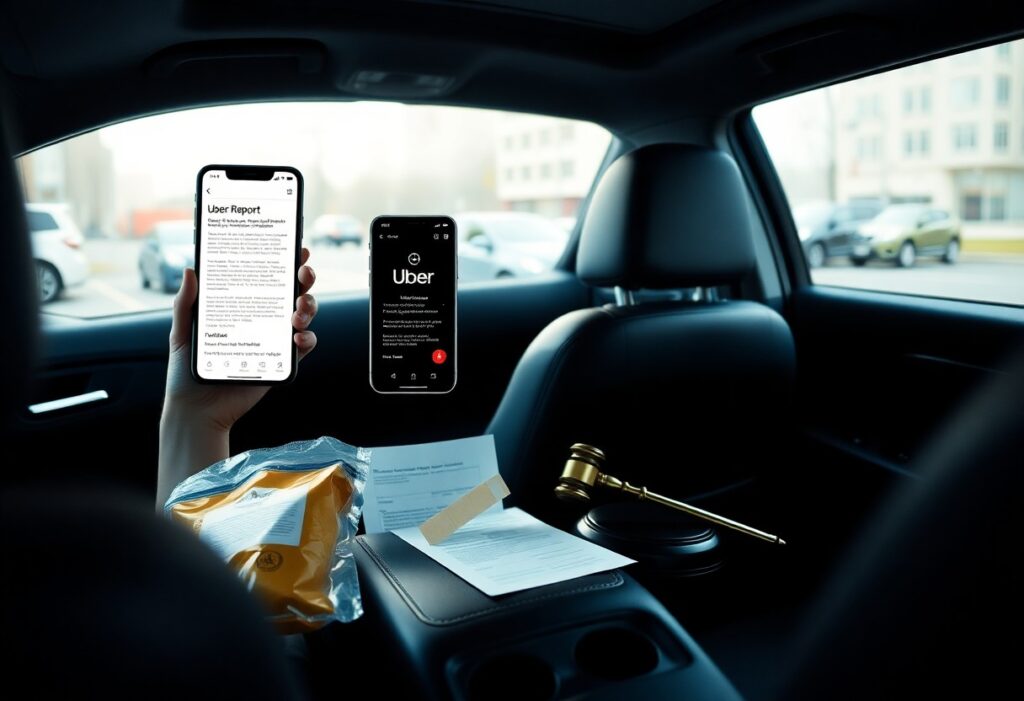
Over the past decade, when you pursue a claim for Compensation In Uber And Lyft Assault you must weigh severity of injuries, the strength of evidence (surveillance, witness statements, medical records), and the driver’s and platform’s liability and safety policies, because these factors drive awards for medical expenses, lost wages, and pain and suffering; your ability to document harm, prove negligence, and show company knowledge of risks most directly affects the quantum of compensation available to you.
Key Takeaways:
- Severity and type of injuries – extent of physical harm, psychological trauma, long-term disability, and prognosis drive the size of compensatory awards.
- Liability and negligence – who is legally responsible (driver, platform, or third party), company screening/supervision failures, and foreseeability of the risk affect recoverable damages.
- Evidence and documentation – police reports, medical records, photos, witness statements, trip data, and expert opinions directly influence credibility and valuation.
- Economic vs. non-economic damages – past and future medical costs, lost earnings, and care needs are quantified economically; pain, suffering, and diminished quality of life are assessed as non-economic losses.
- Governing law and contract terms – state statutes (statute of limitations, damage caps, comparative fault rules), availability of punitive damages, and arbitration/terms of service can limit or expand compensation.
Understanding Assault Cases in Ride-Sharing
Legal Definition of Assault
Statutes differ across jurisdictions, but to prevail you generally must show an act that caused a reasonable fear of harm or unlawful touching. Key legal elements include:
- Intent – whether the actor meant to cause harm
- Contact – physical touching or force
- Reasonable fear – apprehension of imminent harm
The outcome often hinges on whether you can prove both intent and unlawful touching in your case.
Common Types of Assault in Ride-Sharing
In ride-sharing you most often encounter assaults tied to confined vehicles and brief encounters; understanding categories helps you frame claims. Frequent incidents include:
- Sexual assault – unwanted touching or forced acts
- Battery – punches, slaps, or other physical blows
- Robbery with assault – threats or force to take property
The driver or passenger role and whether prior complaints exist significantly influence liability and potential recovery.
| Severity of Injury | Major driver of compensation – long-term disability, surgeries, and therapy increase awards. |
| Perpetrator Intent | Deliberate acts (sexual assault, aggravated assault) justify higher damages and punitive claims. |
| Location & Context | Confined vehicle, late-night trips, or isolated routes can heighten perceived risk and liability. |
| Evidence & Witnesses | Surveillance, GPS, medical records, and third‑party witnesses strongly affect settlement size. |
| Driver Background | Prior complaints, background checks, and company response shape vicarious liability and damages. |
Delving deeper into types, you should track how evidence and injuries change outcomes:
- Medical records – document treatment and prognosis
- Surveillance/GPS – confirm time, route, and location
- Witness statements – corroborate your account
The combination of strong physical evidence and documented prior complaints often pushes settlements into six-figure ranges for severe sexual assault claims and tens of thousands for significant battery injuries.


Factors Influencing Compensation Amount
- severity of the assault
- physical injuries and medical expenses
- psychological impact and emotional distress
- loss of income and other economic damages
- punitive damages and driver or company misconduct
- evidence quality, timing of reporting, jurisdictional caps
Severity of the Assault
Your settlement largely tracks the severity of the assault: a shove with minor bruising often produces low six-figure or under-$20,000 resolutions, while assaults causing catastrophic injuries or permanent disability can push awards into the high six- or seven-figure range; jury verdicts frequently reflect the visible, long-term impact on your life and ability to work.
Physical Injuries and Medical Expenses
If you sustain broken bones, internal injuries, or require surgery, those physical injuries and documented medical expenses form the backbone of economic damages; emergency care, hospital stays, and receipts for ongoing rehabilitation directly translate into quantifiable compensation you can demand.
To illustrate, an ambulance and ER visit can cost $1,500-$10,000, surgery $20,000-$150,000, and long-term physical therapy $50-$250 per session; when you include projected future medical needs, attorneys use present-value calculations and medical expert reports to justify six-figure or larger awards based on those line-item costs.
Psychological Impact and Emotional Distress
Your psychological impact-PTSD, anxiety, sleep disorders-can yield significant non-economic damages when backed by therapy records, psychiatrist testimony, and standardized assessments; juries often award higher pain-and-suffering sums when trauma impairs daily functioning.
Courts and insurers look for consistent treatment (weekly therapy notes, medication records), validated diagnoses, and expert opinions; documented therapy costs ($5,000-$50,000+) plus testimony about lasting impairment often multiplies the award beyond pure medical bills, especially when PTSD prevents you from returning to prior work.
Loss of Income and Economic Damages
Your lost wages, missed shifts, and reduced earning capacity are tangible losses: payroll records, tax returns, and employer statements let you claim past income and project future earnings lost because of the assault, increasing your overall compensation.
For example, if you earned $60,000 annually and can now only work part-time, vocational experts calculate lifetime lost earning capacity; courts will add past wage losses (documented pay stubs) and discounted future losses, so your recovery can quickly climb into six figures when long-term earnings are affected.
Punitive Damages and Their Applicability
Punitive awards target particularly reckless or malicious conduct-driver histories with prior complaints, intentional violent acts, or evidence that a platform ignored known risks can trigger punitive damages, which are designed to punish and deter beyond compensatory awards.
States vary: some cap punitive damages or require a showing of malice/recklessness; where permitted, juries may award multiples of compensatory damages (historically 2x-9x), but courts often reduce extreme ratios-if you prove gross negligence or a pattern of ignored complaints, punitive awards can substantially increase your total recovery.
The documentation and evidence you gather will often determine the ceiling of your recovery.
Rider and Driver Liability
Liability of Uber and Lyft
You can often pursue the platform in addition to the driver: when a trip is active, the companies’ commercial policies typically provide up to $1 million in third‑party liability coverage, while coverage is more limited when the driver is offline or waiting for requests. Courts also let you sue for negligent hiring, supervision, or failure to act if the platform ignored prior complaints or background‑check red flags.
Driver Conduct and Responsibility
Your primary target is usually the driver: intentional assault creates direct liability and can support punitive damages, while negligent acts (distracted driving, deviating from route) create compensatory claims. Independent‑contractor status complicates vicarious liability, but evidence of foreseeable risk or gross misconduct can overcome that defense.
In practice, successful claims hinge on concrete proof: preserve the trip ID, GPS timestamps, in‑app messages and any dashcam or surveillance video; medical records and witness statements strengthen a case where the driver had prior complaints or showed escalating behavior. Examples include cases where platforms faced liability after repeated, documented complaints went unaddressed-those records often shift fault toward the company and increase the potential award.
Rider Responsibility and Behavior
Your own conduct affects recovery: provocation, intoxication, or illegal acts can reduce or bar damages under comparative‑fault rules, and insurers will investigate rider behavior to allocate a percentage of fault. Being candid and documenting the scene helps your credibility.
Courts assign fault as a percentage, so if you’re found partly responsible the award is reduced proportionally and some jurisdictions bar recovery if you’re more than 50% at fault. To protect your claim, promptly get medical treatment, obtain witness contact info, screenshot the trip details, and avoid statements that could be construed as provocation; those steps limit arguments that you contributed to the incident.
Role of Insurance in Assault Cases
Overview of Uber and Lyft Insurance Policies
If you’re assaulted during a trip, the platforms typically provide layered coverage depending on the trip phase: when a ride is active most policies offer $1,000,000 third‑party liability, while the “app on, waiting for a request” phase often carries lower contingent limits and your personal policy may be primary when the app is off; state rules and endorsements change the picture, so you need the specific declarations page for the trip in question.
Coverage Limits and Exclusions
Insurers set clear caps and carve‑outs: many rideshare policies cap third‑party liability at $1,000,000 during an active trip and may limit coverage to $50,000/$100,000/$25,000 (BI per person/BI per accident/PD) when waiting for a ride, while common exclusions include claims arising from the driver’s intentional criminal acts or prior convictions, which insurers often cite to deny payment.
When insurers invoke an intentional acts exclusion, you still can sue the driver personally and pursue vicarious liability theories against the company where state law allows; if damages exceed a policy’s $1,000,000 limit-typical in catastrophic brain or spinal injuries-you may face a recovery gap and must use judgments, structured settlements, or settlement negotiations to capture additional assets from the driver or other defendants.
Claim Filing Processes
To preserve coverage you should report the incident promptly to the rideshare insurer and file a police report; insurers expect timely notice and documentation (trip ID, screenshots, medical records), and failing to notify within the insurer’s required window can be used to dispute or deny a claim, so act quickly to secure the claim number and reserve your rights.
Practical steps you should take: get emergency care and retain medical records, photograph injuries and the vehicle, save app trip details and messages, request the insurer’s declarations page and driver policy number, and consult an attorney before signing releases; statutes of limitations vary by state (commonly 2-6 years) and timely written notice to insurers preserves both coverage and litigation options.
Jurisdictional Differences in Compensation
Variations Across States
You’ll see wide variation: in some states awards commonly sit in the low six-figures, while in others assaults have produced settlements or verdicts exceeding seven figures. Factors like jury tendencies, local medical cost multipliers, and whether punitive damages are permitted push outcomes; for example, metropolitan courts with higher jury awards often produce averages of $250,000-$1,000,000, whereas rural districts trend lower.
Impact of Local Laws and Regulations
Your case value changes when state rules on driver classification, insurance minimums, and TNC oversight differ; California’s AB5/Proposition 22 fight and many states’ licensing regimes alter who bears risk. Also note that platforms commonly provide $1,000,000 liability coverage when a ride is in progress, but coverage phases vary by state and trip stage.
You should act quickly because procedural rules matter: most states set personal-injury statutes of limitations at 2-3 years (California and Texas typically 2 years, New York 3 years), and comparative-negligence doctrines can reduce recoveries by a percentage. Additionally, documented violations of local TNC regulations – missing background checks or inspection records – often strengthen your claim and can lead insurers or platforms to offer higher settlements rather than litigate.
Precedents Set by Previous Cases
You’ll find precedent creates sharp differences: some appellate decisions have affirmed platform liability in passenger assaults, while others have limited exposure based on control or contract terms. As a result, jurisdictions with favorable precedent see more plaintiffs obtaining six- to seven-figure settlements; unfavorable precedents push cases toward lower compensatory awards.
When courts in a jurisdiction recognize vicarious liability or regulatory noncompliance by the TNC, your negotiating leverage rises-courts have shifted settlement patterns from primarily six-figure resolutions to frequent seven-figure outcomes in markets where precedent favors victims. Tracking those appellate rulings and local jury data lets you predict likely ranges and frame demand letters to capitalize on precedent-driven leverage.
Legal Process for Seeking Compensation
Steps to Take After an Assault
Immediately secure your safety and call 911 if you’re injured or threatened; then seek medical care within 24-72 hours to document injuries. Photograph wounds, clothing, and the scene, note the driver name and trip ID, collect witness contacts, and file a police report. Report the incident to Uber or Lyft within 24-72 hours to preserve their records and insurance triggers, and keep all medical bills, receipts, and communications.
Importance of Gathering Evidence
You should compile clear, time-stamped evidence: photos, medical records, trip receipts, text messages, and witness statements. Strong documentation-especially immediate photos and emergency room records-substantially raises your leverage in settlement talks and can unlock the platform’s $1,000,000 liability coverage when applicable.
Act fast: request surveillance footage within days because many cameras overwrite in 7-30 days, and seek a SANE or forensic exam within 72 hours for sexual assaults to preserve DNA. Save ride data (trip ID, GPS logs), phone metadata, and any screenshots; attorneys can subpoena deleted material but courts favor originally preserved files. Given that statutes of limitations often range from 1 to 6 years depending on state, early evidence collection prevents degradation that reduces settlement value.
Engaging Legal Representation
You should consult an attorney experienced in rideshare assault cases quickly; they typically work on a contingency fee (commonly 33-40%) and can evaluate claims against the driver, the platform, and insurers while preserving deadlines and evidence. Early counsel improves outcomes and speeds insurer responses.
An experienced lawyer will obtain Uber/Lyft trip logs, insurance declarations, and driver background checks, retain medical and economic experts to quantify past and future losses (medical bills, lost wages, pain and suffering), and file suit within applicable deadlines. Expect an initial investigation of 30-90 days; many cases settle in 6-18 months, though trials can take longer. Attorneys often advance litigation costs and negotiate fee structures; successful settlements may reimburse those expenses.
Summing up
The compensation you can obtain in an Uber or Lyft assault case hinges on factors such as the severity and permanence of your injuries, your medical bills and lost earnings, and the strength of evidence proving the driver’s or company’s negligence. Policy limits, comparative fault, punitive damages availability, and the quality of your legal representation also affect the award. Strategic negotiation, jurisdictional law, and timely claims procedure influence whether you receive full economic and non‑economic damages for your losses.
FAQ
Q: What main categories of damages determine the quantum of compensation in Uber and Lyft assault cases?
A: Compensation typically divides into economic damages, non‑economic damages, and sometimes punitive damages. Economic damages cover past and future medical bills, lost wages, loss of earning capacity, and out‑of‑pocket costs for care or rehabilitation. Non‑economic damages include pain and suffering, emotional distress, loss of enjoyment of life, and disfigurement. Punitive damages may be available if the assailant’s conduct was intentional, malicious, or grossly negligent and the jurisdiction allows punishment beyond compensation.
Q: How are medical expenses and future care needs calculated and weighted in a settlement or award?
A: Plaintiffs document past medical bills and use medical experts or life‑care planners to estimate future treatment, therapy, assistive devices, and ongoing care costs. Economists or vocational experts calculate lost future earnings and the present value of ongoing care by projecting costs over expected lifespans and discounting to present value. Courts and insurers scrutinize supporting records, expert reports, and the reasonableness of projected costs when assigning dollar values.
Q: How does liability allocation between driver, rider, and the platform affect total recovery amounts?
A: Recovery depends on who is legally responsible. If the driver committed the assault, the driver is directly liable; the platform’s liability hinges on theories such as negligent hiring, supervision, or failure to follow its own safety protocols. Insurance coverage also matters: ride‑share companies provide varying levels of commercial coverage depending on whether the driver was offline, waiting for a ride, or on a trip. If an insurer can disclaim coverage for intentional acts, the plaintiff may be limited to the driver’s personal assets unless a successful claim against the company exists. Comparative fault rules can reduce awards if the victim shares any responsibility under local law.
Q: What role do pain and suffering, emotional distress, and punitive damages play, and how are they quantified?
A: Pain and suffering and emotional distress are non‑economic damages measured using methods such as multiplier (multiplying economic damages by a factor reflecting severity) or per‑diem (assigning a daily rate for the injury’s duration). Expert testimony on psychological harm, treatment records, and witness statements increase credibility. Punitive damages, intended to punish and deter, require proof of especially wrongful conduct and are subject to statutory limits or constitutional review in many jurisdictions, which can significantly affect the final amount.
Q: How do insurance limits, jurisdictional rules, and litigation strategy influence the final payout?
A: Insurance policy limits set a practical ceiling on recoverable insurance money; if limits are low or coverage is denied (common with intentional assaults), plaintiffs may pursue the assailant’s personal assets or corporate claims against the platform. Jurisdictional statutes can cap non‑economic or punitive damages, dictate comparative fault rules, and control admissibility of evidence. Litigation strategy-timing of demands, quality of documentation, expert selection, willingness to accept mediation or trial-affects leverage and ultimate settlement amounts. Strong documentation, persuasive experts, and an understanding of insurance exposure typically increase recoveries.