


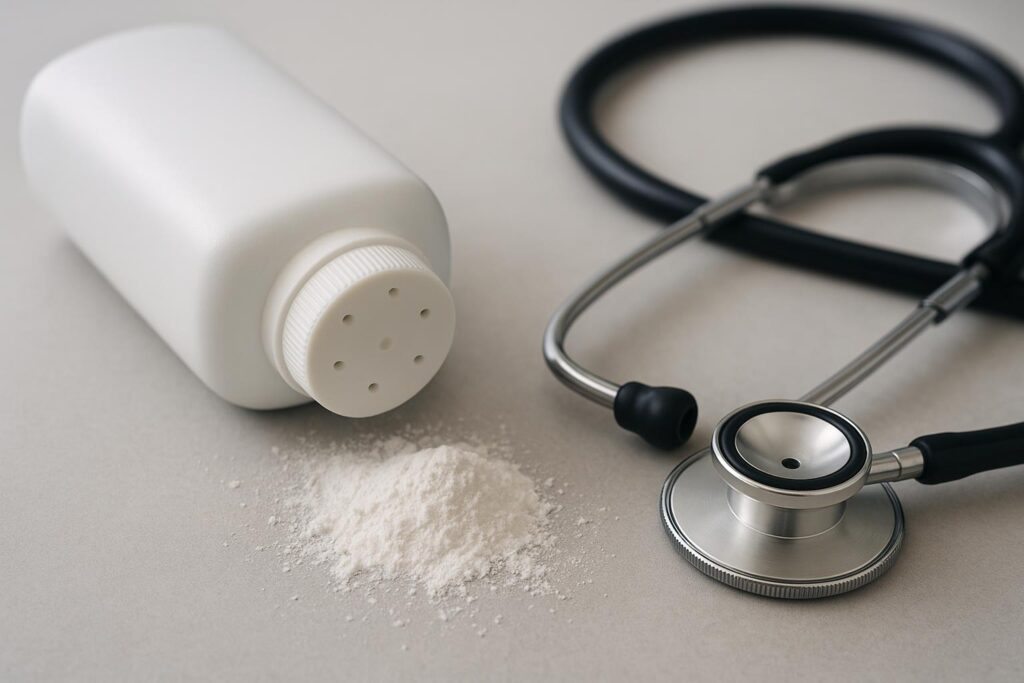
Thousands of women have filed a talcum powder ovarian cancer lawsuit after developing cancer allegedly linked to long-term use of talc-based products. If you or a loved one used baby powder or other talc products and were later diagnosed with ovarian cancer, you may have legal options to pursue compensation. Understanding the symptoms, eligibility requirements, and filing process can help you take timely action.
To learn more about your options, visit our talcum powder lawsuit resource page for a free case review.
Understanding the Link Between Talcum Powder and Ovarian Cancer
Talcum powder is made from talc, a mineral that can sometimes contain asbestos, a known carcinogen. Studies have suggested that when talc is applied to the genital area, particles may travel through the reproductive system and cause inflammation that contributes to ovarian cancer development. The National Cancer Institute and other research bodies have reviewed evidence connecting talc use to ovarian cancer risk.
While not every study confirms a direct causal link, the number of lawsuits and settlements indicates growing concern about product safety and corporate responsibility.
Common Signs of Talc-Related Ovarian Cancer
Recognizing early symptoms is crucial for timely diagnosis and treatment. Women who used talcum powder regularly and experience the following symptoms should consult a doctor:
- Persistent abdominal bloating or swelling
- Pelvic pain or pressure
- Changes in bowel or bladder habits
- Loss of appetite or feeling full quickly
- Unexplained fatigue
According to the Mayo Clinic, these symptoms may indicate ovarian cancer or other serious conditions. Medical evaluation and documentation are essential if you plan to file a talcum powder claim for ovarian cancer.
Who May Qualify to File a Talcum Powder Ovarian Cancer Claim
Eligibility for a baby powder ovarian cancer compensation claim depends on several factors. Generally, you may qualify if:
- You used Johnson’s Baby Powder or other talc-based products for personal hygiene over an extended period.
- You were diagnosed with ovarian cancer or mesothelioma.
- You have medical records linking your diagnosis to talc exposure.
- You are filing within the statute of limitations for talcum powder claims in your state.
Each state has its own filing deadlines, often ranging from one to three years after diagnosis or discovery of the link between talc use and cancer. Missing this window could bar your right to compensation.
Evidence Needed to Support a Talcum Powder Cancer Lawsuit
Strong evidence can increase the likelihood of a successful claim. Key documentation may include:
- Medical records confirming ovarian cancer or mesothelioma diagnosis
- Proof of long-term talcum powder use (receipts, product containers, witness statements)
- Pathology reports showing talc particles in ovarian tissue
- Expert testimony linking talc exposure to your cancer
Attorneys handling these cases often work with medical experts to establish causation and demonstrate corporate negligence.
Compensation and Settlement Amounts for Talcum Powder Cancer Claims
While every case is unique, talcum powder settlement amounts for ovarian cancer have varied widely based on evidence strength, medical costs, and jury findings. Some plaintiffs have received multi-million-dollar verdicts, while others reached confidential settlements. Factors that may influence compensation payouts for talcum powder cancer claims include:
- Severity of illness and treatment costs
- Lost wages and future earning capacity
- Pain, suffering, and emotional distress
- Evidence of corporate misconduct or failure to warn
It is important to note that no attorney can guarantee a specific outcome. However, filing a claim may help recover financial relief for medical expenses and other losses.
Filing Process for a Talcum Powder Ovarian Cancer Lawsuit
The process to file a talcum powder claim for ovarian cancer typically includes the following steps:
- Case evaluation: A legal team reviews your medical history and product use.
- Evidence collection: Attorneys gather documentation and expert opinions.
- Filing the complaint: The lawsuit is filed in the appropriate court.
- Discovery and negotiation: Both sides exchange evidence and may discuss settlement.
- Trial or resolution: If no settlement is reached, the case proceeds to trial.
Because each case is different, timelines can vary. Consulting an attorney early helps ensure compliance with filing deadlines and procedural requirements.
CTA: Check Your Eligibility for a Talcum Powder Lawsuit
If you believe your ovarian cancer diagnosis may be linked to talcum powder use, you may be entitled to pursue compensation. Check your eligibility for compensation from talcum powder ovarian cancer lawsuits today before time runs out.
Understanding Talcum Powder Mesothelioma Claims
In addition to ovarian cancer, some individuals exposed to asbestos-contaminated talc have developed mesothelioma, a rare cancer affecting the lungs or abdomen. A talcum powder mesothelioma claim follows a similar process but focuses on asbestos exposure evidence. Victims may seek compensation for medical costs, lost income, and suffering caused by asbestos-related disease.
Statute of Limitations for Talcum Powder Claims
The statute of limitations for talcum powder claims varies by state. Generally, victims must file within a specific period after diagnosis or discovery of the connection between talc use and cancer. Some states allow extensions under the discovery rule if the link was not immediately known. Acting quickly ensures your right to pursue compensation is preserved.
CTA: Start Your Free Case Review Today
Do not wait to learn if you qualify for a talcum powder ovarian cancer lawsuit settlement. Start your free case review today and see if you are eligible for a talcum powder cancer lawsuit.
Frequently Asked Questions About Talcum Powder Cancer Lawsuits
What is the average settlement for a talcum powder ovarian cancer lawsuit?
Settlement amounts vary widely depending on the strength of evidence, medical costs, and the extent of corporate negligence. Some verdicts have reached millions, while others settled confidentially.
How do I know if I qualify to file a talcum powder claim?
You may qualify if you used talc-based products regularly and were diagnosed with ovarian cancer or mesothelioma. Eligibility also depends on filing within your state’s statute of limitations.
What evidence is needed to prove a talcum powder cancer claim?
Medical records, pathology reports, proof of product use, and expert testimony are key forms of evidence. These documents help establish a link between talc exposure and your diagnosis.
Can family members file a claim on behalf of a deceased loved one?
Yes. In many states, surviving family members may file a wrongful death claim if a loved one passed away due to talc-related cancer. Compensation may cover medical bills, funeral costs, and loss of support.
Is there a deadline to file a talcum powder ovarian cancer lawsuit?
Yes. Each state has a statute of limitations that limits how long you have to file. It is important to contact a legal professional as soon as possible to avoid missing the deadline.
Are talcum powder lawsuits part of a class action or individual cases?
Most talcum powder lawsuits are part of multidistrict litigation (MDL), which consolidates similar cases for efficiency while maintaining individual claim value.
Can I still file if I used baby powder years ago?
Possibly. Even if your use occurred years ago, you may still qualify if your diagnosis and discovery of the link fall within your state’s filing window.