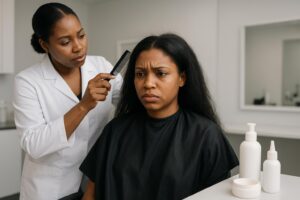
With mounting evidence that some hair relaxers are associated with uterine cancer and other serious health risks, you should assess your exposure, medical history, and possible symptoms while evaluating legal options for compensation; this post explains the allegations for Hair Relaxer Lawsuit, scientific findings, and steps you can take to protect your health and pursue claims.
Key Takeaways:
- Lawsuits allege that repeated use of chemical hair relaxers exposes users to endocrine-disrupting and carcinogenic compounds linked to higher rates of uterine cancer and other reproductive-system cancers.
- Plaintiffs contend manufacturers failed to warn consumers and are pursuing damages through consolidated lawsuits/MDLs, seeking compensation for medical expenses, pain and suffering, and punitive awards.
- Epidemiological studies report associations but causation remains contested; outcomes depend on case-specific evidence and may result in settlements, verdicts, or dismissal.
Overview of Hair Relaxers and Usage
Definitions, product categories, and common formulations
You encounter two main chemistries: hydroxide relaxers (commonly sodium hydroxide, pH ~12) and no‑lye formulations (calcium hydroxide/guanidine carbonate), plus thioglycolate-based systems used less often for permanent straightening. Products appear as creams, gels or kits with a neutralizer; manufacturers advise application times from about 5-30 minutes depending on strength. You should note that these are strong alkalis or reducing agents, and that prolonged contact can cause chemical burns, hair breakage, and increased scalp absorption.

Prevalence, demographics of use, salon vs. at‑home application
You’ll find highest usage among Black women, with many starting in adolescence and continuing into adulthood; surveys and community studies report widespread lifetime use in this group. Both professional salons and at‑home kits are common: professionals handle full relaxes and initial applications, while you might use retail kits for touch‑ups every 6-12 weeks. Pay attention because frequent touch‑ups near the scalp concentrate exposure and raise risk of injury.
Younger users often begin between roughly 12-18 years old to manage texture for school or work, and socioeconomic factors shape whether you rely on salon expertise or cheaper DIY kits (salon services commonly range from $30-$100+, kits $5-$25). Advertising and cultural norms have historically promoted straightening as a grooming standard, increasing cumulative exposures; even when a licensed stylist applies the relaxer, you can still experience scalp inflammation, inhalation of fumes, and repeated chemical contact over years, which many epidemiologic studies flag as relevant to long‑term health risk.
Regulatory classifications, labeling practices, and market actors
You should know most relaxers are regulated as cosmetics in the U.S., meaning manufacturers must list ingredients but do not need FDA premarket approval; the EU enforces stricter substance restrictions and product notification. Big players include legacy brands marketed to textured hair spaces, and thousands of smaller imports and private‑label lines. That regulatory status leaves a gap: no routine premarket safety testing is required for many active relaxer chemicals.
Manufacturers generally provide ingredient lists, directions, and burn warnings; however, ingredient disclosure can be incomplete for fragrance or trade‑secret blends that may contain endocrine‑active or carcinogenic compounds. Adverse events are typically reported voluntarily to systems like the FDA’s MedWatch, and regulators have pursued targeted recalls or warnings when toxicants (e.g., formaldehyde in unrelated straightening products) are identified-showing that enforcement is reactive rather than preventive, which affects how much you can rely on labels alone to assess safety.
Chemical Ingredients and Mechanisms of Harm
Key chemicals of concern (formaldehyde, alkalis, endocrine‑active agents, solvents)
You should be aware that many relaxers combine strong alkalis (most commonly sodium hydroxide or guanidine-derived bases with pH often between 10-13), formaldehyde or formaldehyde‑releasing agents, and endocrine‑active additives such as phthalates and some parabens; solvents and glycols are added for texture and stability. These ingredients are biologically active: formaldehyde is an IARC Group 1 carcinogen, and high‑pH alkalis can damage skin barriers that increase chemical uptake.
Exposure pathways and biological mechanisms (dermal absorption, endocrine disruption, inflammation)
When you apply relaxers, exposure is primarily through the scalp and skin, inhalation of vapors during application, and accidental eye or mucosal contact; heating or repeated treatments raises airborne formaldehyde above OSHA’s 8‑hour PEL of 0.75 ppm in some salon reports. Alkali burns and microabrasions increase dermal absorption, endocrine‑active chemicals can bind hormone receptors or alter steroidogenesis, and persistent local irritation triggers inflammation that promotes DNA damage and proliferation.
Digging deeper, your scalp’s stratum corneum is disrupted by high pH and surfactants: sodium hydroxide at 1-10% concentrations can saponify lipids and create microfissures that allow small molecules to enter the dermis and systemic circulation. Formaldehyde induces DNA‑protein crosslinks and oxidative stress, while phthalates and some preservatives have been shown in vitro to alter estrogen/androgen signaling and lower SHBG; chronic exposure combined with cycles of inflammation, oxidative DNA damage, and hormonal perturbation creates a biological environment that epidemiologic studies suggest may increase risk for hormone‑sensitive cancers over decades of repeated use.
Evidence Linking Hair Relaxers to Uterine Cancer and Other Health Risks
Summary of epidemiological studies, cohort and case-control findings
You’ll find multiple cohort and case-control studies reporting associations between frequent chemical relaxer use and uterine cancer, with several analyses showing an increased risk of about 20-50% (≈1.2-1.5-fold) in long-term or high-frequency users, particularly among Black women. Dose-response patterns appear in some datasets, and large cohorts like the Sister Study and regional case-control series provide the strongest signals, although results vary by product type, age at first use, and exposure duration.
Clinical reports, biomarker research, and plausible biological links to uterine cancer
You should note that clinical case reports document repeated scalp chemical injuries and systemic symptoms after relaxer exposure, while biomarker studies detect endocrine-disrupting chemicals (phthalates, parabens, some alkylphenols) in users’ blood and urine. Together these findings support plausible mechanisms – estrogenic activity, genotoxicity, and chronic inflammation – that can promote endometrial proliferation and malignant transformation.
Deeper biomonitoring and mechanistic work shows that women who use chemical straighteners more often have measurable elevations in metabolites linked to hormonal activity, and in vitro assays demonstrate receptor activation and DNA damage potential for several components used historically in relaxers. You can connect these molecular signals to epidemiology: prolonged endocrine disruption and repeated local burns can create a pro-proliferative uterine environment. While human causal proof is still developing, the convergence of biomarker, toxicology, and clinical-injury data strengthens biological plausibility.
Additional associated outcomes (breast cancer, reproductive harms, scalp/skin injuries)
Studies also associate relaxer use with higher breast cancer risk in some subgroups (often ~1.2-1.4-fold increases reported), earlier menarche, increased uterine fibroid prevalence, reduced fertility metrics, and frequent reports of chemical burns, scarring alopecia, and chronic scalp inflammation that can necessitate medical treatment.
On reproductive outcomes, you’ll see consistent signals linking hair product exposure to fibroid growth and altered menstrual patterns; fibroids affect a large share of Black women by midlife, magnifying impact. Breast cancer associations are strongest in analyses stratified by race and product type. Clinically, scalp burns documented in case series are not just cosmetic – they produce chronic inflammation and skin barrier disruption, which can increase systemic absorption of chemicals and perpetuate endocrine and immune effects that may influence both cancer and reproductive endpoints.
Legal Claims and Litigation Landscape
Common legal theories (product liability, failure to warn, negligence, strict liability)
You’ll see plaintiffs pursue product liability (design, manufacturing, marketing defects), failure to warn (inadequate label or salon instructions), negligence (breach of duty in formulation or testing), and strict liability (selling a dangerous product regardless of fault). Courts require you to prove defect, causation, and damages; for warnings, regulators and foreseeability of consumer use often decide whether a label was sufficient.

Notable lawsuits, class actions, defendants, settlements, and ongoing litigation
You should know dozens of actions have been filed in state and federal courts, with several matters consolidated for coordinated discovery and expert reports; defendants typically include major manufacturers, private-label brands, and some retailers. Plaintiffs seek compensatory and punitive damages, and litigation strategies focus on epidemiology, ingredient testing, and corporate documents to show knowledge of long-term cancer risks.
In representative complaints you’ll read allegations of uterine cancer after 10-25 years of frequent relaxer use; litigation has produced subpoenas for internal testing, marketing memos targeting Black consumers, and expert reports on endocrine disruption. Discovery battles often center on whether companies knew of ingredient hazards or failed to update labels, and some cases are moving toward bellwether trials to shape settlements or rulings on admissible scientific causation evidence.
Pursuing a Claim: Eligibility, Evidence, and Process
Who may be eligible and the challenge of proving causation
You may qualify if you had regular, long‑term use of hair relaxers and a diagnosed uterine cancer or related serious condition; many claims arise from years of use, sometimes with a latency of 5-20 years. Courts require scientific linkage, and because uterine cancer has other risk factors (age, obesity, family history), you’ll need expert epidemiology and individualized medical proof to connect your exposure to the injury.
Assembling medical records, product proof, and expert testimony
You should collect complete medical records (pathology reports, surgical notes, oncologist letters), proof of product use (photos, receipts, bottles, salon logs), and line up experts-oncologists, toxicologists, and epidemiologists-to establish exposure and mechanism; maintaining a clear chain of custody for any physical samples strengthens your claim.
Pathology slides, tumor receptor status, exact diagnosis dates, and pre‑diagnosis gynecologic histories are often decisive; you’ll want copies of purchase receipts, UPC/lot numbers, salon appointment records, and photographs of product labels. Independent chemical analysis of retained bottles or hair samples can detect relevant compounds, and experts typically prepare written reports citing case‑control studies or cohort data to argue causation. Expect expert fees and report prep to range widely, and plan to preserve evidence immediately after diagnosis.
Statutes of limitations, venue selection, and class action versus individual suits
Statutes of limitations commonly run from 2-6 years from diagnosis or discovery, though some states apply a discovery rule; you and your attorney must evaluate where to file-state of purchase, state of injury, or manufacturer’s headquarters-and decide between a class action (faster consolidation) or an individual suit (tailored damages).
Filing strategy often depends on timing and case facts: if many similar claims exist, cases may be centralized in an MDL to streamline discovery, while individual suits proceed when you seek higher, individualized compensation. Venue choice affects jury pools, procedural rules, and potential recovery; deadlines can be tolled in certain jurisdictions, so preserve claims promptly and consult counsel about whether consolidation, federal filing, or state court best serves your goals.
Compensation, Timeline, and Practical Guidance
Types of recoverable damages (medical costs, lost wages, pain & suffering, punitive damages)
You can seek multiple damage categories based on your injuries, treatment, and income loss. Claim values rely on objective proof and expert testimony. Knowing how each category is documented and prioritized can increase the value of your claim.
- Medical costs – hospital bills, surgeries, ongoing care, prescription records.
- Lost wages – pay stubs, employer statements, reduced earning capacity reports.
- Pain & suffering – symptom journals, clinician notes, quality-of-life testimony.
- Punitive damages – available if conduct was reckless or intentionally harmful; often proven with corporate records or internal studies.
| Damage type | Typical examples / proof required |
| Medical costs | Hospital bills, ER records, imaging, prescription receipts, future care estimates |
| Lost wages | Pay stubs, employer letters, tax returns, vocational expert reports for future loss |
| Pain & suffering | Medical notes, patient diaries, testimony from family or mental-health providers |
| Punitive damages | Internal company documents, regulatory findings, patterns of similar complaints |
| Other (future care) | Life-care plans, prosthetics, long-term therapy cost projections |
Typical legal timeline, attorney fees (contingency arrangements), and settlement considerations
Many cases settle in 12-36 months; simple claims can close in 6-12 months while complex MDL or trial cases may last 2-5+ years. Attorneys commonly work on contingency fees (33%-40%), advancing costs like expert reports and court fees that are repaid from recovery. Settlement value depends on diagnosis, evidence strength, and jurisdiction.
Expect a staged process: intake and records (0-3 months), expert development (3-12 months), negotiation or MDL consolidation (12-36 months), and trial if needed (2-5+ years). Contingency rates often drop if you settle early (~33%) and rise if a trial is required (~40%). Statutes of limitation vary by state-commonly 1-6 years-so preserve evidence, get medical records, and use a lawyer who will advance costs and negotiate liens or structured settlements to protect your long-term needs.
Final Words
With these considerations, you should be aware that the hair relaxer lawsuit alleging links to uterine cancer and other serious health risks highlights potential long-term harms from repeated chemical exposure; you may want to consult medical and legal professionals to evaluate your personal risk, preserve product packaging and medical records, and explore participation in litigation or settlements if your health has been affected.
FAQ
Q: What are the main allegations in the hair relaxer lawsuits and what health risks are claimed?
A: The lawsuits allege that repeated use of certain hair relaxer products exposes users to harmful chemicals, including endocrine-disrupting compounds, that may increase the risk of uterine cancer and other serious health problems. Plaintiffs cite epidemiological studies and case reports that suggest an association between long-term, frequent use of relaxers and elevated rates of uterine, breast, and ovarian cancers, as well as non-cancer harms such as severe scalp burns, chemical-induced hair loss, and allergic reactions. Manufacturers are accused of failing to adequately test products, disclose known risks, or warn consumers. Scientific and legal disputes remain over causation, exposure levels, and the strength of the evidence, so alleged links are the focus of litigation rather than universally accepted medical fact.
Q: Who might be eligible to join a hair relaxer lawsuit and what types of evidence are typically used?
A: Individuals who used specified hair relaxer brands or formulations repeatedly over time and later received diagnoses of uterine cancer (or other injuries identified in the suits) may be eligible. Eligibility often depends on product identification, frequency and duration of use, timing of diagnosis, and jurisdictional statutes of limitations. Common evidence includes medical records and pathology reports, purchase records or receipts, photos of product labels or packaging, sworn statements about use patterns, clinical testimony linking exposure to injury, and expert reports from epidemiologists, toxicologists, or oncologists. Attorneys handling mass torts also gather corporate documents, internal testing results, and regulatory filings to support claims against manufacturers.
Q: What immediate steps should someone take if they believe they were harmed by a hair relaxer product?
A: Preserve all relevant medical records, pathology reports, and treatment notes; keep product containers, labels, receipts, and photos showing dates and usage; document symptoms, treatment timelines, and frequency of product application in a written timeline; avoid discarding packaging or evidence. Seek a medical evaluation to confirm diagnoses and obtain copies of diagnostic reports. Contact an attorney experienced in product liability or mass-tort litigation to assess potential claims and deadlines in your jurisdiction; many firms offer free consultations and can advise about joining a class action or pursuing an individual lawsuit. Do not sign away legal rights without independent legal advice, and follow medical guidance from your healthcare providers regarding ongoing care and testing.