

Why Is Legal Representation Crucial In Mass Tort PFAS Water Contamination Cases?
Over the years, PFAS water contamination lawsuit eligibility has emerged as a significant health concern, impacting entire communities. As you face the potential health effects or property damage resulting from exposure to these harmful chemicals, having experienced legal representation becomes necessary. Your attorney will navigate the complexities of mass tort cases, ensuring that you receive the compensation you deserve for your losses. By understanding the legal landscape and advocating for your rights, representation can empower you to seek justice against responsible parties and provide you with a pathway toward healing.
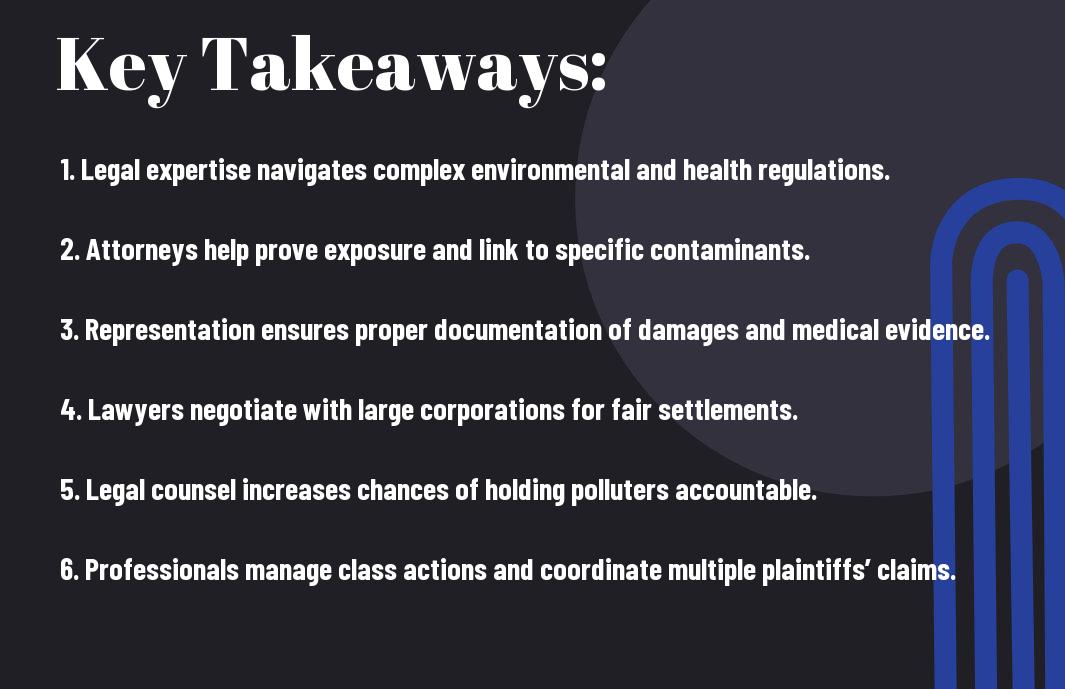
Key Takeaways:
- Legal representation helps individuals navigate complex legal processes and ensures their rights are protected in mass tort cases involving PFAS contamination.
- Experienced attorneys can effectively gather and present evidence, increasing the chances of securing favorable outcomes for their clients.
- Having legal counsel allows victims to access necessary resources, such as expert witnesses and scientific data, that can strengthen their case against responsible parties.
- Legal representation can facilitate negotiations for settlements, potentially providing victims with compensation for medical expenses, property damage, and emotional distress.
- Attorneys specializing in mass torts are familiar with previous case precedents, enabling them to build stronger cases based on established legal principles and findings.
Understanding PFAS and Water Contamination
While water contamination poses significant health risks, the specific dangers associated with PFAS, or per- and polyfluoroalkyl substances, are particularly alarming. PFAS are a group of man-made chemicals that have been used in various industrial applications and consumer products since the 1940s. They are known for their water-resistant and oil-resistant properties, making them popular in items like non-stick cookware, water-repellent clothing, and food packaging. However, these substances do not break down easily in the environment, which means they can persist in soil and water, leading to long-term exposure for communities that rely on contaminated water sources.


Definition of PFAS
Alongside their resilience, PFAS have garnered attention due to their potential health effects. Studies have linked exposure to these chemicals to a range of serious health issues, including cancer, immune system disruption, and hormonal interference. Researchers are actively investigating the extent of these health risks, underscoring the importance of understanding what PFAS are and why you should pay attention to their presence in your water source. By being aware of PFAS, you empower yourself to take proactive steps toward protecting your health and advocating for clean water.
Sources of PFAS Contamination
After recognizing what PFAS are, it’s crucial to identify the sources of their contamination. PFAS can enter water supplies through industrial discharges, runoff from landfills, and aerosolization from firefighting foams that contain these substances. Additionally, agricultural practices can introduce PFAS into the food chain, putting both agricultural workers and consumers at risk. Understanding these sources is crucial, as it enables you to be more vigilant in ensuring the safety of your water and the environment surrounding you.
At the same time, everyday products can also play a role in PFAS contamination. Your use of certain household items, such as stain-resistant carpets, fast-food packaging, and even some cosmetics, can contribute to the problem, where the chemicals eventually make their way into your drinking water. By being cautious about the products you use and advocating for stricter environmental regulations, you can contribute to a collective effort to reduce PFAS pollution and its impact on your community.
The Impact of PFAS on Public Health
Any discussion about the impact of PFAS (per- and polyfluoroalkyl substances) on public health reveals alarming truths about these chemicals that have infiltrated our water supply. PFAS are often referred to as “forever chemicals” due to their remarkable resistance to degradation in the environment and the human body. You need to be aware that exposure to PFAS can lead to a variety of serious health issues, including harmful effects on the immune system, an increased risk of certain cancers, and developmental delays in children. Because these contaminants can accumulate over time, even low levels of exposure can result in significant health complications, underscoring the importance of addressing PFAS in your drinking water.
Health Risks Associated with PFAS
With ongoing research revealing the full scope of health risks associated with PFAS exposure, it is becoming increasingly obvious that these substances pose a significant threat to public health. You may be surprised to learn that studies have linked PFAS exposure to conditions such as liver damage, thyroid disease, and elevated cholesterol levels. These health risks highlight the urgency of addressing PFAS contamination and ensuring you understand the implications for your own health and that of your community.
Long-Term Effects on Communities
For many communities affected by PFAS contamination, the long-term consequences extend beyond immediate health concerns. These chemicals not only jeopardize individual health but can also disrupt the very fabric of the community, leading to decreased property values, economic hardship, and a lack of trust in local government and institutions. If your community grapples with PFAS contamination, you might find resources being reallocated to address health issues or to clean up contamination sites, which can strain public services and infrastructure.
Health concerns related to PFAS can create a ripple effect that impacts community cohesion and well-being. The pervasive nature of these chemicals can lead to significant emotional and psychological stress for residents, with many grappling with the uncertainty of their health risks and the safety of their drinking water. Furthermore, as public awareness grows, communities could face stigmatization, making it even more challenging to attract new residents and businesses. This compound effect illustrates the necessity for legal representation in mass tort cases to address both personal health and broader community consequences that arise from PFAS water contamination.
Legal Framework Surrounding Mass Tort Cases
Overview of Mass Tort Litigation
For individuals affected by PFAS water contamination, understanding the legal framework surrounding mass tort cases is imperative. Mass tort litigation allows many individuals who have suffered similar harm to group their claims against a single defendant or a few defendants. This collective approach not only alleviates the burden on the courts but also strengthens your position against powerful entities, such as corporations, that may have caused the contamination due to negligence or malfeasance. Engaging in mass tort litigation provides you with the opportunity to seek justice and compensation alongside others who share your plight.
On one hand, mass tort cases can lead to substantial settlements or verdicts due to the collective evidence and testimonies presented. On the other hand, the complexity of these cases may require you to navigate through various legal challenges, including discovery processes and jurisdictional issues. Therefore, having knowledgeable legal representation is vital to effectively advocate for your interests, ensuring that you understand your rights and the processes involved at every step.
Relevant Laws and Regulations
An imperative aspect of navigating mass tort cases involves understanding the regulatory landscape that governs them. While national and state laws aim to protect citizens from hazardous substances, like PFAS, the specific regulations may vary widely. Federal laws, such as the Clean Water Act and the Comprehensive Environmental Response, Compensation, and Liability Act (CERCLA), set standards and responsibilities for parties involved in contamination cases. Familiarity with these laws helps you recognize the legal obligations of those responsible for pollution and the potential paths for compensation you might pursue.
Tort law, particularly within environmental contamination, plays a significant role in mass tort cases about PFAS. By holding accountable those responsible for harm, tort claims provide avenues for victims to recover damages associated with health problems, property devaluation, and other losses directly linked to the contamination. You should be aware that the landscape of environmental laws is continuously changing, and having an attorney who is well-versed in these regulations is critical in helping you navigate your claims effectively. Engaging legal counsel who understands the nuances of relevant laws enhances your chances of achieving a favorable outcome in your case.
Role of Legal Representation in Mass Tort Cases
Unlike individual lawsuits, mass tort cases involve numerous plaintiffs who have been harmed by a common defendant, such as large corporations responsible for PFAS water contamination. The complexities of these cases can be overwhelming, and this is where skilled legal representation becomes vital. An experienced lawyer can help you navigate through the intricate legal landscape, providing you with the support and expertise necessary to present your case effectively. They will work diligently to ensure that your rights are protected, and you receive the compensation you deserve for the harm caused.
Importance of Experienced Lawyers
Tort law is inherently complex, and the nuances of mass tort cases require specialized legal knowledge. By securing the services of an experienced attorney, you gain access to a wealth of knowledge regarding the specific laws and regulations governing PFAS water contamination. These attorneys have likely handled similar cases, and their familiarity with the strategies used by corporations can prove invaluable when building your case. They can also help you gather critical evidence, engage expert witnesses, and assess the full extent of your damages, which all contribute to a stronger position in your pursuit of justice.
Strategies for Navigating Complex Litigation
Against the backdrop of mass tort cases, creating a strategy to effectively navigate legal challenges is necessary. These cases involve a vast amount of evidence, numerous stakeholders, and often, extensive financial resources from large corporations. Experienced attorneys can implement targeted strategies to focus on the most pertinent aspects of your case. They can help organize the litigation process in a way that maximizes efficiency and focuses on obtaining results.
This process might include prioritizing cases based on severity of injury, coordinating with other plaintiffs to share resources, or employing expert testimony to strengthen your arguments. Effective strategies help streamline the legal process and enhance the likelihood of a favorable outcome. Additionally, your attorney’s established connections within the legal community may allow for collaborative efforts that can further bolster your position against powerful defendants, ultimately aiding you in achieving justice and appropriate compensation for your suffering.
Case Studies: Successful Mass Tort PFAS Cases
Many mass tort PFAS water contamination cases have set important precedents and achieved successful outcomes. These cases highlight the need for effective legal representation and underscore the significant impact of PFAS on communities and individuals. The following case studies provide an overview of some noteworthy examples:
- Hoosick Falls, NY – In 2016, residents sued major chemical producers for contaminating the local water supply with PFAS. The settlement amount reached $850,000, providing vital funds for community health services and environmental remediation.
- West Morgan-East Lawrence Water Authority, Alabama – In a landmark case, the authority filed a lawsuit leading to a $4 million settlement against manufacturers of PFAS who contaminated local groundwater, establishing accountability for water pollution.
- Camp Lejeune, North Carolina – Veterans and their families successfully filed claims related to PFAS exposure, resulting in an estimated $6.1 billion in compensation and demonstrating the government’s responsibility in protecting service members.
- New Jersey’s Water Supplier Case – The state sued companies for releasing PFAS into water sources, resulting in a settlement exceeding $1 billion aimed at clean-up efforts and the establishment of stricter regulations.
Notable Legal Precedents
Precedents in mass tort PFAS cases have provided a foundational framework for future litigation. Successful outcomes in these pioneering cases demonstrate that individuals and communities can hold large corporations accountable for environmental pollution. The judicial decisions in these matters have outlined the scope of liability and emphasized the need for comprehensive scientific evidence to support claims, reinforcing the importance of skilled legal representation.
Moreover, precedents established through these cases have prompted lawmakers to consider stricter regulations concerning PFAS usage and disposal. These outcomes signify a growing recognition of the dangers associated with PFAS, thereby encouraging more victims to seek legal recourse. The advancements in these cases illustrate that with your attorney’s expertise, you can navigate the complexities of environmental law and achieve a favorable outcome.
Outcomes and Implications for Future Cases
At the conclusion of numerous PFAS mass tort cases, significant outcomes have emerged that carry long-lasting implications for future litigation. Victorious cases have not only resulted in substantial monetary settlements but have also fostered dialogue around regulatory changes that prioritize community safety and health. Furthermore, the growing awareness surrounding PFAS has urged more states to implement stringent testing and accountability measures, building a safer future for contaminated communities.

In fact, the successful resolutions of these legal battles have resulted in the establishment of more robust legal frameworks for addressing water contamination issues, ensuring that victims have a better chance of receiving justice. This evolving legal landscape not only aids you in understanding your rights but also strengthens the push for accountability among corporations that impose environmental hazards on communities. Empowered by these precedents and outcomes, you can pursue justice with confidence in mass tort PFAS cases.
Challenges in PFAS Mass Tort Litigation
Difficulty in Proving Causation
Before you explore into a mass tort lawsuit regarding PFAS water contamination, one of the primary obstacles you may face is the challenge of proving causation. In these cases, it is necessary to establish a direct link between the exposure to PFAS chemicals and the specific health issues or environmental damage you are claiming. This often requires comprehensive scientific evidence and expert testimony, which can be both costly and time-consuming. The complexity arises from the fact that PFAS compounds have been broadly used in various products and can be found in a myriad of environments, making it difficult to trace the source and effects accurately.
Your case may involve numerous individuals and municipalities, each with their own unique circumstances. This multiplicity can make it harder to build a collective understanding of how PFAS has affected you and others. The burden of proof lies heavily on you and your legal representation, and without a clear, scientifically backed explanation of how PFAS exposure has specifically impacted your health or environment, you may face significant hurdles.
Industry Pushback and Defense Strategies
Difficulty in obtaining justice in PFAS mass tort litigation is compounded by industry pushback and defense strategies designed to weaken your case. Companies involved in the production or use of PFAS often possess substantial resources, enabling them to mount aggressive defenses against your claims. This may involve challenging the validity of the scientific studies that link PFAS to harmful health effects or arguing that other environmental factors could be responsible for the negative outcomes you have experienced.
Defense teams may also attempt to categorize your case as part of a larger trend, arguing that mass torts are frivolous or exaggerated. This strategy could encompass attempts to influence public perception and discredit credible research on PFAS. Strong legal representation is vital in counteracting these tactics, ensuring that your voice is heard and that the evidence supporting your claims is presented effectively in court. The uphill battle against well-funded industry defenses highlights why having an experienced attorney who understands these complex legal and scientific landscapes is key to advancing your case.

To Wrap Up
On the whole, understanding the significance of legal representation in mass tort PFAS water contamination cases is vital for anyone affected by this issue. By having skilled attorneys by your side, you gain access to invaluable resources, knowledge, and experience that can significantly enhance your chances of securing fair compensation for the harm you’ve suffered. Attorneys specializing in this area can help navigate the complex legal landscape and advocate your rights effectively, ensuring your voice is heard within a large group of claimants. Your attorney can identify the responsible parties, gather evidence, and build a strong case that supports your individual needs while also contributing to a larger fight for justice.
Your situation demands a high level of expertise and dedication, which makes legal representation a fundamental component of any mass tort case. You are not alone in this process, and having an attorney can provide the support you require to face the challenges ahead. With professional legal assistance, you can focus on your recovery while knowing that your best interests are being prioritized in the pursuit of accountability and reparation for the detrimental effects of PFAS contamination in your community.
FAQ
Q: What are mass tort PFAS water contamination cases?
A: Mass tort PFAS water contamination cases arise when a large group of individuals suffer harm due to the release of per- and polyfluoroalkyl substances (PFAS) into their water supply. PFAS are synthetic chemicals that have been widely used in various industries, leading to significant environmental contamination. These cases typically involve numerous plaintiffs who have faced similar injuries or damages, allowing them to band together and seek compensation from the responsible parties, such as manufacturers or water suppliers.
Q: How can legal representation benefit individuals affected by PFAS water contamination?
A: Legal representation can significantly enhance the chances of affected individuals receiving fair compensation for their damages. An experienced attorney can help navigate the complex legal landscape of mass tort cases, ensuring that all aspects of the claim are properly addressed. This includes gathering evidence, interviewing witnesses, and connecting with scientific experts to establish a clear link between the contamination and the health problems experienced by the plaintiffs. Furthermore, legal counsel can negotiate with defendants on behalf of the plaintiffs and represent their interests in court, making the process smoother and more effective.
Q: What challenges are typically faced in PFAS water contamination cases, and how does legal representation help overcome them?
A: One of the major challenges in PFAS water contamination cases is the need to prove causation between the exposure to PFAS and specific health issues, which can often be complicated by the long latency periods of certain diseases. Additionally, defendants may employ extensive legal resources to dispute claims, which can intimidate individual plaintiffs. Legal representation is imperative in overcoming these challenges by providing access to expert testimony, robust scientific evidence, and strategic legal tactics. An attorney will also stay updated about relevant laws and regulations, thereby ensuring that the case is built on a solid foundation.