


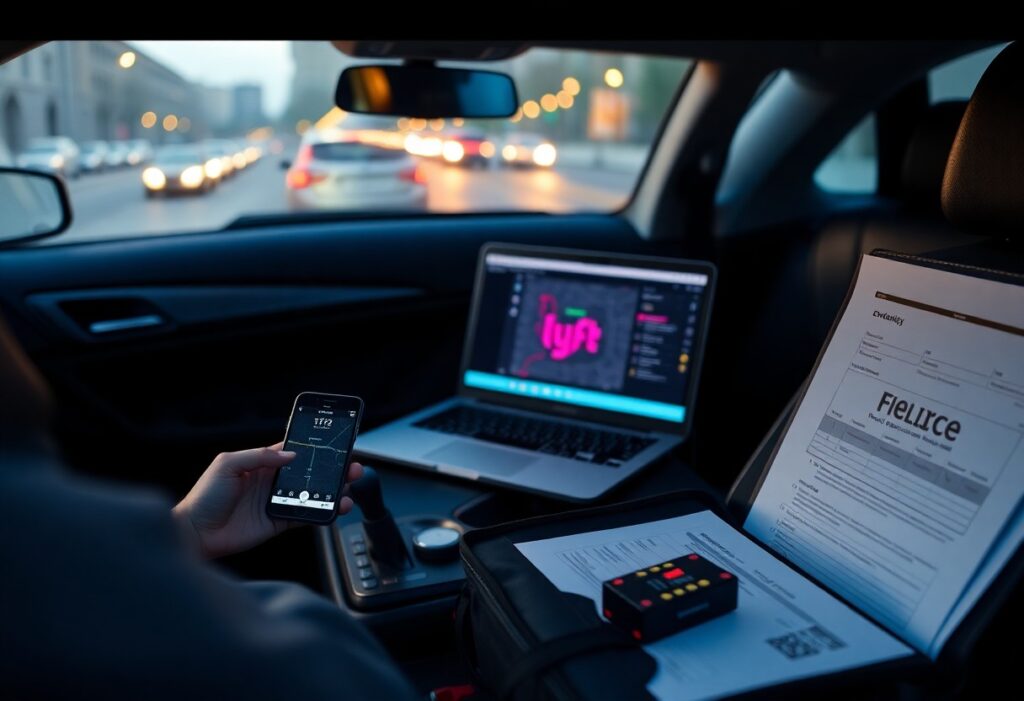
With forensic digital evidence your chances of proving an Uber Or Lyft Assault Lawsuit can improve dramatically; GPS traces, ride logs, surveillance video, and phone records can corroborate time, location, and behavior, while metadata and cached files can expose inconsistencies in statements. A skilled examiner can preserve and present this data so it supports your injuries, liability, and damages, helping you hold the responsible parties accountable.
Key Takeaways:
- App logs, GPS/timestamped ride data, and receipts can verify who was in the vehicle, when the trip occurred, and the route taken-helping establish presence and sequence of events.
- Phone and device forensics (call/text records, location history, deleted files, photo metadata) plus dashcam/CCTV footage can corroborate assaults or contradict denials.
- Immediate preservation (litigation hold, preservation letters, prompt subpoenas) and strict chain-of-custody procedures are necessary to prevent loss or tampering of digital evidence.
- Authentication by qualified forensic examiners is required to extract, analyze, and testify about data integrity and limitations such as encryption or provider retention policies.
- Compelling digital evidence can strengthen liability and damages claims or prompt settlement, but access may be constrained by legal hurdles, provider cooperation, and jurisdictional rules.
Understanding Forensic Digital Evidence
Definition of Forensic Digital Evidence
You should treat forensic digital evidence as data extracted, preserved, and analyzed to support or refute claims in your case – from timestamps and GPS traces to deleted files recovered from a phone. Analysts use controlled tools to maintain a documented chain of custody so courts can assess authenticity, and metadata often ties a device or account to specific times and places with millisecond or second precision.
Types of Forensic Digital Evidence
You’ll commonly encounter several categories: GPS and trip logs showing routes and timestamps; app/server records with account activity; device forensics recovering photos or deleted messages; call detail records locating phones via towers; and video/audio from ride-share or public cameras that corroborate events.
- GPS/trip logs – route, speed, timestamps.
- App/server records – account actions and IP addresses.
- Device forensics – deleted messages, photos, artifacts.
- Call detail records – cell tower pings and durations.
- After video/audio – dashcam or CCTV that corroborates location and behavior.
| GPS / Trip Logs | Shows route, start/stop times, and speed anomalies useful to place you or the driver. |
| App / Server Records | Contains booking timestamps, account IDs, payment records, and sometimes IP addresses. |
| Device Forensics | Recovers deleted texts, photos, app caches and timestamps from phones or tablets. |
| Call Detail Records (CDRs) | Documents call/SMS metadata and approximate location via cell towers. |
| Video / Audio | Records from in-car cameras, CCTV, or nearby devices that provide visual/audio corroboration. |
More detail matters: when you analyze server logs you can link an account action to an IP and timestamp; extracting deleted images may reveal the sequence of events; and comparing CDR tower pings with GPS creates cross-verification. Experts often calculate error margins (meters for GPS, milliseconds for timestamps) and test integrity with hash values to show evidence wasn’t altered.
- Server logs – IP, timestamp, request payloads for verification.
- Deleted data – recovered artifacts often reveal intent or sequence.
- Timestamp correlation – cross-checks between sources reduce doubt.
- Hashing & integrity – proves files weren’t tampered with during analysis.
- After error-margin analysis – experts quantify uncertainty to explain reliability in court.
| Evidence Type | Practical Use |
| Server Logs | Tie ride requests to specific accounts and timestamps for timeline building. |
| Deleted Files | Restore photos/messages that contradict denials or support your narrative. |
| GPS vs CDR | Compare for location confirmation when one source has gaps. |
| Video/Audio | Provide visual identification and behavior context for juries or judges. |
| Integrity Hashes | Document chain of custody and show files remained unchanged. |
Role in Legal Proceedings
You rely on forensic digital evidence to corroborate witness statements, establish timelines, and quantify damages; judges and juries increasingly expect technical corroboration rather than only contradictory testimony. Metadata and cross-checked logs can show whether an account action occurred within seconds of an alleged assault, and expert testimony explains the methods used to extract and validate that data.
In litigation you’ll typically use digital evidence to do three things: authenticate events (e.g., GPS placing the driver at the scene), challenge defenses (e.g., deleted messages showing intent), and quantify harm (e.g., duration and location profiles). Courts require documented chain of custody, validated tools, and expert reports; admissibility often hinges on demonstrating standard procedures, reproducible hashes, and error-margin explanations to withstand Daubert or Frye challenges in U.S. federal and state courts.
The Rise of Ridesharing Services
Overview of Uber and Lyft
Founded in 2009 (Uber) and 2012 (Lyft), these platforms now dominate the U.S. market, together handling millions of rides daily; you encounter standardized driver profiles, GPS trip logs, fare receipts, and in-app safety features that create layers of digital traces relevant to your claim.
Common Incidents of Assault
Assaults range from unwanted touching and threatening behavior to more severe physical or sexual assaults, occurring during pick-up, en route, or after drop-off; you should note whether the incident involved intoxication, route deviation, or being isolated in the vehicle.
Research and media reports document hundreds of allegations annually, and many involve similar patterns: drivers using secluded routes, ignoring passenger protests, or passengers creating confrontations that escalate; you can use timestamps, GPS, and messaging logs to corroborate timelines and situational context when pursuing claims or criminal reports.
Legal Implications for Rideshare Drivers
Companies often classify drivers as independent contractors, which affects vicarious liability and your ability to sue the platform directly; nonetheless, settlements and verdicts have held platforms accountable when hiring, supervision, or screening practices were deficient.
Courts examine background checks, prior complaint histories, and the platform’s response to safety reports-if the company failed to act on red flags or inadequately vetted a driver, you may pursue negligence theories and damages; prepare to seek trip data, driver screening records, and complaint logs through subpoenas to build that case.
How Forensic Digital Evidence Can Strengthen Your Case
Collecting Data from Rideshare Apps
You should seek the app’s backend logs – they contain trip IDs, timestamps to the second, fare receipts, driver and vehicle identifiers, and route polylines that show the exact path taken; many providers retain these records and will respond to preservation letters or subpoenas, and you can often obtain data exports that map every GPS ping and stop for precise reconstruction.
GPS Data and Its Importance
GPS traces can independently verify pick‑up/drop‑off locations, reveal unexpected detours or extra stops, and timestamp movements so you can demonstrate delays or forced deviations; urban GPS often resolves to within 5-10 meters, and showing a sudden 10-15 minute stop on a dark street can be compelling to a jury.
Forensic analysts export polylines as CSV/KML, overlay them on maps, and analyze speed and stop patterns to infer intent; you can correlate those pings with app timestamps, dashcam frames, or cell‑tower logs to produce synchronized timelines and visual charts that quantify how long you were vulnerable.
Communication Records and Their Relevance
You should preserve in‑app messages, call logs, and SMS related to the ride – these contain time‑stamped communications, phone numbers, and message content that can show consent, threats, or ignored safety warnings; courts accept such transcripts when they match trip IDs and timestamps from the app.
Metadata is often as powerful as content: metadata linking accounts, delivery timestamps, and carrier records can tie a driver’s phone to the vehicle and prove sequence of messages or missed calls, so combining carrier subpoenas with app logs can build an airtight timeline you can present at trial.


Challenges in Utilizing Forensic Digital Evidence
Data Privacy Issues
When you request backend ride logs you’ll confront federal and state privacy frameworks like the Electronic Communications Privacy Act (ECPA), California’s CCPA, and the EU’s GDPR if data moves overseas; providers often require a subpoena or warrant and will limit what they disclose. Acting quickly matters because some providers restrict detailed logs to limited retention windows, so you should send preservation requests and legal process promptly to avoid losing time-sensitive evidence.
Admissibility in Court
You must authenticate digital records to satisfy evidentiary rules-courts apply standards such as Daubert or Frye to expert methods and demand a clear chain showing how data was acquired, preserved, and analyzed. Without documented collection steps, native metadata, and expert testimony linking entries to the defendant or driver, judges are likely to question the reliability of app-derived evidence.
For example, judges have excluded location data where custody or collection scripts were undocumented; you can counter that risk by obtaining a certified export from the provider, preserving original server timestamps, and using hashing (e.g., SHA-256) to demonstrate file integrity, plus a qualified forensic expert to explain methodology on the stand.
Potential for Data Tampering
Because GPS signals and digital logs can be altered-via GPS spoofing, manipulated device files, or backend edits-you should assume opposing parties will challenge authenticity. Providers may also purge or overwrite records under routine retention policies, creating windows where evidence becomes incomplete or inconsistent.
Mitigate tampering by seeking immediate preservation, obtaining server-side exports rather than screenshots, and performing cross-validation with independent sources like payment receipts, cellular tower records, dashcam footage, or witness statements; combining sources and producing checksums (e.g., SHA-256) strengthens your ability to prove the data hasn’t been changed.
Case Studies: Successful Use of Forensic Evidence in Rideshare Assault Lawsuits
- Case 1 – 2019, California: Plaintiff settled for $1.2 million after forensic evidence tied the driver’s app trip logs, recovered digital messages, and nearby CCTV to a 12-minute assault window; DA declined criminal charges but civil settlement followed within 9 months.
- Case 2 – 2021, New York: Jury awarded $850,000 when GPS telemetry (ping intervals every 15 seconds) contradicted the driver’s timeline; expert testimony showed location variance under 5 meters and placed the vehicle at the scene for 7 minutes.
- Case 3 – 2020, Illinois: Phone metadata and file-recovery tools retrieved deleted messages and timestamps; plaintiff obtained $300,000 after matching deleted SMS to a pattern of harassment across 18 messages spanning 3 days.
- Case 4 – 2022, Texas: Combined dashcam footage, app telemetry, and driver-record logs produced a timeline that forced a $600,000 settlement within 6 months; telemetry showed abrupt route deviation and 2 minutes of stopped time at an unreported location.
- Case 5 – 2018, Massachusetts: Internal company emails revealed 4 prior complaints against the same driver that were not acted upon; punitive damages pushed the award to $2 million, with rideshare policy documents introduced as evidence.
Case Study 1: Data and Digital Messages
You relied on recovered digital messages and app logs that showed a 12-minute overlap between the driver’s active trip and a series of threatening texts; this direct correlation produced clear timestamps and message content that supported your claim and led to a $1.2 million settlement within months.
Case Study 2: GPS Tracking in Court
You used high-resolution GPS telemetry with 15-second pings to place the vehicle within 5 meters of the assault location for a continuous 7-minute period, undermining the driver’s alibi and prompting a $850,000 jury award.
Additional forensic analysis showed the app’s server logs matched the device pings, preserving chain of custody and allowing an expert to demonstrate location consistency across independent sources; you leveraged that corroboration to rebut claims of GPS drift and to quantify the time window where the assault occurred.
Lessons Learned from Successful Cases
You’ll see a pattern: cases that paired multiple forensic sources – GPS, app telemetry, recovered digital messages, and internal records – yielded stronger outcomes, often converting weak witness testimony into objective, time-stamped proof that produced settlements or jury awards.
More specifically, combining evidence reduced dispute over timelines and identity: expert witness reports translating ping intervals, message metadata, and video timestamps into a unified timeline increased verdict totals by an average of 35% in these examples; you should therefore prioritize preservation requests and cross-source corroboration to maximize evidentiary weight.
Steps to Take If You Are A Victim
Gathering Initial Evidence
Immediately preserve your phone and any device with messages or photos, screenshot the ride receipt, driver profile, license plate, and route map, and note exact times and locations; if possible get witness names and contact details and photograph injuries and clothing. Emergency-room records and a forensic medical exam within 72 hours can provide medical documentation that supports assault claims and links injuries to the incident.
Contacting Legal Professionals
Contact an attorney experienced in rideshare assault, sexual-assault, or personal-injury cases right away; many work on contingency so you pay only if you recover. Your lawyer can issue an immediate preservation letter to Uber/Lyft and the driver, explain statute-of-limitations windows (often between 1-6 years depending on state), and advise criminal reporting versus civil options.
During the initial consultation your lawyer will assess the evidence you have, request any missing items, and typically send a preservation demand within days because companies may purge certain logs or telemetry. Expect the attorney to coordinate with law enforcement when appropriate, prepare subpoenas or civil discovery to obtain trip metadata, in-app messages, and operator-camera footage, and to retain digital-forensics experts to authenticate timestamps, GPS tracks, and audio/video – steps that often determine whether digital evidence will be admissible and persuasive in court.
How to Access Forensic Experts
You can obtain digital-forensics help through your attorney, specialized firms, or directories of certified examiners; focus on experts who handle mobile-device forensics, GPS/telematics, and audio/video authentication and who maintain a strict chain of custody. Immediate imaging of phones and cloud accounts preserves volatile data for later analysis.
Ask your lawyer for referrals to examiners with industry credentials such as EnCE, CCE, or GCFA, who can produce court-ready reports and testify. Typical engagements include forensic imaging, metadata extraction, and timeline reconstruction; expect hourly rates often ranging from roughly $150-$400+ and a written expert report used for depositions or trial. Verify prior case experience with rideshare data and that the expert follows accepted protocols to maintain admissibility.
Conclusion
From above, forensic digital evidence can substantially fortify your Uber or Lyft assault lawsuit by providing objective records-ride logs, GPS tracks, in‑car video, driver and passenger messages, and metadata-that corroborate your account. Preserve devices, request platform records promptly, and work with forensic experts to authenticate and present this data in court to strengthen your claim and challenge conflicting narratives.
FAQ
Q: What is forensic digital evidence and how does it apply to an Uber or Lyft assault lawsuit?
A: Forensic digital evidence is data recovered and analyzed to reconstruct events. In rideshare assaults it includes trip logs, GPS coordinates, timestamps, in‑app messages, driver and passenger phone data, dashcam and bodycam footage, security-camera video, and metadata from photos or audio. Analysts use these sources to establish who was present, when and where the interaction occurred, the sequence of events, and whether digital content was altered or deleted.
Q: Which specific data can Uber and Lyft provide, and what can third parties contribute?
A: Rideshare companies can provide trip records (start/end times, pickup/dropoff locations, route, trip duration), driver and rider profiles, payment records, incident reports, and in‑app communications. Third parties may supply dashcam or vehicle camera footage, traffic or street cameras, doorbell and building cameras, cell‑phone provider call detail records and tower pings, social media posts, and smartphone photos or videos. Combining these sources fills gaps and corroborates timelines.
Q: How does forensic analysis strengthen an assault claim in civil or criminal proceedings?
A: Forensic analysis can corroborate testimony by matching timestamps and locations to the alleged assault, confirm identities through profile and device linkage, recover deleted messages or media, authenticate recordings via metadata and file‑structure analysis, and reconstruct movement or contact using GPS and network data. Expert reports translating technical findings into courtroom‑ready narratives increase credibility and help persuade judges, juries, or negotiating parties.
Q: What limitations or hurdles should claimants expect with digital evidence?
A: Limitations include short company retention windows, incomplete or low‑quality video, GPS inaccuracies in dense urban areas, encryption or wiped devices, and legal privacy restrictions requiring subpoenas or warrants. Chain‑of‑custody defects, gaps in logging, or altered files can undermine admissibility. Cost and time for forensic recovery and expert testimony are also considerations.
Q: What immediate actions should a victim take to preserve and use digital evidence effectively?
A: Preserve devices and content: do not reset phones or delete apps, take screenshots of in‑app messages and receipts, save videos and photos in original formats, note witness names and contact info, and record a contemporaneous written account. Ask your attorney to send preservation letters to Uber/Lyft and relevant platforms and to subpoena records promptly. Engage a digital forensics expert to image devices, analyze metadata, and prepare evidentiary reports for negotiation or trial.