

You noticed vision changes after Ozempic; sudden blurred vision, eye pain, or loss of sight require immediate medical attention, while milder symptoms may improve with dose changes and ophthalmic care. Early evaluation often leads to reversible outcomes. If you’re experiencing these symptoms, it’s crucial to consider potential Vision Problems After Ozempic.
Key Takeaways:
- Rapid vision changes after starting Ozempic require immediate evaluation.
- Contact your prescriber and an ophthalmologist if you experience blurred vision, floaters, flashes, darkening, or sudden vision loss.
- Diabetic retinopathy can worsen with fast drops in blood glucose; clinicians may modify treatment or HbA1c goals to reduce risk.
- Obtain a dilated eye exam and retinal imaging to check for macular edema, hemorrhage, or other complications.
- Report suspected medication-related vision problems to your provider and the FDA MedWatch, and avoid stopping Ozempic without medical guidance.
Understanding the Mechanism of Ozempic and Semaglutide
Your body responds to semaglutide by activating GLP-1 receptors to boost glucose-dependent insulin secretion, suppress glucagon, slow gastric emptying, and promote weight loss, producing rapid glycemic changes that can influence ocular tissues and explain why you may notice shifts in vision after starting therapy.
The Role of GLP-1 Receptor Agonists in Systemic Glucose Regulation
Semaglutide enhances glucose-dependent insulin release and suppresses glucagon, lowering blood sugar and slowing gastric emptying so you can reach glycemic targets, though these systemic shifts may affect microvascular tissues.
How Rapid Glycemic Control Impacts Ocular Osmotic Pressure
Rapid glucose lowering with semaglutide can shift intraocular osmotic gradients, causing fluid movement that leads to transient visual blurring or distortions-watch for sudden vision changes.
Ocular tissues react when extracellular glucose falls faster than intracellular levels, so you may experience corneal swelling, lens refractive shifts, or worsening of macular edema; seek prompt eye assessment if vision worsens because rapid glycemic shifts can temporarily worsen retinopathy.
The Presence of GLP-1 Receptors Within the Human Retina and Optic Nerve
Studies identify GLP-1 receptors in retinal cells and optic nerve tissue, suggesting semaglutide might exert direct ocular effects that could be relevant to vision symptoms.
Cellular studies show GLP-1 signaling can influence neuron survival, inflammation, and vascular permeability in the retina, so you might see either protective benefits or, rarely, adverse changes; report new visual symptoms promptly so clinicians can balance treatment benefits against any potential ocular risks.
Understanding Vision Problems After Ozempic is essential for managing your overall health and ensuring effective treatment.
The Phenomenon of Early Worsening of Diabetic Retinopathy
Early observations linked rapid drops in blood glucose after GLP‑1 therapy to short‑term worsening of diabetic retinopathy, so if you notice vision changes on Ozempic you should monitor closely and contact your eye care provider.
Historical Context: Rapid Glucose Lowering and Retinal Stress
Past intensive‑glucose trials showed that abrupt HbA1c reductions can cause retinal capillary stress and transient hemorrhages, so you should be cautious when glucose falls quickly.
Analyzing the SUSTAIN-6 Clinical Trial Findings on Vision Complications
SUSTAIN‑6 reported a higher incidence of diabetic retinopathy complications with semaglutide, especially in patients with preexisting disease and rapid HbA1c decline, warning you to treat this as a potential risk.
Data from SUSTAIN‑6 were confounded by baseline retinopathy and steep glucose drops, so you need pre‑treatment retinal assessment and close follow‑up if your HbA1c falls fast; work with your clinician to consider pacing glucose improvement to reduce risk and arrange ophthalmic monitoring.
Differentiating Between Transient Blurred Vision and Permanent Damage
Blurred vision after starting treatment may be transient from osmotic shifts, but sudden floaters, flashes, or shadowing suggest bleeding or detachment and require immediate attention.
Clinical evaluation with visual acuity testing, dilated exam, and optical coherence tomography helps you and your eye specialist distinguish reversible osmotic changes from structural damage; seek urgent care for sudden loss or new floaters, since prompt treatment with anti‑VEGF or laser can preserve vision in many cases.
Non-Arteritic Anterior Ischemic Optic Neuropathy (NAION) and Ozempic
NAION can cause sudden, painless vision loss; if you use semaglutide and notice visual changes, seek urgent ophthalmic evaluation because prompt assessment guides testing and management.
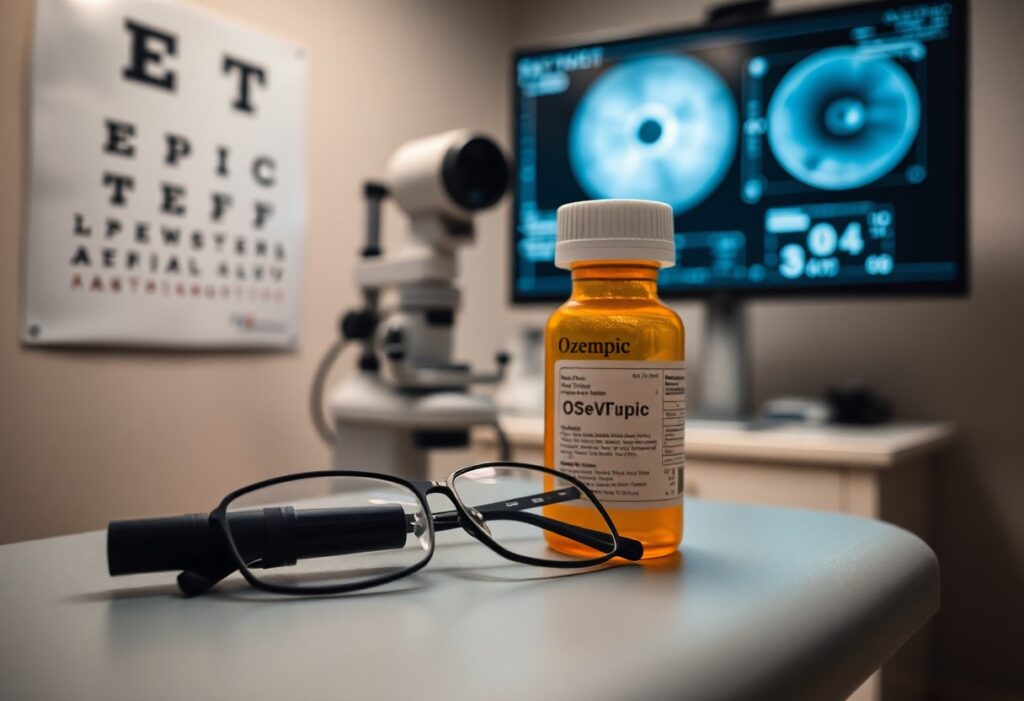
Reviewing the Recent Observational Studies Linking Semaglutide to NAION
Studies reported case clusters and observational signals associating semaglutide with NAION; you should treat these signals as a call for careful risk discussion with your prescriber rather than definitive proof.
Understanding the Pathophysiology of Optic Nerve Infarction
Pathology centers on ischemia of the optic nerve head from impaired microvascular perfusion; you face greater risk when perfusion drops acutely.
Mechanisms include small-vessel disease, a congenitally crowded optic disc and drops in systemic perfusion that produce an optic nerve infarction; you should note that rapid weight loss, nocturnal hypotension or medication effects that lower blood pressure can worsen low perfusion, although a direct causal link with semaglutide remains under study.
Identifying High-Risk Demographics for Ischemic Ocular Events
Demographics with higher NAION risk include older adults, people with diabetes, hypertension, sleep apnea and a small optic disc; you should flag these before starting GLP-1 therapy.
Populations with a prior NAION episode in the fellow eye carry a markedly increased chance of bilateral involvement, so you should obtain a baseline ophthalmic exam (optic disc photos and visual fields) and discuss alternatives with your clinician, and seek immediate care for any sudden visual change.
Common Ocular Side Effects Reported by Ozempic Users
You may experience blurred or fluctuating vision, refractive shifts, increased light sensitivity, or dry eyes after starting Ozempic; these effects are reported by some users. Have your eyes evaluated if symptoms persist, and seek immediate care for sudden vision loss or severe eye pain.
Managing Refractive Changes and Fluctuating Visual Acuity
If you notice fluctuating focus or prescription shifts after beginning Ozempic, wait until your blood sugar stabilizes before updating your glasses; your eye care provider can advise temporary measures, contact lens adjustments, or an updated refraction and discourage premature prescription changes.
Addressing Increased Sensitivity to Light and Photophobia
Photophobia can make bright environments intolerable; use sunglasses, photochromic lenses, brimmed hats, and screen filters, and apply lubricating drops for comfort. Contact your eye specialist if you experience persistent light intolerance, worsening vision, or severe ocular pain.
Exposure to bright light often signals surface irritation, intraocular inflammation, or retinal sensitivity; your provider will perform a slit-lamp and dilated exam to identify the cause. You may receive topical anti-inflammatories, tinted lenses, or desensitization strategies, and presentations with sudden vision loss require emergency evaluation.
Chronic Dry Eye Syndrome and Tear Film Instability Post-Injection
Dry eye after injections can cause grittiness, burning, and fluctuating vision; start preservative-free artificial tears, increase deliberate blinking, and use a humidifier. If symptoms persist, your eye doctor can prescribe anti-inflammatory therapies or consider punctal plugs, especially when you have persistent visual disturbance or pain.
Treatment begins with assessment of tear production, osmolarity, and inflammation; your specialist may order MMP-9 testing and recommend topical cyclosporine or lifitegrast, punctal occlusion, omega-3 supplementation, or autologous serum for refractory cases. If you notice marked vision change or severe pain, seek urgent ophthalmic care.

Identifying Red Flags: When Vision Changes Become an Emergency
Recognizing Sudden, Painless Vision Loss in One or Both Eyes
If you experience sudden, painless loss of vision in one or both eyes, treat it as a medical emergency and seek immediate care; this can indicate retinal artery occlusion or stroke, so call emergency services or go to the ER without delay.
The Clinical Significance of New Floaters, Flashes, or Dark Spots
New floaters, flashes, or a growing dark curtain across your field can signal vitreous hemorrhage or retinal detachment; you should get an urgent retinal exam because timely treatment can preserve vision.
Any sudden increase in floaters or flashes accompanied by a shadow or curtain effect suggests a retinal tear or detachment; your eye doctor will dilate your pupils, perform a detailed retinal exam and often order an ocular ultrasound or OCT to confirm, and emergency treatment within hours may be required to save sight.
Detecting Distortions in Central Vision and Metamorphopsia
Notice if straight lines look wavy, letters warp, or central vision blurs-these changes often point to macular edema or ischemia, so seek prompt retinal specialist review since early treatment improves outcomes.
Central distortion (metamorphopsia) frequently reflects macular involvement such as fluid, ischemia, or neovascular change; your clinician will likely use an Amsler grid, OCT and possibly fluorescein angiography to evaluate, then recommend injections, laser, or urgent referral-fast assessment can limit permanent central vision loss.
Vision Problems After Ozempic? Here’s What to Do Next
Act quickly when you notice visual changes while on Ozempic: stop driving, sit or lie down, and avoid straining your eyes. If you have sudden vision loss, flashes, or many new floaters, treat this as an emergency and contact your healthcare team immediately.
Protocol for Contacting Your Prescribing Endocrinologist
Call your prescribing endocrinologist’s office and explain that you’re experiencing new visual disturbances on Ozempic; describe symptoms, timing, and blood sugar changes. Request same-day advice and ask if you should stop the medication pending evaluation.
The Necessity of an Urgent Referral to a Retinal Specialist
Seek an urgent retinal evaluation if you have sudden vision loss, flashes, or a curtain-like shadow; retinal problems can progress quickly and may require immediate intervention to protect your sight.
An urgent referral connects you with a retinal specialist for a dilated exam, optical coherence tomography (OCT), and possible retinal laser or surgery; bring a copy of your recent glucose readings and medication list so the specialist can assess whether Ozempic-related changes or diabetic retinopathy are involved.
Documenting Symptom Onset, Duration, and Severity for Clinical Review
Note exact symptom onset, duration, severity, and any activity or blood sugar readings at the time; this concise timeline helps clinicians prioritize and decide on urgent referral or treatment.
Include timestamps, clear symptom descriptions (blurred vision, floaters, field loss), photos of visual disturbances if possible, and recent A1c or glucose log entries; provide these to both your endocrinologist and retinal specialist to guide diagnosis and management.
Diagnostic Procedures for Evaluating Medication-Induced Eye Issues
The Role of Optical Coherence Tomography (OCT) in Macular Assessment
Optical coherence tomography (OCT) gives you high-resolution cross-sections of the macula so your clinician can spot retinal swelling, thinning, or fluid pockets related to Ozempic; seek urgent care if OCT shows subretinal fluid or rapid structural change.
Utilizing Fluorescein Angiography to Detect Vascular Leakage
Fluorescein angiography visualizes retinal circulation so your doctor can detect leaking vessels or capillary nonperfusion; leakage near the macula demands prompt intervention.
During the test, dye is injected intravenously and serial photos reveal where blood is escaping or failing to perfuse; this guides treatments like focal laser or intravitreal injections and alerts you to risk of permanent vision loss while providing a clear map to guide effective therapy.
Formal Visual Field Testing to Map Optic Nerve Function and Deficits
Formal perimetry quantifies peripheral and central vision so your clinician tracks optic nerve function and defect progression; sudden field loss or expanding scotomas require immediate evaluation.
Perimetry tests like Humphrey visual field let you and your provider see patterns-central, arcuate, or diffuse-that distinguish optic neuropathy from retinal causes, guide further imaging or referral, and determine if you need urgent medication review or neuro-ophthalmology input when fields worsen.
Therapeutic Interventions for Retinopathy and Macular Edema
Intravitreal Anti-VEGF Injections to Control Vascular Proliferation
Anti-VEGF injections reduce abnormal vessel growth and macular swelling; you may need monthly doses initially with extended intervals later. Expect rapid vision stabilization in many cases, but watch for infection and elevated intraocular pressure as potential complications.
Panretinal Photocoagulation (Laser Therapy) for Advanced Complications
Laser photocoagulation treats peripheral ischemia to lower VEGF and neovascular drive; you should plan multiple sessions to reduce severe vision loss, though it can cause peripheral field constriction and reduced night vision.
- You’ll receive treatment when new vessels or persistent hemorrhage threaten central vision.
- You can expect fewer vitreous hemorrhages and a lower risk of tractional detachment after successful sessions.
- You must accept possible peripheral vision loss and follow-up for retreatment or macular edema management.
Panretinal Photocoagulation: Key Points
| Indication | Proliferative retinopathy with neovascularization |
| Primary Benefit | Reduces risk of severe central vision loss |
| Main Risks | Peripheral field constriction, reduced night vision, possible need for repeat treatment |
Treatment typically targets widespread ischemia so you see regression of neovascularization over weeks; post-laser monitoring is necessary because recurrent bleeding or worsening macular edema may require combined anti-VEGF or surgical measures.
Surgical Management Options for Vitreous Hemorrhage or Detachment
Vitrectomy removes blood and tractional membranes to clear media and allow retinal repair; you may need gas or silicone oil and face risks such as infection and cataract, but surgery can be vision-saving.
When hemorrhage persists or the retina detaches, your surgeon will perform pars plana vitrectomy, repair tears, and relieve traction; postoperative positioning and prompt follow-up determine outcomes, so seek early referral for best prognosis.
Long-Term Prognosis and Expectations for Visual Recovery
Statistical Likelihood of Vision Stabilization After Initial Worsening
Studies show that after initial Ozempic‑related worsening, about half to two‑thirds of patients experience stabilization or partial recovery once glycemic control improves; you should expect variable outcomes based on diabetes duration, baseline retinopathy, and treatment speed.
Timeline for Recovery Following Adjustments in Glycemic Management
After adjusting glucose and stopping offending agents, many patients see visual improvement within weeks to months, with noticeable gains by 3 months for most reversible ischemic changes.
Recovery timelines vary widely. You may see quick improvement in days if macular edema resolves, while nerve or ischemic injuries often take 3-12 months to stabilize. Rapid glucose lowering can exacerbate vision loss. Work with your clinician and an ophthalmologist to pace adjustments and monitor recovery closely.
Understanding the Irreversibility of Certain Optic Nerve Injuries
Some optic nerve injuries are permanent, leaving lasting field loss or reduced acuity despite treatment; you should get urgent evaluation to determine reversibility potential.
Permanent optic nerve damage reflects loss of axons and retinal ganglion cells that generally cannot regrow, so outcomes are limited to preventing further decline and maximizing function. You should expect interventions-strict glycemic control, intraocular pressure management, corticosteroids where indicated-to reduce risk of progression. Consider low‑vision services if central vision remains impaired.
Vision Problems After Ozempic? Here’s What to Do Next
The Critical Role of Blood Pressure Control in Retinal Health
Monitor your blood pressure closely while on GLP‑1 therapy; uncontrolled hypertension can worsen retinal edema and bleeding. You should aim to maintain target values with medication, diet, and regular checks to protect retinal vessels.
Nutritional Support and Supplements for Strengthening the Blood-Retinal Barrier
Include foods rich in lutein, zeaxanthin, omega‑3s, vitamins C and E, and zinc; lutein and zeaxanthin support the blood‑retinal barrier. You can use supplements if dietary intake is low but consult your clinician first.
Consider prioritizing dietary sources-leafy greens, eggs, oily fish, nuts-and an AREDS2‑style supplement when deficiency exists; evidence shows antioxidants and omega‑3s help preserve barrier integrity. You must discuss doses with your provider because high‑dose supplements can interact with medications or increase bleeding risk, so coordinate with your ophthalmologist and primary care.
Lifestyle Modifications: Smoking Cessation and Its Impact on Ocular Safety
Quit smoking to reduce oxidative stress and microvascular harm; smoking speeds retinal vessel damage and raises risk of vision loss. You should use proven cessation aids and support for best outcomes.
Seek a structured quit plan that includes counseling, nicotine replacement, or prescription therapies; stopping smoking lowers progression risk for retinal disease within months. You should also coordinate cessation with your diabetes and eye care teams to manage withdrawal, weight changes, and medication adjustments while preserving ocular safety on GLP‑1 therapy.
Patient Advocacy and Reporting Adverse Events
How to File a Report via the FDA Adverse Event Reporting System (FAERS)
Report vision changes to the FDA through FAERS (MedWatch); you can file online or by phone, include medication name, onset date, detailed symptoms and photos to document serious eye problems.
Navigating Insurance Coverage for Specialized Ocular Diagnostic Testing
Ask your insurer about coverage and any prior authorization required for OCT, fluorescein angiography, or retinal specialist visits; provide your clinician’s report to lower out-of-pocket exposure.
Check policy details for imaging limits, required CPT codes, and appeal windows; you can submit a physician-written letter, urgent-test requests, and receipts to support an expedited decision and reduce out-of-pocket costs.
Accessing Peer Support Groups for Patients Navigating Medication Side Effects
Join online forums or local groups where you can share symptoms, treatment experiences, and questions; collective accounts often highlight patterns that help you push for timely care and peer support.
Learn to vet groups by checking moderator credentials, privacy policies, and whether clinicians participate; you can use anonymized logs or screenshots from groups to corroborate reports when filing official complaints.
Summing up
With this in mind, you should stop Ozempic and seek urgent eye and medical evaluation if you notice sudden vision changes; document symptoms, inform your prescriber, and follow recommended testing and treatment to protect sight while weighing medication options with your clinician.
FAQ
Q: Can Ozempic (semaglutide) cause vision problems?
A: Ozempic has been associated with reports of blurred vision and worsening diabetic retinopathy in some patients. Evidence links rapid improvement in blood glucose to short-term worsening of preexisting diabetic retinopathy, and GLP-1 receptor agonists like semaglutide have been observed in some studies to coincide with progression in people who already have retinopathy. New, sudden visual symptoms are not a common side effect for everyone, but patients with existing diabetic eye disease carry higher risk and require closer monitoring.
Q: What visual symptoms should prompt immediate medical attention?
A: Sudden loss of vision, rapid worsening of blurriness, new floaters, flashes of light, a curtain or shadow over part of the visual field, or severe distortion of vision are symptoms that require urgent evaluation. Mild, stable blurring that develops slowly still warrants prompt contact with your diabetes provider or an eye specialist, but the acute symptoms listed above should trigger emergency ophthalmic assessment because they can indicate retinal detachment, vitreous hemorrhage, or rapidly progressing diabetic macular edema.
Q: I started Ozempic and now my vision is worse. What steps should I take right away?
A: Contact the clinician who prescribed Ozempic immediately and describe the timing and nature of your vision changes. Arrange an urgent dilated eye exam with an ophthalmologist or retinal specialist. Do not stop or change your diabetes medication without consulting the prescriber, unless instructed to do so by a clinician. If you experience sudden severe vision loss or the other acute warning signs, go to the emergency department or an eye emergency clinic for same-day evaluation.
Q: Are vision changes caused by Ozempic reversible, and what treatments are available?
A: Many vision problems related to diabetic retinopathy or macular edema can be treated effectively if identified early. Treatments include intravitreal anti-VEGF injections (for macular edema), focal or panretinal laser therapy, corticosteroid injections or implants in selected cases, and surgical intervention for vitreous hemorrhage or retinal detachment. Persistent or untreated damage can lead to permanent vision loss, so timely diagnosis and treatment greatly improve the chance of recovery or stabilization.
Q: How can I reduce my risk of vision problems while taking Ozempic?
A: Obtain a comprehensive dilated eye exam before starting Ozempic if you have diabetes, and schedule regular follow-up exams as recommended by your eye doctor-typically annually, more often if retinopathy is present. Inform your diabetes and eye care teams about any vision changes immediately. Work with your healthcare providers to avoid overly rapid drops in blood glucose when possible and to tailor diabetes therapy if you have active proliferative retinopathy or macular edema. If significant eye disease exists, your clinician may consider alternative therapies or closer ophthalmic monitoring while using GLP-1 receptor agonists.


