
Just because you used Ozempic and noticed vision changes, you should know vision loss has been reported. You can pursue legal options and potential compensation; this guide explains steps, evidence, and timelines.
Key Takeaways:
- Allegations: Plaintiffs claim Ozempic (semaglutide) use has been linked to worsening diabetic retinopathy and sudden vision loss in some cases.
- Medical evidence: Proving causation typically requires a clear timeline, ophthalmology records, imaging, and expert testimony tying symptoms to the drug or rapid glucose changes.
- Legal steps: Preserve prescriptions and medical records, report the adverse event to FDA MedWatch, and consult an attorney experienced in pharmaceutical or mass-tort cases.
- Potential claims: Lawsuits may assert failure to warn, defective design, or negligence against the manufacturer, seeking medical expenses, pain and suffering, and lost income.
- Timing and outcomes: Statutes of limitations differ by state; cases can resolve through settlement, dismissal, or trial, with expert discovery shaping case strength.
Understanding Ozempic and Its Impact on Ocular Health
This section explains what you need to know about Ozempic’s links to ocular harm, focusing on vision loss, timing, and reported retinal events.
The Mechanism of Action of Semaglutide in the Body
Semaglutide activates GLP-1 receptors to lower glucose and reduce weight, but you should know it alters fluid and blood sugar dynamics that can affect the retina; rapid glycemic shifts are linked to transient or worsening vision.
Historical Context of GLP-1 Receptor Agonists and Side Effects
GLP-1 receptor agonists have a history of gastrointestinal and pancreatitis concerns, and you should be aware that rare ocular reports emerged as use expanded; regulators and studies continue to assess potential retinal risks.
It is important to understand how Ozempic Cause Your Vision Loss may impact your eye health and legal rights.
Early trials and post-marketing surveillance revealed weight loss and glycemic benefits, while you and other patients later reported visual disturbances, prompting case reports and ongoing investigations into whether GLP-1 drugs directly cause retinal damage or unmask preexisting diabetic retinopathy.
Distinguishing Between Common Side Effects and Severe Complications
Common effects you may see include nausea or mild visual blurring during glucose shifts, but severe complications like sudden vision loss, hemorrhage, or retinal detachment require urgent evaluation and possible legal consideration.
When you experience new or worsening vision changes, clinicians distinguish transient glycemic-related blurring from progressive retinal disease using exams and imaging; document timing, medications, and symptoms to support medical care and any legal claims.
The Scientific Link Between Semaglutide and Optic Nerve Damage
Studies have examined how semaglutide’s vascular and hemodynamic effects might stress the optic nerve, and you should weigh emerging reports that link GLP-1 agonists to episodes of optic ischemia and vision loss in susceptible patients.
Analyzing Recent Studies on Non-Arteritic Anterior Ischemic Optic Neuropathy (NAION)
You will find case series, registry analyses, and FAERS reports showing a temporal association between semaglutide use and NAION, particularly in patients with small optic discs or existing vascular disease, although definitive causation remains unresolved.
How Ozempic May Affect Blood Flow to the Optic Disc
Clinical observations link GLP-1 receptor agonists to changes in blood pressure and volume status that can reduce perfusion to the optic disc, placing you at higher risk for ischemic injury if you have compromised ocular circulation.
Semaglutide can lower systemic blood pressure, alter renal sodium handling, and cause rapid weight loss or dehydration, all of which may reduce optic nerve head perfusion; if you have a crowded optic disc or diabetes-related microvascular disease, your risk of ischemia may increase and warrant prompt ophthalmic evaluation.
How semaglutide may reduce optic disc perfusion
| Mechanism | Potential effect for you |
|---|---|
| Systemic BP reduction | Lower perfusion pressure to optic nerve head |
| Volume loss/dehydration | Transient hypoperfusion during acute illness or weight loss |
| Microvascular susceptibility | Higher chance of NAION if optic disc is small or diabetic |
Comparative Risks: Ozempic vs. Traditional Diabetes Medications
Compared to metformin or insulin, you gain cardiovascular and weight benefits with semaglutide but also face a distinct, though rare, ocular safety signal for NAION that older agents lack in the literature.
While older diabetes drugs have long-term safety data and no consistent link to optic ischemia, semaglutide carries both significant cardiometabolic advantages and emerging ocular reports; you should balance benefits and the small potential for vision risk with your clinician, especially if you have ophthalmic risk factors.
Comparative ocular risk overview
| Medication class | Ocular risk / notes for you |
|---|---|
| Semaglutide (GLP-1 RA) | Case reports/FAERS signal for NAION; rare but reported |
| Metformin | No consistent link to optic ischemia; eye benefits via glycemic control |
| Insulin | Longstanding use; risks relate to hypoglycemia rather than optic ischemia |
| Sulfonylureas | Established safety profile; ocular ischemic events uncommon |
Identifying the Types of Vision Impairment Linked to Ozempic
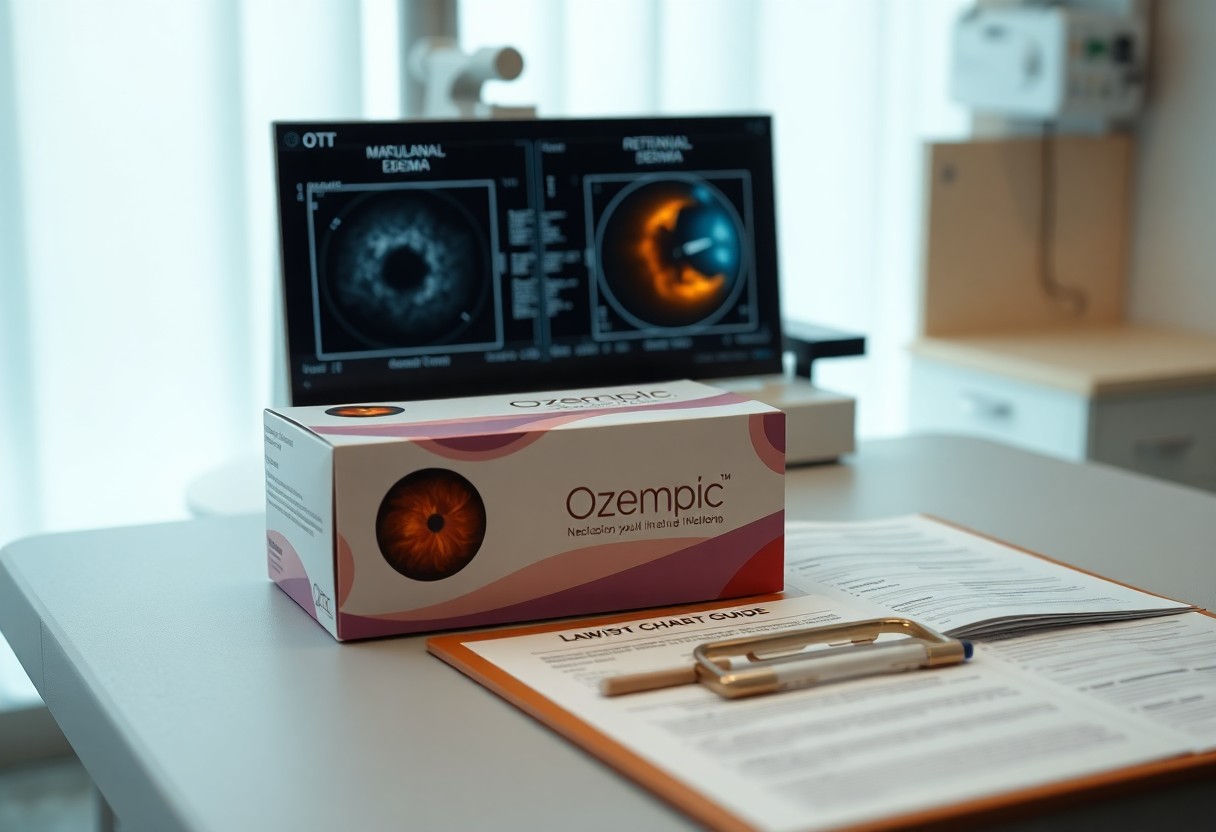
Types of vision problems linked to Ozempic include vascular occlusions, optic nerve ischemia, hemorrhagic events, accelerated diabetic retinopathy, and macular changes that can cause permanent vision loss, so you must monitor any visual changes closely.
- Retinal artery occlusion – sudden, painless, severe loss
- Ischemic optic neuropathy – acute optic nerve dysfunction
- Vitreous hemorrhage – floaters and obscured retina
- Diabetic retinopathy progression – rapid new hemorrhages and exudates
- Macular edema / color changes – chronic blurring and hue alteration
| Retinal artery occlusion | Sudden, painless loss with high risk of permanent vision loss |
| Ischemic optic neuropathy | Acute optic nerve ischemia causing visual field defects |
| Vitreous hemorrhage | Floaters and acute blur that can obscure retinal exam |
| Diabetic retinopathy progression | Rapid worsening of hemorrhages/exudates threatening central vision |
| Macular edema / color changes | Chronic blurring and altered color perception affecting daily tasks |
Sudden, Painless Vision Loss in One or Both Eyes
Painless sudden loss in one or both eyes can signal retinal artery occlusion or ischemic optic neuropathy, so you must seek immediate ophthalmic evaluation to reduce the risk of permanent vision loss.
Rapid Progression of Diabetic Retinopathy Symptoms
Accelerated worsening of diabetic eye disease while on Ozempic may produce new hemorrhages and sudden visual decline, so you should obtain prompt retina specialist assessment to limit lasting damage.
Clinical reports show you may experience swift retinal deterioration after rapid glycemic shifts or medication changes, so if you notice increased floaters, dark spots, or fast loss of acuity you should document onset, get retinal imaging, and notify both your ophthalmologist and prescribing clinician because early intervention can reduce the chance of severe, permanent vision loss.
Chronic Blurred Vision and Changes in Color Perception
Chronic blurred vision and altered color perception often reflect progressive macular edema or photoreceptor dysfunction, so you should monitor subtle shifts and report them early to avoid long-term impairment.
Persistent symptoms such as muted reds, difficulty distinguishing hues, or fluctuating acuity should prompt you to request color testing, optical coherence tomography (OCT), and fluorescein angiography, since these exams can identify treatable macular swelling before irreversible damage occurs.
Thou must consult an attorney if you suspect Ozempic-related vision loss to preserve evidence and protect your legal rights.
Critical Factors That Increase the Risk of Vision Loss
- Your hypertension or prior cardiovascular disease
- High dosage or long-term use of Ozempic
- Genetic retinal vulnerabilities and narrow ocular anatomy
- Coexisting diabetic retinopathy or dehydration
- Concurrent vasoconstrictive medications
- Documented link to vision loss and potential lawsuit claims
Pre-existing Cardiovascular Conditions and Hypertension
If you have long-standing hypertension or prior cardiovascular disease, you face an elevated risk of vision loss while taking Ozempic, since vascular compromise can accelerate retinal injury and complicate recovery.
The Impact of High Dosage and Long-term Usage Duration
Higher doses of Ozempic and rapid titration increase your probability of ocular ischemia and sudden vision loss, especially if you combine treatment with vasoconstrictive medications or dehydration.
Prolonged exposure to high-dose Ozempic can sustain microvascular stress, making small retinal vessels fragile; you should monitor vision closely, report flashes or field defects immediately, and consult your prescriber about dose reduction to lower the risk of permanent damage.
Genetic Predispositions and Underlying Ocular Anatomy
Inherited factors and your underlying ocular anatomy, such as narrow angles or fragile retinal vasculature, can amplify the impact of Ozempic on vision and raise your odds of severe vision loss.
Perceiving subtle visual change early matters because a family history of retinal disease or congenital vascular variants increases susceptibility; you may require ophthalmic imaging, genetic counseling, or altered diabetes therapy to reduce the likelihood of irreversible vision loss and to strengthen your position in an Ozempic-related lawsuit if harm occurs.
Recognizing Early Warning Signs and Symptoms
You must report new visual disturbances to your healthcare provider immediately, since rapid or worsening vision changes can indicate serious retinal or optic nerve injury.
Noticing Changes in Peripheral Vision and Visual Fields
Peripheral vision changes may appear as missing edges, tunnel-like narrowing, or blind spots; any sudden loss of peripheral sight requires urgent ophthalmic assessment.
Difficulty Adapting to Low Light or Dim Environments
Night and dim lighting may make it hard for you to adjust, increasing glare sensitivity and delayed vision recovery; persistent difficulty adapting can signal underlying retinal problems.
If moving from bright to dark leaves you temporarily blind or causes prolonged blurring, tell your provider and seek an eye exam; such symptoms can reflect functional retinal damage or neuro-ophthalmic effects. You should request a dilated exam and visual field testing, because early detection improves treatment options.
Persistent Floaters or “Shadows” in the Line of Sight
Floaters or drifting “shadows” that suddenly increase or are accompanied by flashes of light can indicate retinal tears; seek immediate medical care to reduce the risk of permanent loss.
While common in aging eyes, new or worsening floaters-especially with a curtain-like shadow or light flashes-are signs you need same-day retinal evaluation; these patterns often precede detachments. You should document onset, frequency, and any associated vision loss to aid clinicians and support medical or legal follow-up, and act without delay.
Step-by-Step Guide to Seeking a Medical Diagnosis
| Step | Action |
|---|---|
| Immediate Actions | Seek urgent evaluation, document symptom onset, avoid driving, and preserve medication records and packaging. |
| Specialist Consultation | Schedule a neuro-ophthalmology appointment and bring a complete medication and symptom timeline. |
| Diagnostic Testing | Request MRI with orbit protocol, OCT, and formal visual field testing; obtain copies of images and reports. |
Immediate Actions to Take Following Sudden Vision Changes
If you experience sudden vision changes, seek emergency care for severe loss, avoid driving, note the exact time symptoms began, and keep a clear list of current medications and dosages for clinicians.
Consulting with Neuro-ophthalmologists for Specialized Testing
You should book a consultation with a neuro-ophthalmologist, bring your medication history and symptom timeline, and ask which specialized tests are appropriate.
Request a comprehensive evaluation that includes a targeted history, pupil and eye-movement exams, optical coherence tomography (OCT), formal visual field testing, and selective bloodwork; your clinician can identify and document optic neuropathy, inflammatory or vascular causes and provide findings useful for treatment and legal documentation.
Securing Diagnostic Imaging and Visual Field Assessments
Contact your provider to obtain an MRI of the orbits and brain with contrast and a Humphrey or equivalent visual field test, stressing urgency and providing complete medication details.
Obtain high-resolution MRI with dedicated optic nerve sequences, OCT scans, and formal visual fields; request written reports and digital image copies, and ensure the radiology and ophthalmology reports specifically address signs of ischemic or inflammatory optic nerve injury for both clinical decisions and potential legal evidence.
Determining Your Legal Eligibility for an Ozempic Lawsuit
Assessing whether you qualify hinges on your medical records, prescription history, and evidence connecting Ozempic to your vision loss; you should gather documentation and expert assessments to evaluate a viable claim.
Establishing Proof of Prescription and Consistent Usage
Gather pharmacy receipts, prescription labels, and refill histories to prove you were prescribed and consistently used Ozempic, since authenticated prescription records strongly support your case.
Demonstrating a Direct Link Between Medication and Injury
Proving causation requires expert medical opinions that tie your vision loss to Ozempic and exclude other causes, supported by diagnostic tests and clinical notes.
Experts will review your timeline, retinal imaging, ophthalmology reports, and medication history to establish a temporal association and rule out alternatives like diabetic retinopathy; you benefit from expert medical testimony that explains how Ozempic plausibly caused your injury to a judge or jury.
Understanding the Statute of Limitations for Product Liability
Check your state filing deadlines and when the clock started, because missing the statute of limitations can permanently bar your claim despite strong evidence.
Each state sets different deadlines and some apply a discovery rule-the period may begin when you first learned your vision loss was linked to Ozempic; you should document diagnosis dates and consult counsel promptly to preserve your right to sue.
Pros and Cons of Joining a Mass Tort vs. Individual Lawsuit
Deciding whether you join a mass tort or file an individual suit requires weighing shared resources and consolidated discovery against your desire for personalized control and full compensation for severe harms like vision loss.
Pros and Cons at a Glance
| Pros | Cons |
|---|---|
| Shared discovery reduces duplication and expense | Loss of individual control over settlement decisions |
| Pooled expert witnesses strengthen proof | Potential for smaller per-person payouts |
| Lower upfront legal costs through cost-sharing | Longer timelines to resolution in consolidated proceedings |
| Stronger negotiating leverage against defendants | Settlements may be standardized, not tailored to you |
| Consistent legal strategy across similar claims | Public filings may increase privacy and publicity risks |
| Administrative support from lead counsel | Administrative fees and deductions from settlements |
| Favors plaintiffs with limited individual resources | Less personalized attention to unique medical facts |
| Potential for larger aggregate recovery | Risk that your severe injury is underweighted in group |
Advantages of Collective Resources in Multidistrict Litigation (MDL)
Shared MDL work gives you access to expert witnesses and pooled evidence, cuts legal costs, and strengthens bargaining position so you can pursue claims that might be unviable alone.
Potential Drawbacks Regarding Settlement Control and Timelines
Agreeing to an MDL often means you cede day-to-day control over settlement terms, endure a longer timeline, and face standardized payouts that may not reflect your unique injury severity.
When you join an MDL, lead counsel negotiates common settlements for the group, so you may have limited input on timing or specific terms. That structure can delay compensation and yield a smaller individualized award even if your vision loss is more severe than the group average, leaving you with less tailored recovery.
Evaluating the Benefits of Filing an Independent Personal Injury Claim
Filing independently lets you control legal strategy, demand individualized damages, and seek a verdict that reflects your specific losses, though you shoulder full costs and discovery burdens.
If you pursue a solo claim, you can hire counsel focused solely on your case, select specialists to document your vision loss, and press for a larger, individualized recovery. You must prepare for higher upfront expenses, the full burden of discovery, and the uncertainty of a single-case outcome.
Essential Tips for Documenting Your Medical and Financial Evidence
- medical records
- pharmacy records
- vision loss
- symptom journal
- financial statements
Maintaining a Comprehensive Journal of Symptoms and Treatments
You should record daily symptoms, medication doses, appointment dates, and any sudden vision changes to create a clear timeline linking treatments to outcomes.
Organizing Pharmacy Records and Medical Billing Statements
Collect pharmacy receipts, refill logs, and itemized bills that show prescriptions for Ozempic, dates, and costs to document treatment chronology and expenses.
Organize digital and paper copies in a single folder, labeling each entry by date, prescriber, and drug name; request full pharmacy printouts and insurance EOBs to capture payments and copays. If you find gaps, ask pharmacies for historical refill reports and insurers for itemized billing, and include prescription dates, batch numbers, and notes showing dose changes or adverse reactions.
Recording the Impact of Vision Loss on Daily Life and Employment
Track missed shifts, reduced hours, task limitations, and costs for assistive devices or transport to quantify the economic and personal effects of vision impairment.
Any detailed entries should include dates, employer notices, wage statements, witness observations, photos of home or work adaptations, HR correspondence, and receipts for accommodations to clearly demonstrate lost income and increased expenses tied to vision loss.
Did Ozempic Cause Your Vision Loss? Lawsuit Guide
| Step | What it means for you |
|---|---|
| Initial Case Evaluation and Retaining Expert Legal Counsel | You and your attorney review medical records, prescriptions, timelines, and statute of limitations to decide whether to file and which experts to retain. |
| The Discovery Phase: Gathering Evidence from Pharmaceutical Manufacturers | You pursue subpoenas and document requests for internal manufacturer documents, trial data, and adverse-event reports to build causation evidence. |
| Navigating Settlement Negotiations and Trial Preparations | You evaluate settlement offers against trial risks while preparing expert testimony, witness preparation, and trial exhibits to maximize recovery. |
Initial Case Evaluation and Retaining Expert Legal Counsel
You should have your medical records and prescriptions reviewed by an attorney experienced in drug-injury claims; they will assess causation, timelines, statute of limitations, and whether manufacturer liability is plausible before you commit to filing.
The Discovery Phase: Gathering Evidence from Pharmaceutical Manufacturers
Your attorney will issue subpoenas and requests for production to obtain internal manufacturer documents, clinical trial data, and adverse event reports that could link Ozempic to your vision problems.
Evidence gathering requires you to work with retained experts to analyze adverse-event databases, depose company scientists, and seek production of internal safety assessments; expect contested motions over confidentiality and court orders to compel hidden internal studies.
Navigating Settlement Negotiations and Trial Preparations
Settlement talks allow you to weigh offers against trial risks; your attorney will use collected evidence to demand compensation for medical costs, lost wages, and permanent vision impairment.
Trial preparation forces you to prepare witnesses, refine expert testimony, and simulate cross-examinations while your counsel negotiates; document discovery can pressure manufacturers into larger settlement offers or expose them at trial.
Evaluating Potential Compensation and Settlement Damages
You should compile all evidence of loss-medical records, bills, pay stubs, and witness statements-to present a coherent claim that ties your vision loss to Ozempic and estimates total damages for negotiation or trial.
Calculating Economic Losses from Medical Bills and Lost Wages
Calculate your documented out-of-pocket medical bills, prescription and therapy costs, assistive devices, and lost wages, then add projected lost earning capacity using pay stubs and expert estimates to support a monetary claim.
Assessing Non-Economic Damages for Pain and Suffering
Assess your physical pain, emotional distress, loss of enjoyment, and diminished independence from vision loss, documenting daily impacts and testimony to strengthen claims for pain and suffering.
Consider factors courts and insurers weigh: severity and permanence of your injury, effect on daily activities, medical testimony linking Ozempic to harm, and comparable jury awards; use diaries, family statements, and expert evaluations to justify a higher non-economic valuation.
Future Care Costs for Permanent Vision Impairment
Estimate long-term expenses for vision rehabilitation, assistive technology, home modifications, and potential attendant care, using current invoices and expert projections to quantify ongoing financial need.
Project lifetime costs with a life-care planner and vocational expert to calculate present value of future care, including probability-adjusted need for ongoing therapy, adaptive devices, and lost future earnings; emphasize documented estimates to secure adequate future care compensation.
Common Challenges and Defense Strategies in Drug Litigation
You should expect defendants to raise procedural and scientific hurdles that complicate proving Ozempic caused your vision loss, so your legal team must prepare to dismantle label, causation, and regulatory defenses with targeted evidence and expert testimony.
Manufacturer Arguments Regarding “Failure to Warn” Labels
When you sue, manufacturers will claim their warnings were adequate and foreseeable risks were disclosed, pointing to FDA-approved labels and prescribing information to defeat a failure-to-warn theory.
Scientific Disputes Over Causation and Pre-existing Conditions
If you press causation, expect defense experts to blame comorbidities or coincidental pathology, making specialist records and timing critical to your case.
As you gather evidence, defense teams will attack study design, highlight conflicting epidemiology, and emphasize pre-existing eye disease to create doubt; you must secure ophthalmology notes, medication timelines, and persuasive expert reports that establish a clear temporal link and biological plausibility to overcome those attacks.
Navigating Federal Pre-emption and Regulatory Compliance Issues
Before you move forward, anticipate arguments that federal approval pre-empts state-law claims, requiring you to challenge whether FDA actions actually barred your suit or whether warnings remained insufficient.
Should you face a pre-emption defense, compile FDA submissions, post-market reports, and internal communications to show the manufacturer knew or should have known about risks despite approval; retain regulatory experts to explain why federal compliance did not automatically immunize the company and to distinguish express from implied pre-emption for the court.
How to Choose the Right Legal Representation for Your Case
Selecting a firm with specific pharmaceutical product liability experience, strong connections to medical experts, and a proven track record will give you the best chance of holding manufacturers accountable for Ozempic-related vision loss.
Identifying Firms with Experience in Pharmaceutical Product Liability
Investigate whether the firm has handled drug-injury cases, worked with ophthalmology experts, and taken manufacturers to trial; firms with product liability experience handle complex medical evidence and regulatory issues more effectively.
Understanding Contingency Fee Structures and Legal Costs
Review whether the firm charges no upfront fees, what percentage they take from recovery, and whether they advance case expenses so you understand potential deductions; clear terms protect you from unexpected bills.
Ask about typical percentages (often between 25-40%), whether fees increase for trials or appeals, and how the firm treats shared or “common benefit” costs in mass torts. Insist on a detailed, written fee agreement that explains who pays litigation expenses, how liens and medical bills are handled, and whether you’ll owe fees if the firm recovers nothing.
Assessing the Firm’s History of Success in Mass Tort Litigation
Examine the firm’s mass tort verdicts, settlements, and roles in MDLs or bellwether trials; documented results and appellate experience indicate the capacity to pursue complex, high-stakes pharmaceutical claims.
Check public court records, press releases, and client references for examples of bellwether wins, MDL leadership, and trial verdicts. Verify disciplinary records with the state bar and ask whether the firm can connect you with past clients or provide documented case outcomes before you commit.
To wrap up
Following this guide, you can assess whether Ozempic likely caused your vision loss, gather medical records and expert opinions, and contact an attorney to explore legal options and protect your rights.
FAQ
Q: What is the basis for an Ozempic vision loss lawsuit?
A: Plaintiffs allege that semaglutide (Ozempic) caused new or worsening diabetic retinopathy and other vision injuries and that the manufacturer failed to warn, was negligent in design or marketing, or breached warranties. Legal claims commonly include product liability (design defect, failure to warn), negligence, and wrongful death where applicable. Causation must be proven with medical records, expert testimony linking drug exposure to the eye injury, and a consistent timeline between drug use and symptom onset.
Q: What evidence do I need to support a claim?
A: Medical records showing vision changes, ophthalmologist diagnoses, imaging studies (OCT, fundus photos), and prescriptions proving Ozempic use are core evidence. Expert reports from ophthalmologists and pharmacologists are required to connect the drug to the injury. Copies of drug labels, marketing materials, FDA safety communications, and adverse event reports strengthen a case. A clear timeline showing start of medication, dose changes, and onset or worsening of ocular symptoms is required.
Q: How long do I have to file a lawsuit?
A: Statute of limitations varies by state and by the cause of action; many states set two- or three-year limits for personal injury claims but deadlines can differ for product liability. Discovery rules can extend filing deadlines if the injury was not immediately apparent, and tolling may apply in special circumstances. Consult an attorney promptly to preserve evidence and avoid missed filing deadlines.
Q: What damages can I seek if Ozempic caused my vision loss?
A: Recoverable compensatory damages may include past and future medical expenses, costs for eye surgeries and therapies, lost wages and lost earning capacity, and compensation for pain, suffering, and loss of quality of life. Punitive damages could be available if the manufacturer acted with malice or reckless indifference. Settlement values or jury awards depend on injury severity, strength of causal evidence, and jurisdictional limits.
Q: Should I join a class action or file my own lawsuit?
A: Choice depends on individual facts, injury severity, and legal strategy. Multidistrict litigation (MDL) or mass tort coordination often centralizes discovery while preserving each claimant’s right to pursue individual trials or settlements. Class actions are less common for individualized personal injury claims because medical circumstances vary. Consult a lawyer experienced in pharmaceutical litigation to evaluate whether consolidation, an individual lawsuit, or another approach offers the best chance for recovery.


