With the increasing awareness of PFAS water contamination and its alarming health impacts, you may wonder how long it takes to resolve a mass tort case surrounding this issue. The timeline for these cases can vary widely due to factors like the complexity of the claims, the number of affected individuals, and the legal strategies employed. Generally, you can expect a period of months to several years for resolution, but understanding the process can help you navigate through your rights and potential compensation more effectively.
Key Takeaways:
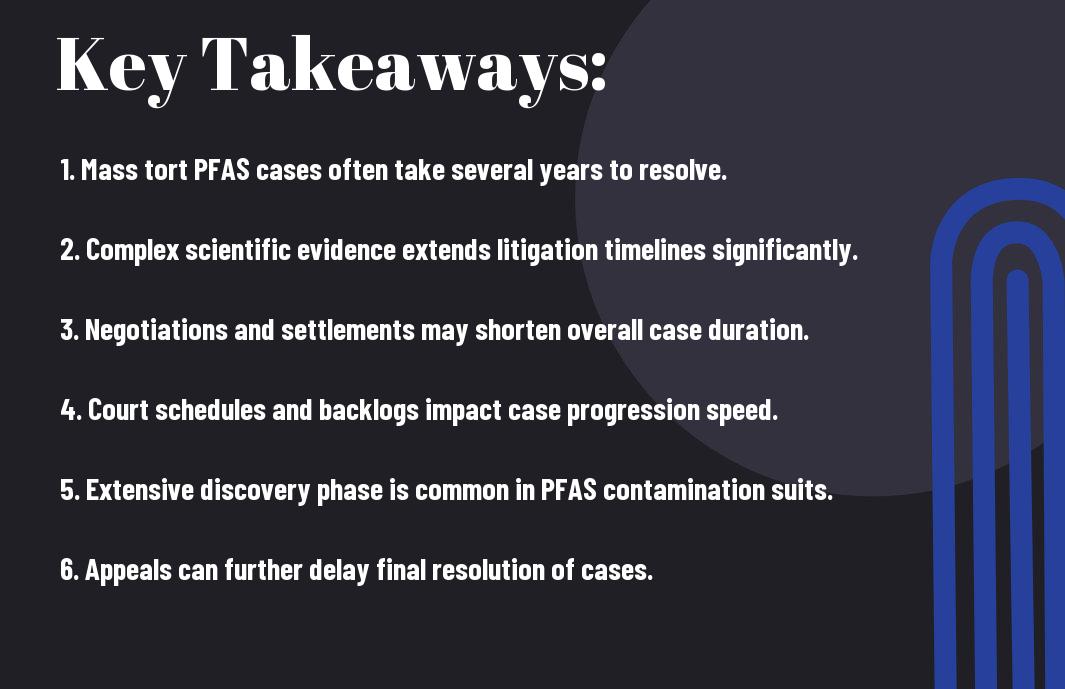
- The timeline for resolving a mass tort PFAS water contamination case can vary significantly, often taking several years due to the complexity of the legal process.
- Pre-trial phases, including discovery and depositions, can be time-consuming and may last for months or even years before reaching trial or settlement.
- Settlement negotiations can greatly impact the length of the case, as parties may take time to agree on compensation for affected individuals.
- Factors such as the number of plaintiffs, the extent of contamination, and the legal strategies employed can all influence the duration of the case.
- Judicial efficiency and court schedules can also affect how quickly a case moves through the legal system, potentially leading to delays.
Understanding Mass Tort Cases

Before delving into the specifics of PFAS water contamination, it is important to establish a clear understanding of mass tort cases and how they function. These cases often arise when a large group of individuals has been harmed by the same entity, usually due to a product or environmental exposure, leading to a common legal grievance.
Definition of Mass Tort
Cases involving mass torts combine individual claims into one larger lawsuit, allowing for a more streamlined process in court. These types of cases typically emerge from incidents such as environmental disasters, pharmaceutical negligence, or defective products that affect a significant number of people. In your situation, the mass tort framework is particularly relevant when addressing issues like PFAS contamination, where numerous individuals exposure to toxic chemicals can lead to severe health consequences.
Key Characteristics of Mass Tort Cases
Any mass tort case is defined by several key characteristics that distinguish it from other types of lawsuits. Generally, mass torts involve a substantial number of plaintiffs who have suffered similar injuries or damages, yet each plaintiff maintains their own distinct claim and potential compensation. Additionally, mass tort cases tend to focus on specific defendants responsible for the harm, making it crucial for you to establish a clear link between your injury and the actions of the liable party.
Mass tort cases often share common legal and factual issues, which allows for greater efficiency in the judicial process. The outcome of one case may significantly impact the others, facilitating a more equitable resolution for all plaintiffs involved. Understanding these characteristics will empower you as you navigate your own experience in pursuing justice. Additionally, the sheer scale of such cases can lead to extensive investigations and legal battles, often resulting in lengthy timelines before final resolutions are reached. Be prepared for this reality as you advocate for your rights.
PFAS Water Contamination Overview
Clearly, PFAS (per- and polyfluoroalkyl substances) have emerged as a significant environmental concern due to their widespread presence and persistent nature. These synthetic chemicals are used in a variety of industries, ranging from consumer products to firefighting foams. Due to their unique properties, PFAS are resistant to heat, water, and oil, making them desirable for manufacturing, yet this same durability contributes to their persistence in the environment and human body. Understanding PFAS and their impact on water sources is imperative for recognizing the potential health risks and advocating for cleaner water in your community.

What are PFAS?
What you need to know about PFAS is that they encompass a large group of man-made chemicals, many of which have been linked to adverse health effects. Research has indicated that exposure to PFAS can lead to various health problems, including liver damage, immune system effects, and increased risk of certain cancers. It is important for you to be aware of these substances as they can accumulate over time in your body and in the environment, posing risks even at low levels of exposure.
Sources of PFAS Contamination
By understanding the sources of PFAS contamination, you can better protect yourself and your community. Mainly, PFAS enter the environment through industrial discharges, the use of products containing these chemicals, and the application of treated wastewater in agriculture. Additionally, firefighting foams used at military bases and airports have contributed significantly to PFAS pollution in groundwater and surface waters. Moreover, many everyday items, such as non-stick cookware, water-repellent clothing, and food packaging, can leach PFAS into your water supply.
A significant concern surrounding PFAS contamination is its ubiquity in your environment. A recent study indicated that almost 99% of the U.S. population has detectable levels of PFAS in their blood, primarily due to the widespread use of these substances in consumer products and industrial processes. As these harmful chemicals can migrate into water supplies, you might unknowingly consume contaminated drinking water, leading to potential health risks. Taking action to understand the sources and advocate for changes in policy and cleanup efforts can help ensure a safer water supply for you and your loved ones.
Factors Influencing Case Duration
Keep in mind that various elements can significantly impact the duration of your mass tort PFAS water contamination case. Understanding these factors can help you set realistic expectations. Here are some elements that may influence how long your case takes to resolve:
- Complexity of evidence
- Number of plaintiffs
- Defendant’s response
- Legal representation
- Jurisdiction
Any of these components can extend the timeline of your case, making it necessary to stay informed and prepared for the journey ahead.
Complexity of Evidence
Among the most significant factors in your PFAS water contamination case is the complexity of the evidence involved. In many instances, proving the source and effects of contamination can require extensive documentation, expert testimony, and scientific data. If the evidence is intricate, it may lead to longer discovery periods, as both sides work to compile, analyze, and present their findings effectively.
Moreover, if there are disputes regarding the credibility of the evidence, this may lead to protracted litigation as each party presents its arguments. The more complex the evidence, the longer it can take to reach a resolution, emphasizing the importance of thorough preparation and experienced legal counsel in your case.

Number of Plaintiffs
Below the complexity of evidence, the number of plaintiffs involved can greatly influence the duration of your case. A mass tort case typically includes many individuals affected by the same issue, and as more plaintiffs are added, the case often becomes more intricate. Each plaintiff may have unique circumstances, requiring tailored evidence and legal strategies that can further prolong the process.
Case dynamics can shift depending on how many plaintiffs are participating. While a larger group can strengthen the case by showing widespread impact, it can also lead to extended negotiations and potential delays as attorneys coordinate their efforts and address different legal nuances for each individual. Working with a skilled attorney is necessary to navigate the complexities that arise from a higher number of plaintiffs.
Legal Process Timeline
Now that you’ve initiated your understanding of mass tort PFAS water contamination cases, it’s imperative to explore into the timeline of the legal process. This timeline will vary based on numerous factors, including the complexity of the case, the jurisdiction, and the number of plaintiffs involved. By familiarizing yourself with this timeline, you can better navigate the various stages and understand what to expect as your case progresses.
Initial Filing and Pleadings
Around the beginning of your case, you will likely encounter the initial filing and pleadings phase. This often involves the plaintiffs, which may include individuals affected by PFAS contamination, filing a complaint against the responsible parties, such as manufacturers or municipalities. The defendants then respond with their pleadings, stating their defenses or counterclaims. Depending on how the parties involved approach this stage, the filing and initial exchanges can take anywhere from a few weeks to several months to complete.
Discovery Phase
One of the most significant stages in any mass tort case is the discovery phase. Here, both parties engage in extensive information gathering to build their respective cases. Discovery can include the exchange of documents, expert witness testimonies, and depositions, often resulting in a thorough examination of evidence related to PFAS contamination and its effects on the affected communities. This phase typically lasts a number of months, but it can extend for years, especially if the case involves multiple jurisdictions or a vast number of plaintiffs.
Even though the discovery phase may feel overwhelming, it is vital for establishing the evidence needed to support your case. During this time, you might uncover important documentation that reveals patterns of negligence or responsibility regarding the PFAS contamination. Collectively, these findings will help strengthen your claim and provide a foundation for potential settlements or court decisions. Maintaining clear communication with your legal team during this phase can enhance your understanding of the evidence as well as the potential outcomes moving forward.
Settlement Possibilities
Once again, it’s important to understand that in mass tort cases, particularly those involving PFAS water contamination, the potential for settlement can offer a path toward resolution. Settlements can provide you with compensation for injuries or damages without the lengthy process of going to trial. In many cases, defendants may prefer to negotiate a settlement to avoid the uncertainty and expense of litigation, which can extend for years. You might find that many parties involved come to the table to discuss settlements as soon as some evidence of liability is established, as the cost of litigation can often outweigh the potential benefits of fighting a case in court.
When Settlements Occur
At the outset of a mass tort case, settlements may occur once defendants realize the strength of the claims against them and the overwhelming evidence in favor of the plaintiffs. Often, this happens after initial discovery processes reveal key information. As the case progresses, particularly if it is clear that juries are likely to side with affected plaintiffs, you may begin to see settlement negotiations ramping up. This can happen at various stages during litigation, whether it’s after the filing of the complaint, during discovery, or even during trial.
Settlement Agreements and Their Impact
Among the many factors that influence how settlement agreements are structured, the extent of the contamination, the number of claimants, and the actual damages suffered by you play significant roles. Settlement agreements typically outline the total financial compensation you may receive as well as any non-monetary considerations such as remedial action plans to ensure future safety. Once these agreements are reached and signed, you might find that they can offer peace of mind, ensuring that your needs are addressed while avoiding the unpredictability of a courtroom verdict.
Even after settlement agreements are executed, you should be aware that they may have lasting impacts on your situation. For instance, accepting a settlement often means waiving your right to pursue further claims related to the same issue, which can be a double-edged sword. While you may receive immediate compensation that addresses your current hardships, it is vital to consider the potential future effects of PFAS exposure that may not yet be fully understood or manifested. Therefore, it’s important to carefully evaluate any settlement offer against the backdrop of your long-term health and financial stability.
Case Outcomes and Verdicts
After navigating the complexities of a mass tort PFAS water contamination case, you may be wondering about the potential outcomes and the likelihood of achieving a favorable verdict. Case outcomes can vary significantly depending on numerous factors, including the strength of the evidence presented, the damages calculated, and the tactics employed by both parties. In many instances, settlements occur prior to trial, often allowing you to receive compensation more quickly, while in other situations, the case may proceed to a trial where a verdict will ultimately determine the outcome.
Trial Factors and Duration
Case length can be influenced by several key factors in a trial setting, including:
- Complexity of the underlying science regarding PFAS contamination
- Number of plaintiffs participating in the mass tort
- Judicial efficiency and timeline of local courts
- Preparation required for expert witness testimonies
Recognizing the myriad of factors at play, it is important to understand that trial duration can extend from several months to several years before achieving a final resolution.
Appeals Process
Among the possibilities following a trial verdict is the appeals process, which allows either party to challenge the court’s decision. If a verdict is received, you or the opposing party may file for an appeal if there are grounds to believe that legal errors were made during the trial. Keep in mind that the appellate process can prolong resolution even further, often taking months or years for a final determination on the appeal, depending on the jurisdiction and the complexity of the issues involved.
It is important to understand the appeals process as it can significantly impact your case. An appeal can lead to a reversal of the lower court’s decision or even a remand for a new trial, which may bring about additional uncertainties. Each state has its own rules regarding appeals, which may affect your timeline and overall resolution. As you consider these aspects, be aware that engaging legal counsel experienced in PFAS litigation is vital to navigate your options effectively.
To Wrap Up
Upon reflecting on the timeline for resolving a mass tort PFAS water contamination case, it’s important to understand that these cases can be quite complex and time-consuming. You may find that the duration of such a case largely depends on several factors, including the number of affected individuals, the extent of the contamination, and the willingness of the responsible parties to negotiate or go to trial. Often, the initial stages, which involve gathering evidence and building your case, can take months or even years, with some cases dragging on for several years before reaching a resolution.
<pUltimately, while the pursuit of justice in a PFAS contamination case can be lengthy, remaining informed about the process can empower you to navigate through the difficulties ahead. You should consult with legal experts who specialize in environmental law to keep abreast of your rights and options at every stage. Having experienced counsel can make a significant difference in how effectively and efficiently your case proceeds, helping you to seek the compensation and accountability you deserve.
FAQ
Q: How long does it typically take to resolve a mass tort PFAS water contamination case?
A: The timeline for resolving a mass tort PFAS water contamination case can vary significantly based on several factors. Generally, these cases can take anywhere from a few months to several years to reach a resolution. Key aspects influencing the timeline include the complexity of the case, the number of plaintiffs involved, the extent of contamination, and the willingness of parties to negotiate settlements. Additionally, cases may involve extensive discovery processes, expert testimony, and possibly trials, all of which can extend the time required for resolution.
Q: What stages must a PFAS water contamination case go through before resolution?
A: A mass tort PFAS water contamination case typically goes through several stages before reaching a resolution. Initially, there is an investigation stage where evidence is gathered to establish the extent of contamination and its effects on affected individuals. This is followed by the filing of claims, which may involve the consolidation of cases into a single multi-district litigation (MDL). Discovery is the next phase, where both plaintiffs and defendants exchange information and evidence. Settlement discussions often occur during this stage, but if an agreement can’t be reached, cases may proceed to trial. The complexity of these stages can prolong the overall process.
Q: How do settlements affect the duration of a PFAS contamination case?
A: Settlements can significantly affect the duration of a PFAS contamination case. If parties are willing to negotiate and reach a settlement early in the process, the case can be resolved much faster than if a trial is necessary. Settlements may involve discussions regarding compensation for damages, medical expenses, or necessary remediation efforts for contaminated sites. However, if parties are not able to agree on terms or if the defendants contest liability vehemently, the case may extend into a lengthy trial process, further delaying resolution. Overall, the settlement dynamics play a key role in how quickly these cases can conclude.