It’s possible you could experience sudden vision loss after Ozempic; reports link the drug to rare but serious eye events, so seek immediate medical attention and discuss stopping the medication with your doctor; early treatment may improve outcomes.
Key Takeaways:
- Ozempic (semaglutide) has been linked in some studies to increased diabetic retinopathy complications and isolated reports of sudden vision loss.
- Patients with pre-existing diabetic retinopathy or long-standing poorly controlled diabetes face higher risk of vision worsening after treatment initiation.
- Rapid lowering of blood glucose after starting a GLP-1 receptor agonist is a proposed mechanism for acute retinopathy worsening and vision changes.
- Baseline eye exam and close retinal monitoring during the first months of therapy are recommended; report new visual symptoms immediately and seek urgent ophthalmology evaluation.
- Risk-benefit discussion with the prescribing clinician should guide continued use, with consideration of alternative therapies or adjusted glucose targets if serious retinal changes occur.
Understanding GLP-1 Receptor Agonists: The Rise of Semaglutide
The physiological mechanisms of Ozempic and Wegovy
Semaglutide mimics GLP‑1, slowing gastric emptying, enhancing insulin release and suppressing glucagon so you see lower glucose and appetite suppression; watch for rare but serious visual changes that require urgent evaluation.
Historical context of GLP-1 therapy in metabolic health
Early GLP‑1 research from the 1990s set the stage for therapies that gave you effective glucose lowering and weight loss, while also revealing rare safety signals that clinicians now monitor.
Clinical development progressed from exenatide to liraglutide and then semaglutide, with approvals for diabetes first and obesity later, so you now encounter weekly injectable semaglutide (Ozempic/Wegovy) and an oral option; you should be aware of labeled risks like pancreatitis, thyroid C‑cell warnings and emerging reports of visual symptoms that demand prompt assessment.
Global adoption trends for diabetes and weight management
Adoption of semaglutide has surged worldwide for diabetes and obesity, meaning you may see more prescriptions but also face off‑label use and supply shortages that impact access and safety.
Markets in the United States and Europe show the fastest uptake, with insurers and national formularies varying widely, so you should expect inconsistent availability, rising demand driving price pressures, and increased off‑label prescribing; maintain vigilance for rapid uptake, inequitable access and any ocular or systemic adverse events you experience while on therapy.
Sudden Blindness After Ozempic? What You Need to Know
Overview of the Harvard/Mass Eye and Ear observational study
Harvard/Mass Eye and Ear published an observational report that identified increased reports of ocular events among semaglutide users; you should note the cases include instances of sudden vision loss but the study did not establish causality and data remain limited.
Analyzing the statistical significance of the reported findings
Statistical signals in the study were modest, with wide confidence intervals and small event counts, so you should treat p-values cautiously because adjustments and low power can limit statistical certainty.
Analyzing the statistical significance of the reported findings – more detail
You should focus on effect sizes, confidence intervals, and whether results persisted after adjusting for diabetes severity, prior ocular disease, and other confounders; look for pre-specified analyses, adequate event counts for power, dose-response patterns, and independent replication, since reliance on unadjusted or exploratory comparisons raises the risk of false-positive signals.
Differentiating between anecdotal reports and peer-reviewed data
Anecdotes and social-media accounts can alarm you but differ from systematic research; anecdotal reports cannot determine incidence or causation, while peer-reviewed data use defined methods to estimate risk.
Differentiating between anecdotal reports and peer-reviewed data – more detail
When you assess individual reports, verify medical documentation, temporal proximity to drug initiation, and exclusion of alternative causes; prioritize studies with validated outcomes, control groups, and adjudicated events, and if you experience visual changes seek immediate ophthalmic evaluation and report the event to your clinician and safety authorities.
Defining NAION: Non-Arteritic Anterior Ischemic Optic Neuropathy
NAION is a sudden, painless loss of vision caused by impaired blood flow to the front of the optic nerve; you often have a small, crowded optic disc and vascular risk factors. It is not caused by giant cell arteritis, so you need urgent evaluation to identify reversible risks and rule out other causes.
Pathophysiology of “Eye Strokes” and optic nerve damage
Ischemia of the short posterior ciliary circulation leads to axonal swelling and infarction at the optic nerve head, and you may develop a swollen or pale optic disc with permanent axonal loss if blood flow is not restored.
Clinical presentation and common symptoms of sudden vision loss
You typically notice sudden, painless vision loss in one eye-often on waking-with sectoral visual field defects, reduced color perception, and possible afferent pupillary defect; seek urgent assessment for prompt diagnosis.
Field testing will reveal altitudinal or arcuate defects and you may retain central acuity early, so formal visual field and optic nerve exams are vital to distinguish NAION from retinal or neurologic causes; early ophthalmic and systemic evaluation helps identify modifiable vascular risks.
Long-term prognosis and current limitations in treatment options
Recovery is unpredictable: some patients gain partial vision over months while others sustain permanent visual field loss; currently available treatments provide limited, inconsistent benefit.
Treatment options are mostly supportive, and you should focus on aggressive control of blood pressure, diabetes, and sleep apnea while arranging neuro-ophthalmic follow-up and low-vision rehabilitation; ongoing trials seek effective therapies, but no proven treatment reliably restores lost vision today.
The Biological Connection: How Ozempic May Affect the Eye
Evidence links GLP-1 agonists like Ozempic to ocular effects via metabolic and hemodynamic changes, so you should consider reports tying rapid glucose reductions to retinal ischemia and optic nerve compromise even though underlying mechanisms remain incompletely defined.
Potential vascular impacts of rapid glycemic fluctuations
Vascular instability from abrupt glucose drops can stress retinal microcirculation, so you may see worsening diabetic retinopathy or new retinal ischemia after initiating Ozempic.
The role of blood pressure changes and ocular perfusion pressure
Blood pressure shifts with GLP-1 therapy can change ocular perfusion, meaning you might suffer transient hypoperfusion and optic nerve ischemia, particularly if you take antihypertensives or have autonomic neuropathy.
Altered systemic pressure combined with intraocular pressure sets ocular perfusion pressure, so you must monitor symptoms: modest drops in perfusion can trigger permanent vision loss in susceptible eyes, prompting clinicians to review medication timing, volume status, and autonomic function when vision changes occur.
Investigating GLP-1 receptor expression in human ocular tissues
Studies assessing GLP-1 receptor presence in the eye are sparse and inconsistent, so you cannot assume a direct receptor-mediated ocular effect from Ozempic based on current evidence.
Molecular work using immunohistochemistry and RNA sequencing is needed because you deserve clarity on whether Ozempic can act directly on retinal cells or the optic nerve; confirmation of ocular GLP-1 receptors would make direct pharmacologic effects a plausible mechanism and alter monitoring approaches.
Assessing the Risk: Identifying Vulnerable Patient Profiles
If you screen patients for Ozempic-related vision risk, prioritize baseline retinopathy, recent rapid glucose changes and medication interactions; patients with existing retinal disease face the greatest immediate concern.
Demographic breakdowns: The influence of age and medical history
Age matters: you should note that older adults and those with long diabetes duration face higher risk, while younger, obesity-only patients usually have less baseline retinal damage but still require monitoring.
Comparing risk profiles: Type 2 Diabetes vs. Obesity patients
Type of diagnosis shapes risk: you treating type 2 diabetes patients often see more microvascular damage than in obesity patients, increasing the likelihood of vision-threatening events.
Examine differences closely: you should expect higher baseline retinal vulnerability in type 2 diabetes due to microvascular disease and glycemic swings, whereas obesity patients mainly risk ocular issues from rapid metabolic shifts during weight loss; both groups need tailored surveillance.
Risk Comparison: Type 2 Diabetes vs. Obesity
| Type 2 Diabetes | Obesity |
|---|---|
| Higher retinopathy prevalence Greater glycemic variability | Lower baseline retinal disease Risk largely from rapid metabolic changes |
| More frequent ophthalmic follow-up advised | Increase monitoring during rapid weight loss or glucose shifts |
| Often older with comorbidities | Often younger but may have hypertension |
The impact of pre-existing cardiovascular and renal conditions
Cardio and renal comorbidity amplify risk: you must recognize that pre-existing cardiovascular or kidney disease increases susceptibility to ocular complications and can alter drug handling.
When you manage patients with heart or kidney disease, anticipate altered drug clearance and compromised ocular perfusion; reduced renal function can prolong exposure and cardiovascular disease can worsen retinal ischemia, so coordinate care and increase vision surveillance.
Recognizing Warning Signs: Early Symptoms to Monitor
Monitor for abrupt changes in vision; if you experience sudden, painless vision loss or a curtain-like dimming, seek emergency ophthalmic evaluation within 24 hours.
Identifying painless, sudden changes in visual acuity
Notice if you lose clarity without pain-colors dulled, objects blurred, or a sudden drop in acuity in one eye; these signs can indicate ischemic optic neuropathy and require urgent attention.
Recognizing visual field defects and peripheral “shadows”
Spot any missing areas or a peripheral “shadow” creeping inward; if you notice a half-field loss or curtain effect, you may be experiencing optic nerve ischemia and must act quickly.
Peripheral shadows usually begin at the edge of your vision and progress; you may also notice a relative afferent pupillary defect (RAPD), decreased color perception, or a pale, swollen optic disc on exam. During evaluation you should expect confrontational field testing, Amsler grid checks, urgent fundoscopy, and possible formal perimetry to confirm the defect.
Distinguishing NAION symptoms from diabetic retinopathy
Compare sudden, unilateral, painless visual loss and altitudinal field defects (NAION) with the typically gradual, bilateral floaters, blurred vision, and retinal hemorrhages of diabetic retinopathy; use onset, laterality, and fundus findings to differentiate them.
Exam often shows optic disc swelling and sectoral pallor with altitudinal visual field loss in NAION, while diabetic retinopathy reveals microaneurysms, dot-blot hemorrhages, cotton-wool spots, and macular edema; you should get a dilated fundus exam and, if NAION is suspected, an urgent neuro-ophthalmology referral and immediate ocular assessment.
Comparative Analysis: Ozempic vs. Other Metabolic Medications
Comparative Summary
| Medication | Ocular risk / clinical notes |
| Ozempic (semaglutide) | Large outcome trials show metabolic and CV benefits; post‑marketing reports include visual events but no consistent causal link to sudden blindness. Monitor patients with diabetic retinopathy. |
| Mounjaro (tirzepatide) | Dual GIP/GLP‑1 with strong glycemic and weight effects; ocular safety data remain limited-watch for blurred vision and retinal changes in high‑risk patients. |
| Zepbound (tirzepatide for weight) | Similar profile to Mounjaro for ocular signals; reportable vision complaints are rare but you should consult if symptoms arise. |
| Older GLP‑1 agonists (liraglutide, exenatide) | Longer safety record with extensive data showing no confirmed association with sudden vision loss; some transient visual symptoms reported, especially with preexisting retinal disease. |
| SGLT2 inhibitors | Different mechanism and side‑effect profile; current evidence does not indicate major ocular toxicity related to these agents. |
Ocular side effect profiles of Mounjaro and Zepbound
Mounjaro and Zepbound deliver substantial metabolic gains, but ocular safety evidence is limited; you should monitor retinal status if you have diabetes, since isolated reports of visual disturbance exist though no definitive link to sudden blindness has been established.
Safety data regarding older generation GLP-1 agonists
Older GLP‑1s carry larger datasets that show clear benefits with only sporadic visual complaints; you will find no consistent evidence that they cause sudden vision loss, though retinal disease can worsen independently.
Clinical trials, population registries, and pharmacovigilance for older GLP‑1 agonists generally show limited ocular signals: most reported events involved progression of preexisting diabetic retinopathy or transient visual changes rather than acute ischemic blindness. You should have baseline retinal assessment if you have known retinopathy, and your clinician may intensify ophthalmic follow‑up during dose escalation; urgent evaluation is warranted for any abrupt vision change because timely intervention can prevent permanent damage.
Evaluating the risk-to-benefit ratio in chronic disease management
Assessing risk versus benefit asks you to weigh the proven cardiovascular and glycemic benefits against rare ocular events; discuss retinal status with your provider and maintain regular eye exams when initiating or increasing doses.
When choosing or continuing a GLP‑1 or tirzepatide agent you should consider individual factors-diabetes duration, existing retinopathy, blood pressure control, and concurrent therapies-and balance them with expected reductions in weight, A1c, and cardiovascular risk. You should obtain baseline ophthalmic evaluation, report new visual symptoms immediately, and seek emergency assessment for sudden vision loss so timely measures can be taken to reduce the chance of lasting harm.
Clinical Recommendations for Patients Starting Semaglutide
Establishing baseline ophthalmologic examinations
Schedule a comprehensive baseline ophthalmologic exam before starting semaglutide to document retinal status and visual acuity; disclose any history of diabetic retinopathy and report existing vision loss to guide monitoring.
Protocols for reporting visual disturbances to healthcare providers
If you notice blurred vision, flashes, floaters, or sudden vision loss, contact your prescribing clinician or ophthalmologist immediately and avoid driving until evaluated.
Contact your care team by phone at symptom onset, use emergency services for severe loss, record the exact time symptoms began and any recent medication or dose changes, and request expedited ophthalmology referral; early assessment can preserve vision.
Managing patient expectations regarding rare side effects
Understand that severe ocular events are rare, yet you should monitor vision daily during dose changes or rapid weight loss and report any new symptoms promptly.
Discuss risks, expected benefits, and clear reporting steps with your prescriber before initiating therapy, confirm follow-up intervals, and know that timely reporting usually allows prompt evaluation and management.
The Role of Rapid Glucose Lowering in Ocular Complications
Rapid reductions in blood sugar after starting agents like Ozempic can stress retinal vessels, and you may face increased risk of early worsening of diabetic retinopathy and even sudden vision loss if changes occur too fast without monitoring.
Understanding the “Early Worsening” phenomenon in diabetic eyes
You may see retinopathy worsen within weeks of a steep HbA1c fall; microaneurysms and capillary leakage can produce vision-threatening changes that require prompt retinal evaluation and possible treatment.
How intensive glycemic control impacts retinal microvasculature
Intensive glucose lowering can change retinal perfusion and osmotic balance, increasing capillary permeability or closure, so you need early ophthalmic monitoring to detect microvascular injury.
Clinically, sudden HbA1c drops trigger altered blood flow, endothelial dysfunction, and transient ischemia that raise VEGF and inflammation; you should arrange baseline and short-interval retinal exams because these processes can worsen edema, precipitate hemorrhages, and risk permanent vision loss if untreated.
Strategies for gradual titration to mitigate vascular stress
Slow, stepwise dose increases and modest HbA1c targets allow retinal circulation to adapt, lowering the chance of early worsening; you should coordinate changes with eye care for safer treatment.
Discuss a titration plan with your prescriber to limit weekly dose escalations, aim for controlled HbA1c decline over months, and schedule ophthalmology checks at baseline and early follow-up; you reduce risk by combining careful dosing with timely retinal surveillance and rapid response to any visual symptoms.
Navigating Media Coverage: Fact vs. Sensationalism
Analyzing “Blindness” headlines vs. actual clinical incidence rates
Headlines often label cases as “blindness,” but you should compare dramatic wording to clinical data: most media reports stem from isolated case reports or adverse-event lists, and true total blindness is rare compared with milder visual complaints.
Expert consensus from the American Academy of Ophthalmology
Experts at the American Academy of Ophthalmology note that reported events don’t prove causation; you should treat eye symptoms seriously and report them, since surveillance data and case reports remain limited.
The AAO emphasizes that many reported cases involved patients with preexisting diabetic retinopathy or rapid reductions in blood sugar; you should know that trial signals with semaglutide suggest worsening retinopathy may relate to rapid glycemic improvement rather than a direct drug toxic effect. Report any new vision changes to your clinician and to adverse-event systems.
Clarifying the distinction between total blindness and visual impairment
Distinguishing total loss of light perception from partial visual impairment matters because you might experience blurred vision, field loss, or floaters without being totally blind; total blindness is exceedingly uncommon while impairments are more frequently reported.
Clinical evaluation distinguishes causes such as retinal artery or vein occlusion, vitreous hemorrhage, or worsening diabetic retinopathy; you should seek emergency care for sudden severe vision loss, flashes, or a curtain-like defect, because these presentations demand urgent retinal or vascular assessment. Keep your regular eye exams and inform your prescriber about any changes.
Regulatory Oversight: FDA and Manufacturer Responses
Current status of Ozempic labeling and safety warning updates
Labeling for Ozempic now includes updated safety information noting reported visual events; you should watch for sudden vision loss, report symptoms immediately, and discuss risk-benefit with your prescriber.
Post-marketing surveillance and the role of the FAERS database
FAERS collects post-marketing reports you can track; rising case counts have prompted safety reviews and signal detection alerts for ocular events.
Reports in FAERS show varied timeframes between first dose and ocular symptoms, and you should review case narratives and dates to assess temporality, especially when sudden blindness is reported. Regulators and manufacturers analyze de-identified reports for patterns, but FAERS cannot prove causation, so signal evaluation relies on case detail, clinical data, and epidemiologic studies.
Global regulatory perspectives from the EMA and MHRA
European regulators (EMA) and the MHRA have issued safety communications and urged healthcare professionals to report serious visual events; you should follow local guidance and monitor for sudden vision changes.
Coordination between the EMA, MHRA, and FDA includes shared data reviews and harmonized risk communication; you should expect updated prescribing information and public advisories if evidence strengthens. Both agencies may require post-marketing studies from manufacturers, and international reporting helps detect rare but serious risks affecting patient safety.
Future Research Directions: Closing the Knowledge Gap
The necessity for prospective, randomized clinical trials
You need prospective randomized trials to determine whether GLP-1 agonists such as Ozempic raise risk of ischemic optic neuropathy or sudden vision loss, while controlling for diabetes severity and vascular comorbidities to establish causality and precise incidence.
Longitudinal studies on the long-term ocular safety of GLP-1s
Clinical longitudinal cohorts should track you for years to detect delayed effects of GLP-1 therapy on retinal and optic nerve health, using standardized visual metrics and imaging to identify rare but severe events early.
Prospective cohort studies should enroll diverse patients starting GLP-1 therapy and follow you with scheduled visual acuity, visual field testing, fundus photography, and optical coherence tomography (OCT) for at least five to ten years; predefined endpoints, centralized reading centers, and rapid adverse-event reporting will help detect low-frequency but high-impact ocular harms and guide clinical recommendations.
Exploring genetic predispositions to ischemic optic neuropathy
Genetic screening may reveal variants that place you at higher risk for ischemic optic neuropathy when exposed to GLP-1 therapies; case-control genomics and polygenic risk scoring could inform personalized prescribing and monitoring strategies.
Population-scale genome-wide association studies and targeted sequencing can identify alleles that increase your susceptibility to optic nerve ischemia after GLP-1 exposure; combining genomics with electronic health records and medication data enables gene-drug interaction analyses, so clinicians can offer personalized monitoring or alternative therapies to reduce the risk of preventable severe vision loss.
Practical Guidance for Current Ozempic Users
Essential questions to ask your endocrinologist and eye doctor
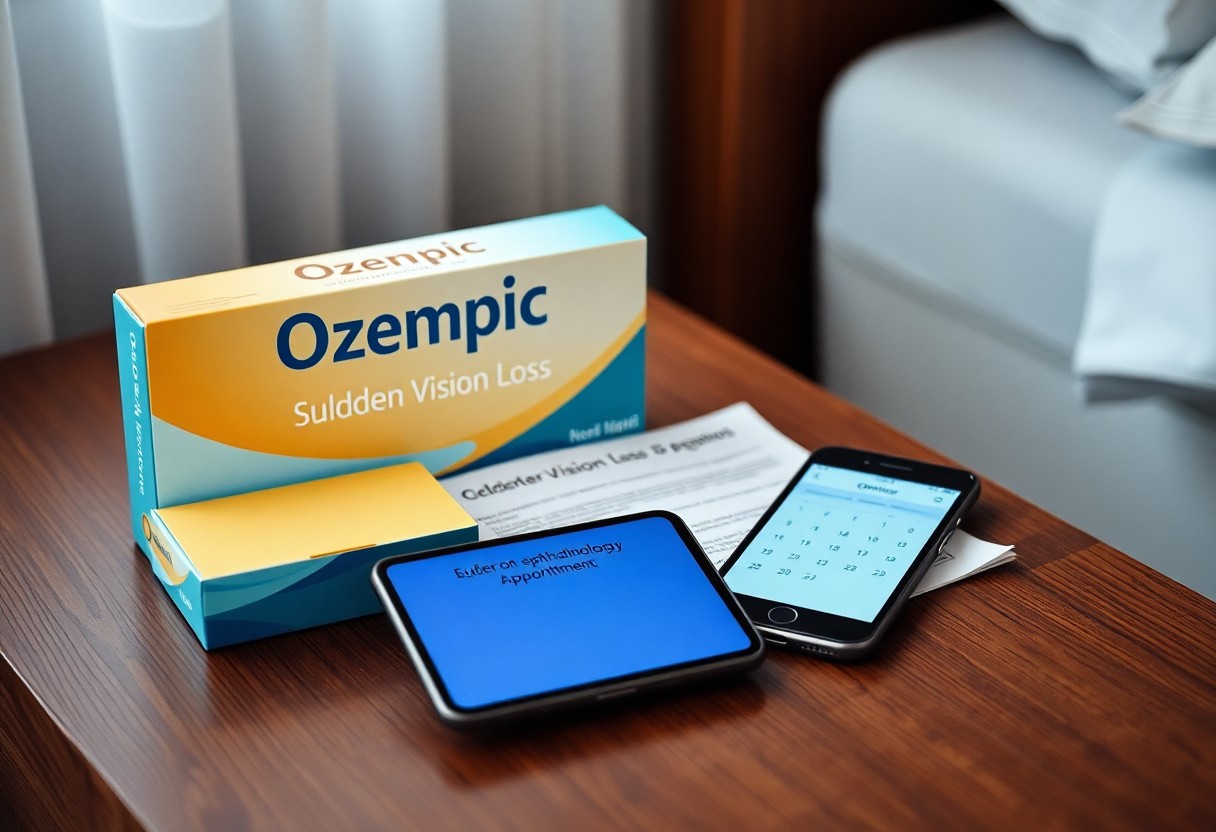
Ask your endocrinologist and eye doctor which symptoms require emergency care, whether your retinal exams should be advanced, and how to balance glycemic targets with ocular risk; seek immediate care for any sudden vision loss or new visual field defects.
Lifestyle modifications to support vascular and ocular health
Adopt smoking cessation, a Mediterranean-style diet, regular aerobic exercise, and tight blood pressure and glucose control to protect retinal circulation; quitting smoking and lowering blood pressure are especially beneficial for vascular and ocular health.
Include scheduled dilated retinal exams, daily home vision checks with an Amsler grid, and frequent communication between your specialists so changes are caught early; sudden central vision loss or new floaters require same-day evaluation. You should also optimize lipids, maintain healthy weight, limit alcohol, and monitor blood pressure and glucose closely while on treatment.
Criteria for pausing or discontinuing medication under supervision
Consider pausing Ozempic only if you develop new, unexplained severe visual symptoms, confirmed retinal ischemia, or if an eye specialist advises it; do not stop the medication without medical supervision.
Discuss a clear action plan with both specialists that defines objective triggers for temporary discontinuation-such as acute vision loss, documented retinal artery occlusion, or rapid unexplained visual field loss-and outlines alternative glycemic strategies during the pause; stopping abruptly without a replacement plan can risk hyperglycemia or other complications.
Summing up
The risk of sudden blindness after Ozempic is uncommon, but you should treat any abrupt vision change as an emergency: stop the medication, seek immediate medical care, inform your prescriber, and report the event to pharmacovigilance so risks can be assessed and managed.
FAQ
Q: Is sudden blindness a known side effect of Ozempic?
A: Reports of sudden complete blindness after Ozempic are extremely rare and not clearly established as a direct drug side effect. The semaglutide label and clinical studies have documented diabetic retinopathy complications, particularly in patients with pre-existing retinopathy who experience rapid improvements in blood glucose. A small number of case reports describe severe vision loss after starting semaglutide, but causation remains uncertain and other causes must be ruled out. Any new or worsening vision loss after initiating Ozempic requires immediate medical evaluation.
Q: What mechanisms might explain vision loss after starting Ozempic?
A: Rapid lowering of blood glucose can transiently worsen diabetic retinopathy, producing macular edema or vitreous hemorrhage that impairs vision. Vascular events such as retinal artery occlusion or ischemic optic neuropathy can cause abrupt vision loss and need urgent assessment. Inflammatory or allergic reactions are uncommon but possible, and systemic causes like stroke or medication interactions should be considered during evaluation.
Q: What symptoms should prompt urgent medical attention?
A: Loss of vision in one or both eyes, sudden severe blurring, a shower of floaters, flashes of light, or a curtain-like shadow moving across the field of vision require immediate care. Eye pain, new persistent headaches, unequal pupil size, or sudden double vision also warrant urgent assessment. Contact emergency services or an ophthalmologist without delay if these signs occur after starting Ozempic.
Q: How can patients lower the risk of vision problems when using Ozempic?
A: Patients with diabetes should obtain a comprehensive dilated retinal exam before beginning GLP-1 receptor agonist therapy if they have long-standing diabetes or known retinopathy. Schedule regular ophthalmic follow-up after initiation and monitor vision closely during the first months of therapy. Aim for gradual improvement in blood glucose rather than very rapid A1c reductions, and notify the prescribing clinician immediately about any visual changes so management can be adjusted promptly.
Q: What happens during evaluation and treatment if vision loss occurs on Ozempic?
A: Ophthalmic evaluation usually includes visual acuity testing, dilated fundus examination, optical coherence tomography (OCT), and fluorescein angiography when indicated. Treatment depends on the underlying cause and may include intravitreal anti-VEGF injections for macular edema or proliferative disease, laser photocoagulation, vitrectomy for vitreous hemorrhage, or systemic management for vascular or neurologic events. Stopping Ozempic alone will not reverse established retinal damage; medication decisions should be made collaboratively by the treating endocrinologist and ophthalmologist.