
It’s vital for you to understand the implications of PFAS water contamination and How To File PFAS water contamination lawsuit. These harmful chemicals, often found in firefighting foam and various consumer products, have been linked to serious health issues, including cancer and immune system damage. If you’re a victim of contamination, you may qualify for a mass tort claim, which consolidates numerous individual cases against responsible parties. This blog will guide you through the imperative aspects of pursuing a mass tort PFAS water contamination claim to protect your rights and seek compensation.
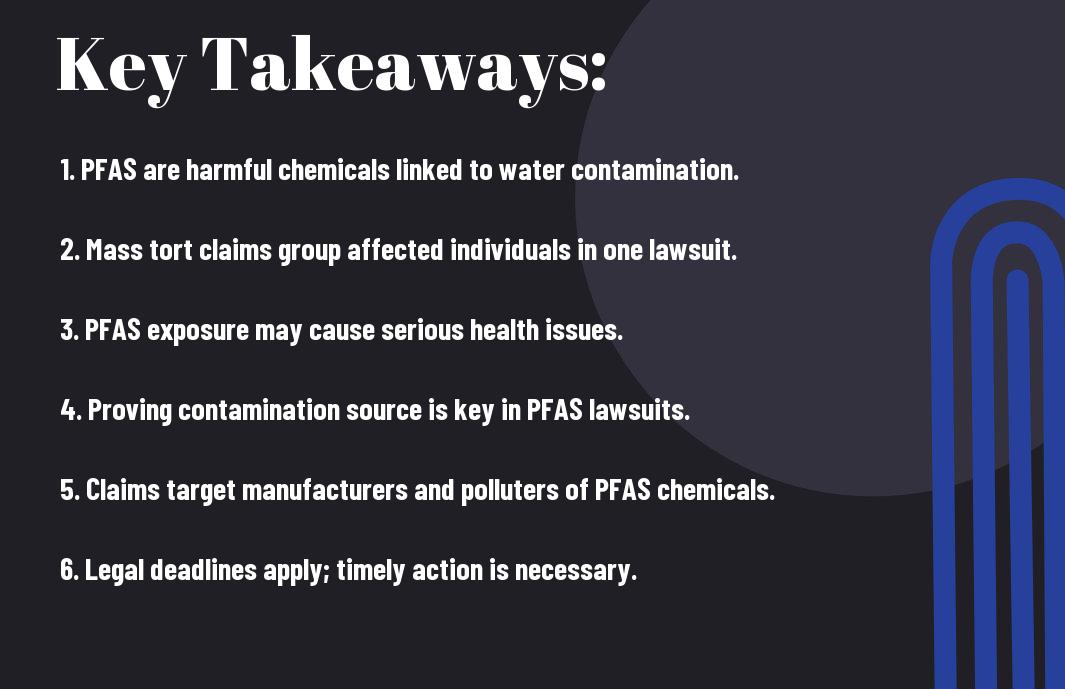
Key Takeaways:
- PFAS, or per- and polyfluoroalkyl substances, are a group of synthetic chemicals linked to various health issues, and mass tort claims have emerged due to widespread water contamination.
- In mass tort cases, affected individuals may seek compensation for medical costs, property damage, and other damages resulting from PFAS exposure.
- Litigation typically hinges on proving that companies were negligent in their production or disposal of PFAS, contributing to contamination in water supplies.
- Class actions may sometimes arise, bringing together many affected individuals under a unified claim, which can streamline the legal process.
- Potential plaintiffs should gather evidence of their exposure and any health-related impacts and consult with a legal expert to understand their rights and options for pursuing claims.
Understanding PFAS

Definition of PFAS
With your health and the environment at stake, it’s imperative to understand what PFAS are. PFAS stands for per- and polyfluoroalkyl substances, a group of human-made chemicals that have been used in a variety of industrial applications and consumer products since the 1940s. These substances are often referred to as “forever chemicals” because they do not break down easily in the environment and can persist indefinitely. Their unique chemical structure makes them resistant to heat, water, and oil, which is why you may find PFAS in items like non-stick cookware, water-repellent fabrics, and food packaging.
Sources of PFAS Contamination
An important aspect of PFAS is knowing where contamination can occur. These chemicals can enter your water supply from various sources, including industrial discharges, landfill leachate, and firefighting foam that has been used at airports and military sites. Additionally, agricultural runoff can also contribute to PFAS contamination, as certain fertilizers and pesticides contain these substances. Understanding these sources can empower you to take action and seek remedies if you suspect PFAS exposure.
Due to the widespread use of PFAS in numerous products and practices, contamination can occur in unexpected places. For instance, even if you live far from industrial areas, you might still be at risk because PFAS can migrate through soil and water systems. This makes it challenging to pinpoint exactly where the contamination originated, emphasizing the need for vigilance in monitoring your water quality. If you live near a known source of PFAS, be proactive in testing your water and seeking alternatives to minimize exposure.
Mass Tort Claims Overview
It is vital to understand that mass tort claims provide a legal avenue for individuals affected by similar injuries from a specific product or circumstance to seek compensation collectively. This legal approach is particularly relevant in situations involving widespread exposure to harmful substances, such as PFAS water contamination. By participating in a mass tort, you can present your unique case and circumstances while benefiting from the efficiencies of a coordinated legal process.
What is a Mass Tort?
Around the country, mass torts allow groups of individuals who have suffered damages from the same source—like PFAS contaminated water—to file lawsuits against the responsible parties. Each participant retains a separate legal representation but together forms a coalition to strengthen their claims. This structure enables you to showcase both the individual and collective impact of the contamination on your life and health.
Comparison with Class Action Lawsuits
Across the legal landscape, mass torts share similarities with class action lawsuits, but they have vital differences that may influence your decision on which route to pursue for compensation. The following table outlines key distinctions:
Comparison of Mass Torts and Class Action Lawsuits
| Mass Torts | Class Actions |
| Individuals maintain separate cases | One representative case for all |
| Unique injuries and damages are evaluated | Common injuries and damages are aggregated |
| Potential for larger individual settlements | Settlements are divided among class members |
Even though mass torts and class action lawsuits serve to address similar situations, your individual circumstances and the nature of your injuries may require a different legal approach. Mass torts offer the opportunity for you to present your unique case while benefiting from the collective power of others in a similar situation, potentially leading to a larger settlement specific to your needs. This can be particularly beneficial when you are navigating the complexities of PFAS water contamination claims and seeking accountability from the responsible parties.
Legal Grounds for PFAS Water Contamination Claims
Not only do mass tort PFAS water contamination claims involve substantial financial implications, but they also hinge on legal theories such as negligence and strict liability. Understanding these legal doctrines is vital for you if you are considering joining a mass tort claim. When companies produce chemicals such as PFAS, they have a duty to ensure that their operations do not endanger public health or the environment. If you can demonstrate that a defendant breached this duty by acting carelessly, and this negligence led to the contamination of your water supply, you might have a solid claim for damages.
Negligence and Liability
The concept of negligence plays a pivotal role in establishing liability in PFAS water contamination cases. For you to succeed, you would need to show that the responsible party either failed to act according to the established duty of care or engaged in conduct that was unreasonable under the circumstances. If viable evidence indicates that the company was aware of the harmful effects of PFAS yet continued to manufacture and release these substances, your claim would gain strength. Alternatively, if you can prove that their actions resulted in an avoidable risk to public health, you may have a stronger case for compensation for your damages.
Environmental Regulations and Standards
Standards are another vital aspect of PFAS water contamination claims. Federal and state environmental regulations impose limits on the levels of contaminants allowable in drinking water. If your water supply exceeds these permissible levels, you may have grounds to hold the responsible parties accountable for violating these standards. These regulations exist to protect you and your community, and when they are breached, it becomes a violation of the law that could support your claim.
Environmental regulations stipulate safe thresholds for chemical exposure in public water systems. When these regulations are surpassed by the presence of PFAS, it indicates a serious violation that jeopardizes not just your health but that of the entire community. In such cases, the responsible parties may not only face civil liability but also regulatory penalties, ensuring that they are held accountable for any damages caused to individuals as well as deterioration of the environment. You should consider consulting with legal experts who specialize in environmental law to understand how these regulations may impact your potential claim.
Health Impacts of PFAS Exposure
Keep in mind that exposure to PFAS can result in a range of health effects, which may vary depending on the duration and level of exposure. Understanding these potential impacts is imperative for your wellbeing and for making informed decisions regarding your health and any claims you may pursue. You should be aware that some individuals may experience symptoms such as headaches, nausea, or skin rashes as a result of short-term exposure to PFAS. These effects, while generally not severe, can still serve as indicators of how your body reacts to these harmful substances.

Short-term Effects
The short-term effects of PFAS exposure are often overlooked, yet they can manifest in various ways. You might find yourself experiencing symptoms that can disrupt your daily life, including fatigue and digestive issues. While these effects are typically temporary, they serve as a warning sign of the potential risks associated with repeated exposure, emphasizing the importance of monitoring your environment for PFAS contamination.
Long-term Health Risks
Beside the short-term effects, long-term exposure to PFAS is linked to more serious health issues. Research indicates that prolonged contact with PFAS may increase your risk of developing serious conditions such as liver damage, thyroid disease, and even certain cancers, including kidney and testicular cancer. The risk of adverse health outcomes escalates with the accumulation of these chemicals in your body over time, highlighting the significance of understanding your long-term exposure risks.
And as you consider the implications of PFAS exposure, it’s vital to acknowledge that the health risks associated with long-term exposure can be profound and life-altering. From immune system dysfunction to increased cholesterol levels, the ramifications of PFAS in your system are extensive. Being aware of these risks can not only help you advocate for yourself but also underscore the importance of seeking justice through mass tort claims if you believe your health has been compromised due to PFAS contamination.
Steps to File a Mass Tort Claim
To successfully file a mass tort claim related to PFAS water contamination, the first step is to gather sufficient evidence that supports your case. This includes collecting medical records, water testing results, and any documentation that links your health issues to the contamination. You should also compile evidence that demonstrates how many people have been affected in your area. This evidence will help to establish a pattern of harm and strengthen your claim when presented in court.
Gathering Evidence
Between your personal experiences and any broader data available on PFAS contamination, you have a solid foundation to build your claim. Engage with water testing organizations that can provide verified results, and consider reaching out to local health departments for information on community health impacts related to PFAS. Additionally, testimonials from others affected by the contamination can bolster your case, highlighting the widespread nature of the issue.
Choosing Legal Representation
Steps in selecting the right legal representation can greatly impact the outcome of your mass tort claim. You should seek attorneys who specialize in environmental contamination and mass torts, as their expertise will be beneficial in navigating the complexities of your case. Be sure to inquire about their experience with PFAS claims specifically and understand the fee structure they propose. Selecting the right team can provide you with the support needed to move forward with confidence.
Mass tort claims require knowledgeable legal counsel who understands the intricacies of environmental law. Your attorney will not only represent your interests in court but will also help you gather and present evidence effectively. It’s important to find a legal team that is committed to fighting for your rights and has a track record of success in similar cases, ensuring that your struggle against PFAS contamination is met with the necessary legal expertise and support.
Navigating the Litigation Process
Now that you understand the basics of mass tort PFAS water contamination claims, it’s vital to grasp how to navigate the litigation process effectively. Litigation can be complex and multifaceted, requiring you to be well-informed at every stage. The journey typically begins with the discovery phase, where both parties gather and exchange relevant information. This phase plays a significant role in building your case, as you may need to prove not only the contamination of your water supply but also the adverse health effects linked to PFAS exposure. This may involve gathering medical records, scientific studies, and witness testimonies to support your claim.
Discovery Phase
Before you enter the courtroom, thorough preparation during the discovery phase is vital. This includes the collection of evidence that can substantiate your claim. You may be required to respond to requests for documents, answer interrogatories, or even undergo depositions. It’s important to stay organized and work closely with your legal team, ensuring that all relevant information is collected and preserved. The discovery process can take several months, but it’s a critical step in establishing the validity of your case, so patience and diligence will pay off.
Settlement vs. Trial
Behind the scenes of any litigation, you’ll need to weigh the benefits of settling your claim versus pursuing a trial. Settlements can offer a quicker resolution and often come with less financial risk than going to trial. If you choose to settle, you may receive compensation sooner, allowing you to address medical bills and other related expenses without delays. However, trials can sometimes yield higher compensation and hold responsible parties accountable in a more public forum, which may also enhance the strength of your case.
It’s vital to discuss your options with your attorney, as they can offer insights into the likelihood of success at trial versus the terms available in a settlement. Keep in mind that while a settlement might seem appealing, some cases involve significant financial compensation that can only be achieved through a trial. Additionally, trials may provide a more transparent avenue to bring attention to the ongoing issue of PFAS contamination, potentially prompting more systemic change towards regulatory accountability. Understanding the pros and cons of each path can empower you to make the decision that best suits your situation and needs.
Conclusion
Summing up, understanding mass tort PFAS water contamination claims is important for you if you believe you have been affected by this environmental issue. The presence of PFAS in drinking water can lead to serious health complications, and numerous studies have linked these chemicals to a range of illnesses. If you suspect that your health has been compromised due to PFAS exposure, it’s important to explore your legal options. Engaging with a knowledgeable attorney can help you navigate the complexities of your claim and determine your eligibility in joining a mass tort action.
Additionally, it’s beneficial for you to stay informed about the latest developments regarding PFAS regulations and ongoing litigation. Awareness of these matters not only empowers you but also assists in building a stronger case should you choose to pursue your rights. The landscape of PFAS litigation is evolving, and you have the opportunity to be part of a collective effort that seeks accountability and justice for those impacted by water contamination. Take the necessary steps to understand your situation, gather evidence, and consult experts who can guide you through the claim process.
FAQ
Q: What are PFAS, and why are they a concern for water contamination?
A: PFAS, or per- and polyfluoroalkyl substances, are a group of synthetic chemicals used in various industrial and consumer products for their water- and grease-resistant properties. Due to their widespread use, they have been detected in drinking water supplies across the country. Concerns arise because PFAS are persistent in the environment and human body, leading to potential health risks such as cancer, liver damage, and thyroid problems. This long-lasting presence combined with their toxicological impacts has led to increasing scrutiny and litigation related to water contamination.
Q: What constitutes a mass tort claim related to PFAS water contamination?
A: A mass tort claim arises when multiple individuals suffer similar harm due to a common issue—in this case, exposure to PFAS-contaminated water. In a mass tort, affected individuals typically bring claims against entities such as companies that manufactured or used PFAS chemicals, seeking compensation for health issues, property damage, or other losses incurred. Each claimant maintains their own individual case, but the issues being raised and the evidence often overlap, making it a collective effort to push for justice and accountability.
Q: What steps should individuals take if they believe they are affected by PFAS water contamination?
A: Individuals who suspect they have been affected by PFAS contamination should take several key steps. First, obtain water testing to confirm the presence of PFAS in their drinking water source. Next, keep detailed records of any health issues that may be linked to the contamination. Consulting with an attorney experienced in environmental law can also be beneficial, as they can provide guidance on whether a mass tort claim is appropriate and help navigate the complex legal landscape associated with PFAS litigation. Additionally, staying informed about local water safety reports and community resources can empower individuals as they address any potential health concerns.