Just understanding the financial impacts of PFAS water contamination is vital for you to successfully navigate mass tort claims. As you assess your situation, it’s crucial to document a range of costs, including medical expenses relating to health issues linked to contamination, property devaluation, and alternative water sources needed for safety. These elements not only showcase your losses but also support your claim for compensation. Being thorough in documentation can significantly enhance your case against companies responsible for the contamination, allowing you to recover deserved financial support.
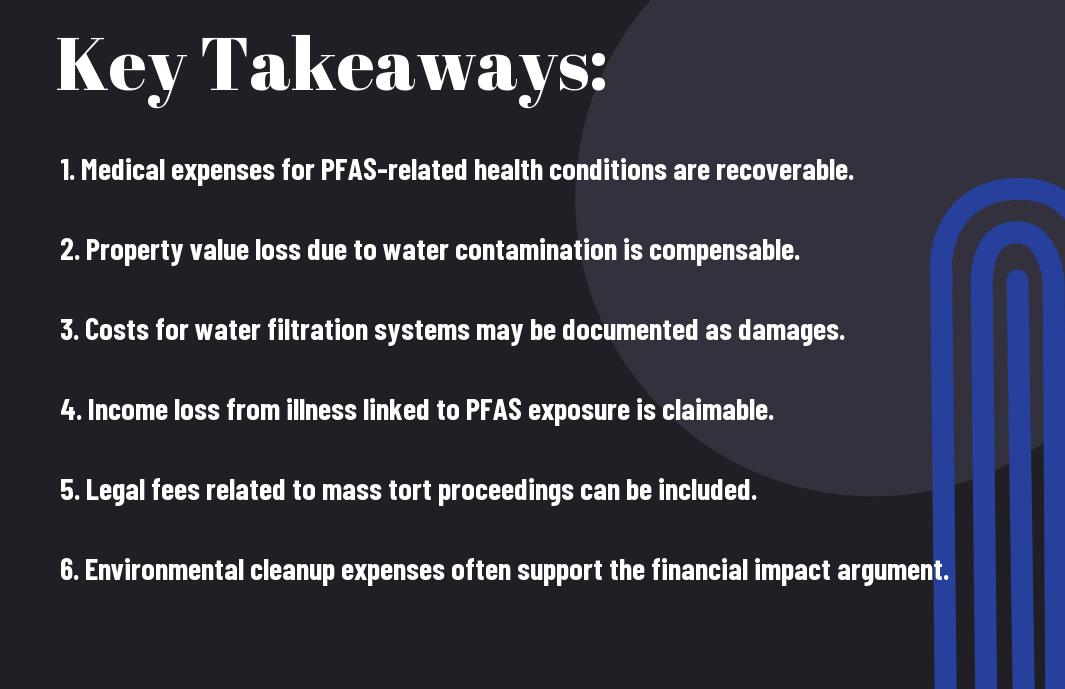
Key Takeaways:
- Documenting the costs of medical treatment related to PFAS exposure can help establish the financial impact on claimants.
- Loss of property value due to contaminated water sources may contribute significantly to claims against responsible parties.
- Economic losses from decreased productivity and increased absenteeism due to health issues should be factored into financial documentation.
- Compensation for water supply disruptions and the costs of alternative water sources must be accounted for in claims.
- Legal expenses incurred while pursuing claims against polluters can be a significant financial burden that should be documented and included in total damages sought.
Understanding PFAS and Water Contamination

Before submerging into the financial impacts of mass tort PFAS water contamination claims, it’s important to understand what PFAS is and how it affects water supplies. PFAS, or per- and polyfluoroalkyl substances, are a group of man-made chemicals that have been used in numerous industries since the 1950s. They are often referred to as “forever chemicals” due to their persistence in the environment and human body, as they do not break down easily. As a result, you may find PFAS in drinking water, food packaging, and even household products, raising serious concerns about widespread exposure.
Definition of PFAS
After becoming more aware of PFAS, you should know the specifics surrounding these compounds. PFAS encompasses a broad range of chemicals, including PFOA (perfluorooctanoic acid) and PFOS (perfluorooctanesulfonic acid), which have been used in various applications from non-stick cookware to water-repellent fabrics. Their unique chemical properties make them effective for industrial applications, but it comes at a significant environmental cost. PFAS can accumulate in your body over time, leading to potential long-term health issues.
Health Risks Associated with PFAS
On top of understanding what PFAS is, you need to be informed about its potential health risks. Research has indicated that these substances are linked to various health problems, including weakened immune systems, increased cholesterol levels, and even certain types of cancer. Long-term exposure to PFAS can disrupt hormonal systems and may lead to developmental issues in children.
In fact, studies have shown that PFAS exposure is particularly concerning for vulnerable populations, including pregnant women and children. You may experience a heightened risk of adverse health effects, such as reduced vaccine effectiveness and complications during pregnancy. The threat is serious and widespread, making it imperative for you to be aware of PFAS contamination in your water supply, as it can have lasting effects on your health and well-being. Understanding these risks is the first step in determining the financial implications of any potential claims you may need to consider regarding water contamination.
Economic Consequences of PFAS Contamination
Any discussion regarding the economic consequences of PFAS contamination must address the myriad ways in which your community can be affected. The omnipresence of these “forever chemicals” can profoundly alter the financial landscape for individuals and businesses alike, leading to long-lasting repercussions for local economies. Understanding these impacts is vital as you navigate the complexities of mass tort claims associated with water contamination.
Impact on Property Values
Around areas grappling with PFAS contamination, property values typically experience a noticeable decline. Buyers often steer clear of homes and properties in regions affected by these toxic substances, fearing long-term health risks and decreased quality of life. As a result, you may find that your property assessments plummet, making it increasingly difficult to sell or refinance your home without incurring significant losses.
Cost of Water Treatment and Remediation
Between the legal fees and ongoing expenses related to water treatment and remediation, the financial burden on businesses and homeowners can be substantial. As the demand for clean drinking water increases, treatment technologies can become costly, impacting your personal finances or the operational capabilities of local businesses. You will likely face not only immediate expenses for remediation efforts but also long-term investments in infrastructure to safeguard against further contamination.
Understanding the scope of expenses associated with water treatment and remediation efforts is vital for your financial planning. This range of costs can vary widely, depending on the level of contamination, the required remediation method, and ongoing monitoring needs. Since these expenses can turn into a financial strain, you should seek to document the exact costs incurred and potential future liabilities as you prepare your mass tort claim. Recognizing the financial responsibilities tied to PFAS contamination can help you gain insight into both your current situation and future economic impacts.

Documenting Financial Losses
Once again, accurately documenting your financial losses is vital for pursuing mass tort PFAS water contamination claims. The impacts of chemical exposure can lead to a wide range of financial consequences, including medical expenses, property devaluation, and lost wages. To bolster your case, you need to track and record all relevant financial transactions related to your health and property. This documentation will serve as undeniable evidence of the damages you have suffered, allowing your legal team to build a robust claim that reflects the true extent of your losses.
Establishing Causation
An important aspect of your claim is establishing a clear connection between the PFAS exposure and your financial damages. You must demonstrate that the contamination directly caused your health issues or property devaluation, rather than attributing these issues to other factors. Gathering medical records that show diagnosis related to PFAS exposure, along with expert testimony, can significantly strengthen your argument. It will be vital to link your symptoms to the contaminated water source, showing a direct line from the pollution to your financial hardships.
Collecting Evidence of Damages
Causation is only part of the equation; equally important is the effort you put into collecting tangible evidence of your damages. This evidence may encompass a variety of documentation from medical bills and receipts to insurance claims and tax records. Each piece of information adds to the narrative of your experience, presenting a compelling case for the financial impact the contamination has had on your life. Make sure you keep copies of all documents and consider organizing them chronologically to facilitate the review process.
A comprehensive collection of evidence will include both hard and soft costs related to your situation. For example, medical documentation showing the costs of treatment for illnesses linked to PFAS exposure and any future medical expenses can greatly bolster your claim. Additionally, you should also document any lost income due to time taken off work for medical appointments or recovery, as well as decreases in property value attributed to the contamination. All of these records form a cohesive picture of how PFAS water contamination has negatively impacted your financial well-being and will be vital when seeking compensation.
Legal Framework for Mass Tort Claims
Many people may not realize the complex legal framework surrounding mass tort claims, especially when it comes to environmental issues like PFAS water contamination. Understanding these regulations is imperative for you to navigate the challenges of filing a claim successfully. The mass tort system allows individuals affected by the same source of harm—in this case, PFAS contamination—to lodge claims collectively, emphasizing the collective nature of damages and injuries suffered.

Key Regulations and Statutes
Below are some of the key regulations and statutes that govern mass tort claims related to PFAS water contamination. The Resource Conservation and Recovery Act (RCRA) and the Comprehensive Environmental Response, Compensation, and Liability Act (CERCLA) are pivotal in establishing liability for hazardous waste release, including PFAS. These laws not only define the responsibilities of polluters but also set the stage for reclaiming damages incurred by affected individuals. Additionally, the Safe Drinking Water Act (SDWA) allows for federal and state regulation of drinking water quality, which directly applies to your case if your water source has been contaminated.
Role of Federal and State Authorities
On the regulatory side, both federal and state authorities play significant roles in addressing PFAS contamination and its implications for mass tort claims. Federal agencies, such as the Environmental Protection Agency (EPA), establish guidelines for monitoring and limiting PFAS levels in drinking water systems, ensuring that you are aware of the safety standards applicable to your water supply. Likewise, state-level departments may implement stronger regulations or specific compliance protocols that affect how you pursue your claim against responsible parties.
Also, state authorities often serve as the first line of defense in investigating and addressing PFAS contamination in your local environment. They assess the risks associated with contaminated sites and can initiate legal actions against responsible parties, supporting your efforts in seeking justice. Furthermore, local regulations might provide additional pathways for recovery, allowing you to explore various legal options for claiming damages related to health issues or property devaluation caused by PFAS exposure.
Case Studies and Precedents
Now, examining past case studies and precedents can provide valuable insights into the financial impacts of mass tort PFAS water contamination claims. Below are some notable examples that reflect the monetary consequences faced by affected communities:
- Hinkley, California (2000): PG&E was ordered to pay over $333 million to residents because of PFAS contamination caused by their operations, significantly impacting property values and health.
- Camp Lejeune (2017): A $6.2 billion settlement was reached for military veterans and families exposed to toxic water, showcasing the long-term healthcare costs and economic burden of PFAS.
- West Virginia (2019): A settlement of $70 million was awarded to residents of Parkersburg, illustrating the financial ramifications of litigating against chemical companies for water contamination.
- Warren, Michigan (2021): The city secured $30 million from DuPont and 3M for cleanup efforts and damages tied to PFAS pollution, emphasizing the ongoing costs of remediation.
- Newburgh, New York (2022): A settlement exceeding $19 million was reached due to unreasonable PFAS levels in drinking water, highlighting the risks associated with industrial contamination.
Successful Mass Tort Claims
One of the key indicators of success in mass tort claims related to PFAS contamination lies in the ability to demonstrate a direct link between exposure and financial damages to affected parties. In cases such as those from Hinkley, California, and Camp Lejeune, the settlements have signified recognition of the substantial economic loss resulting from compromised water sources. Your claim may hinge on pinpointing specific health issues, lowering property values, or increased remediation costs that arise from contaminating activities. Evidence in these successful cases showed the extent of negligence, leading to viable financial outcomes.
Moreover, the financial outcomes in these cases underline the importance of thorough documentation and expert testimony in establishing a strong claim. By preparing a comprehensive data set that outlines individual health impacts, property devaluation, and community-wide costs, you enhance your case’s strength when seeking compensation. This strategic approach can lead to substantial recoveries, reinforcing the notion that responsible parties must be held accountable for their actions.
Lessons Learned from Past Cases
Past experiences with PFAS contamination claims reveal valuable lessons that can benefit your legal strategy. Lessons drawn from the outcomes and claims process in places like Newburgh, New York, and Parkersburg, West Virginia, indicate the necessity of articulately connecting evidence of harm with financial impacts. In successful instances, plaintiffs utilized a variety of methods, including meticulous documentation of health issues and economic impacts, to substantiate their claims for damages.
Successful claims often turned on the strength of the evidence presented and the clarity with which you demonstrate how PFAS exposure directly translates to financial harm. Whether it be reduced property values, health care expenses, or community cleanup costs, the data you can compile will serve as a critical component in establishing your right to compensation. By learning from previous successful mass tort claims, you equip yourself better for the challenges ahead in your personal or community’s efforts to hold responsible parties accountable.
The Role of Expert Testimony
All mass tort PFAS water contamination claims often hinge on the persuasive power of expert testimony. This is especially true when it comes to articulating the financial impacts of contamination on affected communities. Experts can provide clarity and depth to your claims, grounding them in scientific evidence and data-driven analyses. Their insights can greatly bolster your position when seeking compensation for the losses suffered due to environmental contamination.
Importance of Financial Experts
One of the necessary elements in your mass tort case will be the involvement of financial experts. These specialists can ascertain the economic consequences of PFAS contamination, helping to quantify the extent of your financial losses. They will often explore into the cost of water filtration systems, healthcare expenditures tied to contamination-related illnesses, and overall economic downturns impacting the community. Their expertise not only lends credibility to your claims but also provides a sound financial framework that opponents may struggle to counter.
Types of Expert Analysis Required
Behind every effective mass tort claim is an array of expert analyses that can paint a vivid picture of the financial impacts of PFAS contamination. You will benefit immensely from engaging multiple experts who can provide granular analyses across various domains. Some of the necessary areas of analysis may include:
| Type of Analysis | Description |
|---|---|
| Economic Impact Analysis | Assessing the broader economic effects of PFAS contamination on your community. |
| Health Care Cost Analysis | Estimating future healthcare costs related to health issues caused by contamination. |
| Property Value Assessment | Analyzing the decline in property values due to perceived or actual contamination. |
| Lost Earnings Calculations | Determining lost earnings for individuals affected by the crisis. |
| Remediation Cost Estimates | Estimating costs required to remediate the contaminated water supply. |
Experts will collect data and provide analytics that relate each of these financial impacts back to the PFAS water contamination, strengthening your case for compensation. Their conclusions will offer a detailed overview of the economic damage, making them instrumental during trial proceedings or settlement negotiations. After the analyses are presented, you will be in a much stronger position to argue your claim effectively.
Experts will also explore into the specific methods they employ to collect and analyze data pertinent to your situation, ensuring that their findings can withstand scrutiny. You may need to support your claims with substantial evidence, including:
- Statistical Data
- Community Surveys
- Market Analyses
- Health Studies
- Financial Models
After securing appropriate expert testimony, the information they provide can make a significant impact on the outcome of your case.
Summing up
With these considerations, you can discern that documenting the financial impacts of mass tort PFAS water contamination claims involves a comprehensive evaluation of both direct and indirect costs. You should look into medical expenses incurred due to PFAS exposure, including long-term healthcare treatment and monitoring. This also extends to property devaluation and any related costs to replace or purify contaminated water sources, which can deeply affect your financial standing and overall quality of life. Your documentation should be precise and detailed, allowing for a more compelling case when seeking compensation.
Additionally, consider the emotional and societal ramifications that can be attributed to such contamination events. Loss of income due to illness or diminished property value may further amplify the financial strain that you experience. By systematically collecting data and evidence related to these impacts, your case will be significantly strengthened. Ultimately, thorough documentation plays a vital role in navigating the complexities of these claims and seeking just restitution for the damages incurred due to PFAS contamination.
Q: What types of financial damages can be claimed in PFAS water contamination cases?
A: In PFAS water contamination cases, claimants may document various types of financial damages. These can include medical expenses related to health issues caused by exposure to PFAS, costs associated with blood testing and ongoing medical monitoring, loss of property value due to contamination, and expenses incurred for water filtration systems or bottled water purchases. Additionally, individuals may claim lost wages if they had to take time off work for treatment or legal proceedings. Emotional distress and loss of quality of life may also be factored into the compensation sought.
Q: How can property owners demonstrate economic losses resulting from PFAS contamination?
A: Property owners can demonstrate economic losses from PFAS contamination by obtaining assessments and appraisals that reflect a decrease in property value due to the proximity to contaminated water sources. Documents such as real estate sales comparisons, tax assessments, and expert testimony can help establish the financial impact. Additionally, owners should keep detailed records of expenses related to remediation efforts, such as hiring specialists for clean-up or investing in new water systems. Maintaining a history of property use and the resultant value can lend credibility to their claims.
Q: Are there any ancillary costs that should be documented apart from direct medical expenses in PFAS claims?
A: Yes, there are several ancillary costs that claimants should document alongside direct medical expenses. These may include transportation costs incurred while traveling to medical appointments, costs for alternative care treatments, and potential household disruptions, such as the need to move out during remediation. Claimants should also consider documenting any loss of recreational opportunities or lifestyle changes resulting from health conditions linked to PFAS exposure. Gathering receipts, invoices, and other relevant financial documentation will strengthen their position when pursuing compensation.