


Just in 2025, you should be aware about Water Contamination Lawsuit, that millions of families may have been exposed to dangerous PFAS chemicals through contaminated drinking water, linked to serious health conditions including cancer. If you or your loved ones have been affected, recent legal developments show ongoing settlements and new lawsuits targeting major manufacturers. This update provides the latest information to help you understand your rights and the potential for financial compensation related to PFAS exposure in your community.
Key Takeaways:
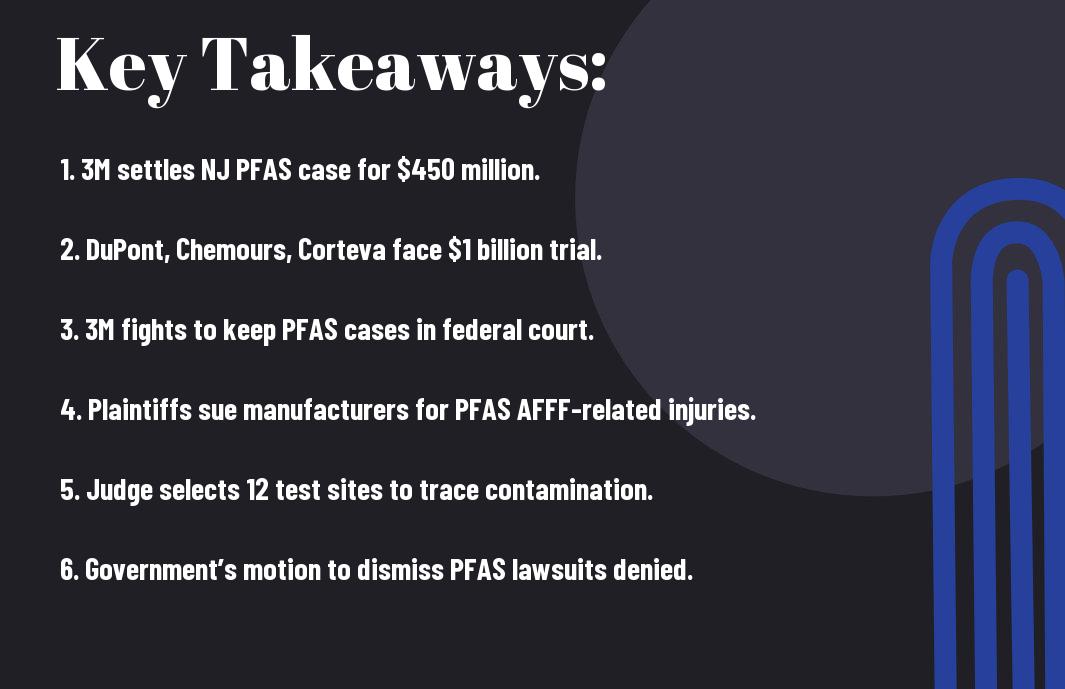
- 3M reached a \$450 million settlement in New Jersey for PFAS water contamination, with payments and cleanup efforts extending through 2050, while DuPont and others are proceeding to trial.
- 3M is actively working to keep PFAS lawsuits related to Maryland and South Carolina federal contamination cases in federal court to maintain government contractor defenses.
- A major lawsuit filed in Alabama alleges serious personal injuries from PFAS exposure linked to firefighting foam, implicating multiple chemical manufacturers including 3M and DuPont.
- The MDL judge selected 12 test sites across seven states to help trace PFAS contamination back to specific manufacturers through purchase records and site documentation.
- A new Connecticut family lawsuit highlights health problems like ulcerative colitis and liver damage in a child, attributed to long-term PFAS exposure from firefighting foam and water contamination.
- A South Carolina judge denied the U.S. government’s motion to dismiss PFAS lawsuits, allowing site-specific claims against military operations involving toxic firefighting foam to continue.
- The Village of Nyack, New York, sued companies including Teva Pharmaceuticals and Estée Lauder for contaminating local water with PFAS, seeking financial responsibility for cleanup and water treatment.


Major Developments in PFAS Litigation
Several key moves have shaped PFAS litigation recently, signaling shifts in strategy by major defendants and advancing plaintiff claims. You’ll see settlements focused on environmental cleanup coexist with aggressive trials targeting personal injury damages. Courts are zeroing in on jurisdictional battles and selecting test sites to trace contamination back to manufacturers. Meanwhile, governments remain actively involved, facing resistance in attempts to dismiss claims tied to military PFAS use. These developments underscore the increasing complexity and scale of PFAS liability you may encounter if pursuing your case.
3M’s $450 Million Settlement in New Jersey
3M agreed to a \$450 million settlement with New Jersey addressing PFAS water contamination connected to DuPont’s Chambers Works facility. This deal allocates over $60 million specifically for cleanup and natural resource damages starting in 2026, with payments extending through 2050. It’s a separate arrangement from 3M’s existing AFFF multidistrict litigation settlements and focuses primarily on environmental remediation rather than personal injury claims. While not addressing individual health damages directly, this settlement signals 3M’s urgency to contain liability amid expanding PFAS lawsuits.
DuPont’s Imminent Trial and Legal Challenges
DuPont, along with Chemours and Corteva, rejected settlement offers and is heading to trial next week, facing New Jersey’s claim for nearly $1 billion in groundwater remediation costs. Unlike 3M’s environmental-only deal, DuPont confronts multifaceted legal challenges, including allegations of knowingly contributing to widespread PFAS pollution without adequately warning the public. The trial marks a pivotal moment as courts and plaintiffs push for accountability on both contamination cleanup and personal injuries linked to PFAS exposure.
DuPont’s upcoming trial exposes you to an intense legal spotlight on how corporate behaviors caused PFAS contamination at the Chambers Works site. New Jersey’s lawsuit demands substantial damages to fund long-term groundwater remediation, underscoring the scale of environmental harm attributed to DuPont’s operations. This case also highlights the firm resistance from DuPont and its affiliates to negotiate settlements, opting instead to contest liability and defend against expansive claims. The outcome may set precedent impacting other jurisdictions seeking both cleanup funds and compensation for health impacts related to PFAS exposure. For you, understanding these dynamics could influence how aggressively your suit is pursued and the potential recovery amounts at stake.
Unraveling Contamination Trails
Tracing the source of PFAS contamination remains a complex puzzle involving decades-old chemical use and widespread environmental dispersal. Courts are zeroing in on specific sites—airports, military bases, fire stations—to uncover purchase and usage records linking manufacturers like 3M, DuPont, and Chemours to local pollution. Identifying these connections is key because without tying contamination to responsible parties, it becomes harder for you and others to pursue accountability or secure compensation for health damages caused by long-lasting toxic exposure.
Judicial Efforts to Identify PFAS Sources
Judges are selecting focused test sites to streamline discovery, such as the 12 locations spanning seven states chosen by the MDL court to pinpoint manufacturer liability. These sites—often with preserved procurement records—help establish the chain of custody for PFAS-laden firefighting foam and other products. Federal courts are also navigating challenges like the government contractor defense, which companies invoke to distance themselves from liability when producing PFAS under military contracts, making these site-specific investigations increasingly important.
Key Lawsuits Highlighting Community Impact
Lawsuits from communities like West Haven, Connecticut, and Nyack, New York, showcase the personal and environmental devastation wrought by PFAS contamination. A family lawsuit alleges serious illnesses—including ulcerative colitis and liver damage—stemmed from prolonged exposure to toxic firefighting foam and drinking water. Meanwhile, the Village of Nyack sued over industrial operations contaminating its water supply, seeking funds to install treatment systems. These cases reflect how widespread, persistent PFAS pollution is driving urgent legal action to protect public health and recover damages.
Communities are not only seeking remediation but also highlighting gaps in corporate responsibility and governmental oversight. The West Haven family’s case underscores the long-term health consequences for individuals exposed to PFAS from birth onward. Nyack’s lawsuit brings to light the environmental negligence of multiple industries whose waste management practices contaminated a vital river source. Together, these lawsuits intensify pressure on manufacturers and regulators, illustrating how you and your neighbors can also demand transparency and accountability where contamination threatens daily life.
Emerging Legal Battles
The ongoing wave of PFAS litigation is intensifying, with new cases targeting chemical manufacturers and users expanding nationwide. You can follow these developments closely through resources like the PFAS Class Action Lawsuit, which tracks major settlements and courtroom maneuvers. Several companies are actively fighting to limit their exposure, but emerging lawsuits highlight increasing accountability demands from impacted communities and individuals suffering from long-term health effects.
New Lawsuits Filed by Consumers and Communities
Recent filings include families and local governments alleging PFAS-contaminated water caused serious illnesses and environmental harm. For instance, a family in Connecticut sued after their child developed ulcerative colitis and liver damage linked to prolonged PFAS exposure. Likewise, the Village of Nyack, N.Y., is pursuing major manufacturers over drinking water contamination, seeking compensation for treatment and remediation costs. These suits focus heavily on negligence, failure to warn, and product liability, reinforcing growing public pressure on polluters for financial accountability.
The Role of Regulatory Bodies in Ongoing Cases
Regulatory agencies play a key role in shaping PFAS litigation by providing scientific data, enforcing cleanup standards, and influencing legal interpretations of contamination responsibilities. Their involvement ensures site-specific facts guide judicial decisions, as seen in South Carolina where a federal judge denied the government’s motion to dismiss cases, citing unresolved jurisdictional issues. This evolving regulatory oversight continues to impact how courts address claims and government defenses in PFAS lawsuits.
Federal and state regulators’ growing attention to PFAS contamination directly affects ongoing lawsuits by establishing contamination thresholds and cleanup obligations that courts consider when determining liability. Agencies like the EPA set evolving health advisories and mandate water testing protocols, creating a legal framework that shapes plaintiffs’ strategies and defendants’ defenses. For example, regulatory findings can pinpoint contamination sources tied to specific manufacturers, strengthening lawsuits that seek damages for medical costs and environmental remediation. You can expect regulatory actions to remain intertwined with litigation as new science and policy evolve alongside court cases.
The Health Implications and Environmental Concerns
PFAS contamination poses ongoing risks not just to individual health but to entire ecosystems. These persistent chemicals accumulate in soil and water, threatening wildlife and contaminating crops. As you navigate your exposure concerns, understanding the environmental footprint is key—widespread detection in groundwater means contamination can silently affect communities for decades, increasing the likelihood of long-term health issues and complicating cleanup efforts.
Studies Linking PFAS to Serious Health Risks
Research consistently ties PFAS exposure to increased risks of cancers such as kidney and testicular cancer, alongside immune system impairments and thyroid disease. Studies reveal that folks exposed through contaminated water have significantly higher incidences of these conditions, with chemical persistence leading to cumulative harm over years, especially in children and vulnerable populations.
Groundwater Contamination and Public Health Responses
Widespread groundwater contamination, often traced back to firefighting foam and industrial discharge sites, has driven public health initiatives nationwide. Authorities now implement advanced filtration systems and mandate regular water testing to limit PFAS ingestion, yet many communities still struggle with legacy pollution, underscoring the challenge of eliminating these toxins from water supplies.
Numerous municipalities rely on affected wells, with some testing revealing PFAS concentrations exceeding EPA health advisory levels by over 70 times. In response, states like New Jersey have allocated millions for remediation projects, including water treatment upgrades and replacement wells, while public health agencies issue ongoing advisories about bottled water use or alternate sources. Despite these efforts, remediation remains slow and expensive, placing urgent pressure on manufacturers and governments to accelerate accountability and cleanup to protect you and your neighbors.

Conclusion
As a reminder, if you or your family has been exposed to PFAS-contaminated water and suffered health issues, you may have the right to pursue legal action for compensation. The evolving landscape of PFAS litigation continues to hold manufacturers and other responsible parties accountable. Staying informed about ongoing lawsuits and settlements can help you understand your options and protect your interests. Consulting with experienced PFAS attorneys can guide you through the process and ensure your concerns are properly addressed.
FAQ
Q: What are PFAS and why are they called “forever chemicals”?
A: PFAS (per- and poly-fluoroalkyl substances) are a group of man-made chemicals that include PFOS and PFOA. They are called “forever chemicals” because they do not break down easily in the environment or the human body, leading to long-lasting contamination and potential health risks.
Q: What health conditions have been linked to exposure to PFAS-contaminated water?
A: Exposure to PFAS-contaminated water has been associated with several serious health issues, including certain types of cancer, ulcerative colitis, liver damage, and other chronic illnesses. These conditions have been reported in individuals exposed over long periods, sometimes even in utero.
Q: Who are the major companies involved in PFAS water contamination lawsuits?
A: Major chemical manufacturers and companies involved in PFAS lawsuits include 3M, DuPont, Chemours, Tyco, Teva Pharmaceuticals, and Estée Lauder, among others. These companies have been accused of producing or distributing PFAS-containing products that led to environmental contamination and health damages.
Q: What types of lawsuits are being filed related to PFAS contamination?
A: Lawsuits related to PFAS contamination include environmental remediation claims, personal injury claims, product liability, negligence, failure to warn, and nuisance claims. These lawsuits seek financial compensation for health damages, cleanup costs, and sometimes punitive damages against the responsible companies.
Q: What is the significance of the multidistrict litigation (MDL) in PFAS cases?
A: The MDL consolidates multiple PFAS lawsuits from various sites to streamline the legal process. The judge has selected test sites to trace contamination to specific manufacturers, helping clarify liability. This consolidation aids in managing complex legal issues and may speed up resolution for plaintiffs.
Q: How has the government responded to PFAS lawsuits, especially regarding contamination at military sites?
A: The U.S. government has attempted to dismiss some PFAS lawsuits under federal immunity protections, but courts have denied broad dismissals. Site-specific facts must be examined, allowing claims involving negligent handling of PFAS contamination at military sites to proceed. This keeps open the path for communities and businesses to pursue justice.
Q: What should individuals who believe their health has been affected by PFAS-contaminated water do?
A: Individuals who suspect their health issues are related to PFAS exposure should consider consulting with experienced PFAS attorneys for a free consultation. Legal professionals can evaluate if they have a valid claim and guide them through the process of filing a lawsuit for potential compensation.