

There’s an urgent need to know how rideshare coverage works so you can protect yourself after a crash; injury risk and immediate medical needs should drive your first steps. This guide shows how you check coverage differences, collect evidence, contact insurers, and file Claim After An Accident promptly so you pursue possible compensation while preserving your rights.
Key Takeaways:
- Coverage depends on driver status: when the app is off the driver’s personal policy applies; when waiting for a ride there may be limited liability coverage; while en route or with a passenger the rideshare company’s commercial policy is typically primary and offers higher limits.
- Document the scene immediately: take photos of vehicles, injuries, road conditions, and the app screen showing trip status; collect driver name, plate, insurance info, and witness contacts; call police for a report if there are injuries or significant damage.
- Report the accident through the Uber/Lyft app and to your personal insurer promptly; provide the exact time, trip status, and any police report number; obtain a rideshare claim number and the insurer adjuster contact.
- File claims with the appropriate insurer(s): injured passengers can pursue the rideshare company’s policy when applicable; if the driver’s personal policy applies, file with that insurer and notify your carrier about potential coverage gaps or subrogation.
- Preserve records and meet deadlines: keep medical records, bills, repair estimates, receipts, photos, and all correspondence; consult an attorney if injuries are serious or coverage is disputed.
Understanding Uber and Lyft Insurance
Types of Insurance Coverage
Coverage shifts by app status: when the app is off you rely on your personal auto policy; when waiting the platforms typically provide contingent liability; during trips the companies offer primary commercial liability often up to $1,000,000. Collision and comprehensive depend on your policy; uninsured/underinsured protection varies by state. Thou verify your policy’s exclusions and deductible handling.
- Personal auto – covers driving when the app is off
- Contingent liability – applies when the app is on but no passenger
- Primary commercial liability – active-trip coverage for third parties
- Collision & comprehensive – vehicle damage only if your policy includes collision
- Uninsured/underinsured – protects against drivers with inadequate limits
| Offline | Your personal policy is primary; platform coverage does not apply |
| Available/Waiting | Platforms usually offer contingent liability; vehicle damage relies on your collision coverage |
| En route/Accepted | Company provides primary liability, often up to $1,000,000 |
| With passenger | Active-trip commercial coverage handles third-party claims and injuries |
| Collision/Comprehensive | Paid only if you carry collision; deductible reimbursement policies vary by company and state |
Importance of Insurance for Rideshare Drivers
You drive more miles and pick up strangers, which increases exposure to crashes and liability; insurance protects your savings and future earnings by covering medical bills, property damage, and legal defense. Platform limits may not cover vehicle repairs unless you have collision, so maintaining adequate liability and optional endorsements matters.
If a passenger suffers serious injury, settlements frequently exceed six figures and can exceed your personal policy limits, leaving you personally exposed. You should evaluate higher limits (for example, moving from 25/50/25 to 100/300/100), consider a rideshare endorsement or commercial policy, and document earnings loss to claim wage replacement when applicable.
How Uber and Lyft Insurance Works
Both platforms operate in tiers: app-off uses your personal insurance; app-on waiting triggers contingent liability; accepted trips activate the platform’s primary coverage (commonly up to $1,000,000). You must still report incidents to both the platform and your insurer; coverages and deductible handling vary by state and insurer.
After an accident you should get medical attention, call police, photograph the scene, exchange information, then file a claim with the platform and notify your insurer. The platform will assign a claims specialist and coordinate with your insurer for third-party liability; you should preserve receipts, repair estimates, and any ride logs to substantiate the claim.
Factors to Consider Before Starting a Claim
- Fault determination (police report, app trip status, witness statements)
- Insurance coverages available from Uber / Lyft versus the driver’s personal policy
- Documentation you must gather: photos, trip ID, medical records, repair estimates
- Injuries severity and medical treatment timeline
- Damage assessment and potential total-loss thresholds
- Claim filing deadlines and state-specific procedural rules
Determining Fault in an Accident
You should collect the app trip status, police report, and witness statements to establish fault; dashcam or traffic-camera footage can nail timing and position. Insurance adjusters use comparative-fault rules in many states – for example, a 30% share of fault reduces your recovery by that percentage – and the driver’s app status often dictates whether Uber/Lyft provides higher liability limits like $1,000,000 when a passenger is aboard versus lower contingent limits when the driver is merely logged in.
Gathering Necessary Documentation
You must secure the police report number, photos of the scene and vehicle damage, the trip ID or screenshot of the ride, the driver’s insurance and contact info, medical records and bills, repair estimates, and witness contact details – keep digital and physical copies to avoid gaps when you file the claim.
Request the police report as soon as possible (online or from the department), and download app records and trip receipts immediately since platforms can purge logs; timestamp photos and back them up to cloud storage, keep contemporaneous medical notes and invoices (dates, provider names, and procedure codes), and compile witness statements with contact info so adjusters cannot dispute availability of evidence.
Assessing Damage and Injuries
You should get multiple repair estimates (two is a minimum), document visible damage with dated photos, and seek medical attention for any pain or trauma – emergency care for serious injuries takes precedence, and missed early treatment can weaken your ability to prove causation and damages.
Prioritize immediate medical evaluation for potential internal or soft-tissue injuries and retain all visit notes, imaging results, and receipts; track lost wages with pay stubs and keep a symptom diary to demonstrate functional loss, obtain repair invoices and photos of pre- and post-repair condition, check if repair cost approaches a common total-loss threshold (often around 70% of vehicle value), and consult a specialist or attorney if future care or permanent impairment is likely.
After compiling all medical records, repair estimates, and a clear timeline of events, submit them to the insurer and your attorney if you have one.

How to Start a Claim with Uber or Lyft
Reporting the Accident Immediately
You should call 911 for injuries, then get a police report number and exchange driver/passenger/witness details; police reports and trip status (on-trip, en route, offline) heavily affect fault and coverage. Take time-stamped photos and videos of vehicle damage, road conditions, and injuries on your phone. Many insurers expect notice within 24-72 hours, so log these items right away and note the trip ID from the app before leaving the scene.
Using the App to Report an Incident
Open the trip in the Uber or Lyft app, choose the incident or safety option, select the type (damage, injury, theft) and attach photos, the police report number, and any witness contact info; apps let you flag whether a passenger was onboard to trigger the right coverage. Use the app’s chat or email to create a written record – attaching images and the police report speeds review and reduces disputes.
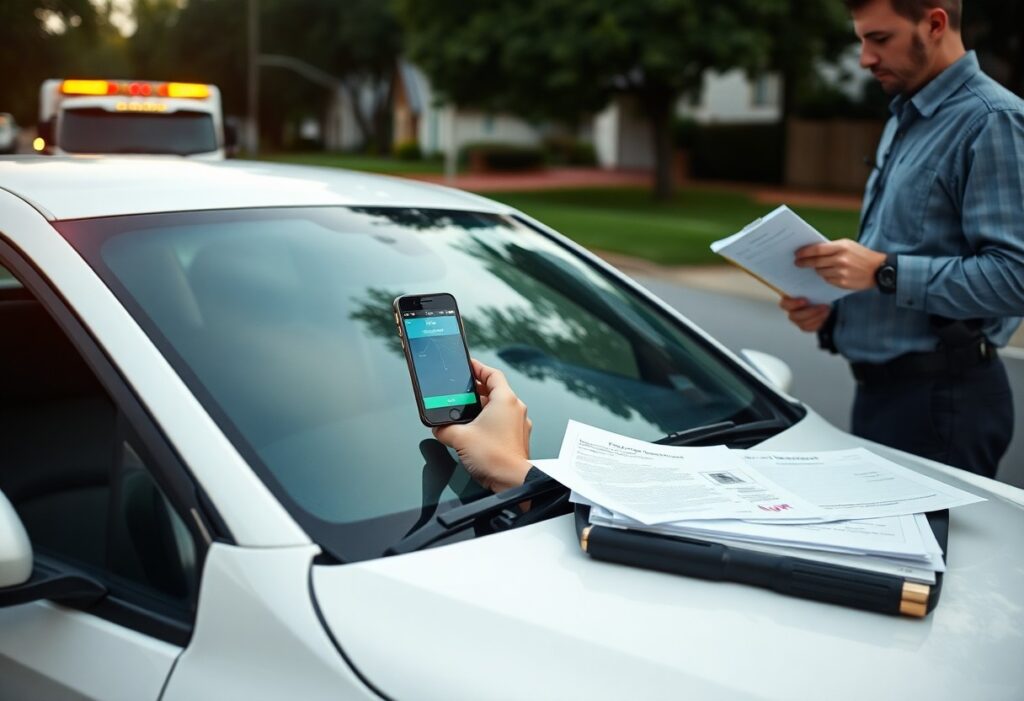
Expect an initial acknowledgment from the rideshare company within 24-72 hours; they may request additional documentation like medical records or repair estimates. If the trip was marked “on-trip” or “en route,” their commercial liability often becomes primary for third-party injury – include the trip ID, time stamps, and any passenger statements to ensure the incident is categorized correctly.
Contacting Your Insurance Company
Notify your personal insurer promptly and provide the police report number, photos, trip ID, and the app’s incident confirmation; do not admit fault when speaking with adjusters or other drivers. Ask whether your policy covers rideshare activity during the app-on phases and confirm deadlines for filing a claim-many carriers expect notification within 24-72 hours.
Prepare to supply repair estimates, medical bills, and the rideshare company’s claim reference; your insurer may open a first-party claim and later seek subrogation from the rideshare carrier if applicable. If you carry collision coverage, confirm your deductible and whether the insurer denies coverage for app-on driving-if denied, the rideshare company’s contingent collision or comprehensive may apply but often requires you to have active collision coverage first and may include its own deductible.
Tips for Filing Your Claim Successfully
- Report the crash to Uber or Lyft through the app immediately and notify your insurance claim contact within 24-72 hours when possible.
- Obtain and keep the police report number, witness names, and the app trip status screenshot showing whether the driver was logged in, waiting, en route, or on a trip.
- Take timestamped photos of vehicle damage, scene, and injuries; get repair estimates and medical receipts to support loss calculations.
- Log all claim numbers, adjuster names, and dates of contacts; send follow-up emails to create a written trail.
- Use objective language in statements-avoid speculation about fault; state observable facts like speeds, signals, and distances.
Maintaining Clear Communication
You should confirm names, claim numbers, and expected response times at the start of every call and follow up by email so you have a written record; insurers often take 7-14 business days to acknowledge a new claim, so proactive follow-up prevents misunderstandings and delays.
Providing Accurate and Complete Information
Provide your insurer and the rideshare company with exact times, police report identifiers, photos, medical bills, and repair estimates; incomplete forms or missing receipts are common reasons claims stall or get undervalued.
When you supply documentation, attach PDFs or high‑quality images, name files clearly (e.g., “Claim123_TowingReceipt_2025-03-02.pdf”), and cross‑reference each item in an evidence list-this speeds adjuster review and reduces back‑and‑forth requests for clarification.
Documenting All Interactions with Insurance
Keep a running log of every call, message, and correspondence with timestamps, the person’s name, and a short summary; this record is critical if coverage disputes arise or if you need to escalate to state regulators.
Record the date, time, and content of every contact and save voicemails and emails in a dedicated folder; if an adjuster offers a settlement, ask for the offer in writing and compare it against your documented damages-Assume that you save every call log, email, and written offer with timestamps to preserve your evidence and strengthen your position in any dispute.
Understanding the Claims Process
What to Expect After Filing
After you file, expect an adjuster to contact you within 48-72 hours to collect a statement, photos, and medical info; they’ll request repair estimates and may schedule an inspection. You should provide trip logs, screenshots of the app status, and witness contacts. If injuries are significant, the insurer may offer a short-term payment for urgent bills, but do not sign a full release until you understand ongoing medical needs.
Timeframes for Claims Processing
Initial acknowledgment usually comes within 1-3 business days, liability decisions often within 30-90 days, and complex bodily-injury claims can take several months to resolve. Property-damage claims (repairs, totals) commonly close in 2-6 weeks once estimates and invoices are submitted.
For example, a vehicle-damage claim with clear fault and an app trip record often settles in under 14 days after an estimate and rental invoice are provided; conversely, a soft-tissue injury without clear contemporaneous medical treatment may drag beyond 6-9 months while causation and treatment plans are evaluated. Keep copies of timelines: claim number, adjuster name, and every submission date-these accelerate follow-ups and support complaints to your state regulator if responses exceed mandated deadlines.
Appeals Process for Denied Claims
If your claim is denied, the insurer must state the denial reason; common causes include app-offline status, late notice, or insufficient evidence. Start an internal appeal by submitting additional records, photos, or trip data within the insurer’s specified window-often 30 days-and ask for a written reconsideration explaining how new evidence changes the outcome.
When appealing, gather objective proof: app logs, GPS timestamps, video, repair estimates, and contemporaneous medical notes showing treatment within 72 hours. If internal appeal fails, you can file a complaint with your state insurance department or pursue mediation/arbitration; legal action remains an option under your state’s statute of limitations (often 2-3 years), so document every interaction and consider consulting an attorney early for complex denials tied to rideshare coverage gaps.
Common Mistakes to Avoid When Filing a Claim
Delaying the Claims Process
Waiting to report the crash gives evidence time to disappear: surveillance footage is often overwritten within 24-72 hours, witness memories fade, and repair shops may close their estimates. File with your insurer and the rideshare company as soon as you’re safe; many apps and insurers expect notification within 24-72 hours, and a prompt report preserves leverage for settlement negotiations.
Failing to Provide Necessary Evidence
Skipping photos, dashcam clips, trip logs, or medical records weakens your claim quickly; insurance adjusters rely on timestamps, app screenshots, police reports, and repair estimates to assign fault and value damages. Include a police report number, photos of vehicle damage and scene, and ride app screenshots to strengthen your position.
Gather evidence proactively: save dashcam files to cloud storage immediately, screenshot the rideshare trip confirmation and driver profile, obtain witness contact info and a copy of the police report, and keep all medical bills and receipts. In many cases a single clear image of the license plate plus a time-stamped app screenshot can change an adjuster’s view; treat digital files as primary evidence and maintain backups for at least 90 days or until the claim closes.
Ignoring Policy Limits and Details
Assuming unlimited rideshare coverage is risky-policies vary by phase (app off, app on waiting, en route, passenger onboard) and can range from tens of thousands to $1,000,000 in liability. Check limits, deductibles, and whether collision is contingent; settling for more than the policy cap can leave you personally liable.
Read the actual policy language and confirm with both the rideshare insurer and your personal carrier which policy is primary in each phase. If the app was off, your personal auto policy may be primary and could deny if you didn’t disclose commercial use. Also verify deductibles and whether wear-and-tear exclusions apply-if a repair estimate is $8,000 but the applicable coverage caps at $5,000, you may be responsible for the difference.
Summing up
Summing up, you should quickly identify which insurance phase applies (your personal policy, the rideshare app’s contingent coverage, or the company’s commercial policy), document the scene and injuries, notify the rideshare company and your insurer, and file a formal claim with clear evidence and timelines; consult an attorney if coverage or liability is disputed to protect your rights and recovery.
FAQ
Q: Which insurance policy applies after an Uber or Lyft accident?
A: It depends on the driver’s app status at the time of the crash. When the driver is offline, the driver’s personal auto policy generally applies. When the app is on and the driver is waiting for a match (available), the rideshare company typically provides limited contingent liability (varies by state).
After the driver accepts a ride and while en route to pick up or transporting a passenger, Uber and Lyft commonly provide primary liability coverage (often up to $1 million in many states) and may offer contingent collision/comprehensive if the driver has that coverage on their personal policy. State laws and company policies differ, so obtain the driver’s insurance and the rideshare company’s claims contact information and verify which policy period applies to your situation.
Q: What immediate steps should I take at the crash scene and in the hours after?
A: Call emergency services if anyone is injured and secure medical attention right away. Exchange names, phone numbers, vehicle registration, driver’s license, and insurance details; take screenshots of the ride receipt, driver profile, and trip map from the app. Photograph vehicle damage, the scene, road conditions, traffic controls, visible injuries, and any skid marks. Get contact information for witnesses and file a police report.
Avoid admitting fault or discussing settlement amounts. Preserve evidence (don’t hastily repair or alter the vehicle) and start a written log of symptoms, treatments, missed work, and expenses.
Q: How do I start a claim with Uber or Lyft insurance, and what documentation will the insurer request?
A: Use the app’s “Report an Accident” or help/safety center to notify the company and request the insurer’s contact information. You may need to submit the police report number, photos, a copy of the ride receipt or trip ID, names and contact details, medical records/bills, repair estimates, and proof of lost wages. The rideshare insurer or the driver’s insurer will assign a claim adjuster who may request a recorded statement, medical releases, and additional documentation. Keep copies of everything and send documents via tracked email or the insurer’s portal so there’s a record of timely submission.
Q: What common mistakes slow down or reduce the value of a rideshare accident claim?
A: Waiting to seek medical care or delaying reporting to police and insurers can weaken a claim. Altering or repairing the vehicle before documentation, failing to preserve photos, not collecting witness information, and inconsistent statements to different parties cause problems. Posting about the crash on social media can be used against you. Failing to notify your own insurer when your policy requires prompt notice, or giving unrestricted recorded statements without legal guidance when injuries are significant, can limit recovery.
Q: When should I consult an attorney and what can an attorney do for a rideshare accident claim?
A: Consult an attorney if there are serious or permanent injuries, disputed fault, multiple liable parties, significant medical bills, or if the available policy limits appear insufficient. An attorney can identify all possible sources of recovery (driver’s personal policy, rideshare company policy, third-party at-fault drivers), preserve and obtain medical records, calculate present and future damages, handle negotiations and demands, protect against premature lowball offers, and file suit if needed. Many attorneys handle these matters on contingency, meaning you pay only if you recover.


