

Hair relaxers have been linked to elevated cancer risk for many users, and if you developed cancer after long-term use you may have legal options for Hair Relaxer Cancer Mass Tort; evidence of toxic chemicals and manufacturer negligence can support claims, and joining a mass tort or filing individually can increase your chance of recovery. Consult a qualified attorney quickly to evaluate exposure, preserve evidence, and pursue compensation for medical costs and damages before filing deadlines expire.
Key Takeaways:
- Research has reported associations between long‑term use of certain chemical hair relaxers and increased risk of some cancers, and those findings have prompted product‑liability claims against manufacturers.
- Legal options include joining a mass tort or multidistrict litigation (MDL), filing an individual product‑liability/personal‑injury suit, or pursuing a settlement; potential recovery can cover medical bills, lost wages, and pain and suffering.
- Act promptly: preserve medical records and product evidence, document years/frequency of use, and consult an attorney experienced in mass‑tort/consumer‑product litigation to evaluate eligibility and meet statute‑of‑limitations deadlines.
Medical and Scientific Evidence in Litigation
Key epidemiological, clinical, and cohort studies relevant to claims
Several large cohorts, including the Black Women’s Health Study and the Sister Study, plus pooled case-control analyses, have reported associations between frequent hair relaxer or straightener use and increased risks of hormonally driven cancers; relative risks in published analyses often fall in the ~1.1-1.8 range. You should note that risk estimates are typically higher with long-term, frequent use, earlier initiation, and a history of scalp burns or dermatitis-factors commonly highlighted in plaintiff expert reports and case-series evidence.
Toxicology, mechanistic hypotheses, and laboratory evidence supporting causation
Product testing and ingredient analyses show relaxers can contain alkaline agents (sodium hydroxide or guanidine), preservatives, and fragrance chemicals with endocrine activity; you can rely on mechanistic hypotheses that include scalp absorption, chronic local inflammation, and endocrine disruption as biological pathways linking exposure to cancer development. In vitro studies cited in litigation demonstrate genotoxicity and hormone-receptor signaling changes after exposure to certain cosmetic mixtures.
Expanding on mechanisms, animal and cell-line studies reported by experts show repeated topical exposure can produce DNA strand breaks, increased proliferation in estrogen-receptor-positive cells, and uterine tissue changes at doses analogous to heavy consumer use; biomonitoring work also documents transient spikes in urinary or serum biomarkers after application, and penetration increases when the scalp is damaged. You will see defendants challenge extrapolation, but plaintiffs use these lab findings to support dose-response and biological plausibility in causation opinions.
Regulatory findings, product investigations, recalls, and the scientific consensus and gaps
Regulators have issued safety communications and taken enforcement actions in some cases, while the EU and other jurisdictions restrict specific preservatives and cosmetic ingredients; nevertheless, you should be aware that systematic recalls for relaxers are uncommon and the overall scientific consensus remains unsettled due to limited long-term randomized data and incomplete ingredient disclosure by manufacturers. These gaps are frequently emphasized in litigation strategy and expert reports.
Providing more context, agency actions have included warning letters, product sampling, and requests for additional safety data, and some manufacturers have voluntarily reformulated products or changed labeling. You will find that plaintiffs point to limited premarket safety testing, proprietary industry data, and inconsistent ingredient transparency as regulatory weaknesses, while defense experts stress population-level uncertainty and confounding; those contrasts shape motions on admissibility and the framing of causation at trial.
Legal Theories and Claims
Product liability: design defects, manufacturing defects, and failure-to-warn claims
You can pursue classic product-liability theories: a design defect claim alleges the relaxer’s formulation was unreasonably dangerous compared to a safer alternative; a manufacturing defect claim targets contaminated or misformulated batches; and a failure-to-warn claim argues labels omitted known risks or mitigation steps. Courts look for proof of actual product condition, industry standards, and whether a reasonable warning would have changed your use or prevented injury.
Negligence, breach of warranty, and consumer protection/private-label liability
You may assert negligence when a manufacturer failed to research, test, or disclose hazards, plus breach of express or implied warranty where marketing promises like “safe” or “for all hair types” are false. State consumer-protection (UDAP) statutes can add statutory damages and attorneys’ fees, and private-label sellers can be liable if they controlled formulation or labeling.
In practice, courts require proof of duty, breach, and causation by a preponderance of evidence; you’ll often use internal documents, safety-testing gaps, and marketing materials to show a breach. Examples: if a manufacturer ignored internal studies or altered formulations without retesting, juries have awarded compensatory and sometimes punitive damages for concealment or reckless disregard.
Causation issues, role of expert testimony, and defenses defendants typically raise
You’ll face stringent causation standards: general causation (can the product cause cancer) and specific causation (did it cause your cancer). Courts expect reliable expert testimony-epidemiologists, toxicologists, and clinicians-to link exposure, dose, and biologic mechanism; absent that, defendants move to dismiss under Daubert or Frye.
Experts typically present cohort/case-control studies, dose-response data, animal tests, and product analyses showing specific chemicals; you should expect defendants to counter with alternative-exposure theories (hormone therapy, genetics), compliance defenses, and attacks on study methodology. Courts routinely decide admissibility via Daubert hearings, and successful defense motions can preclude key experts and end claims before trial.
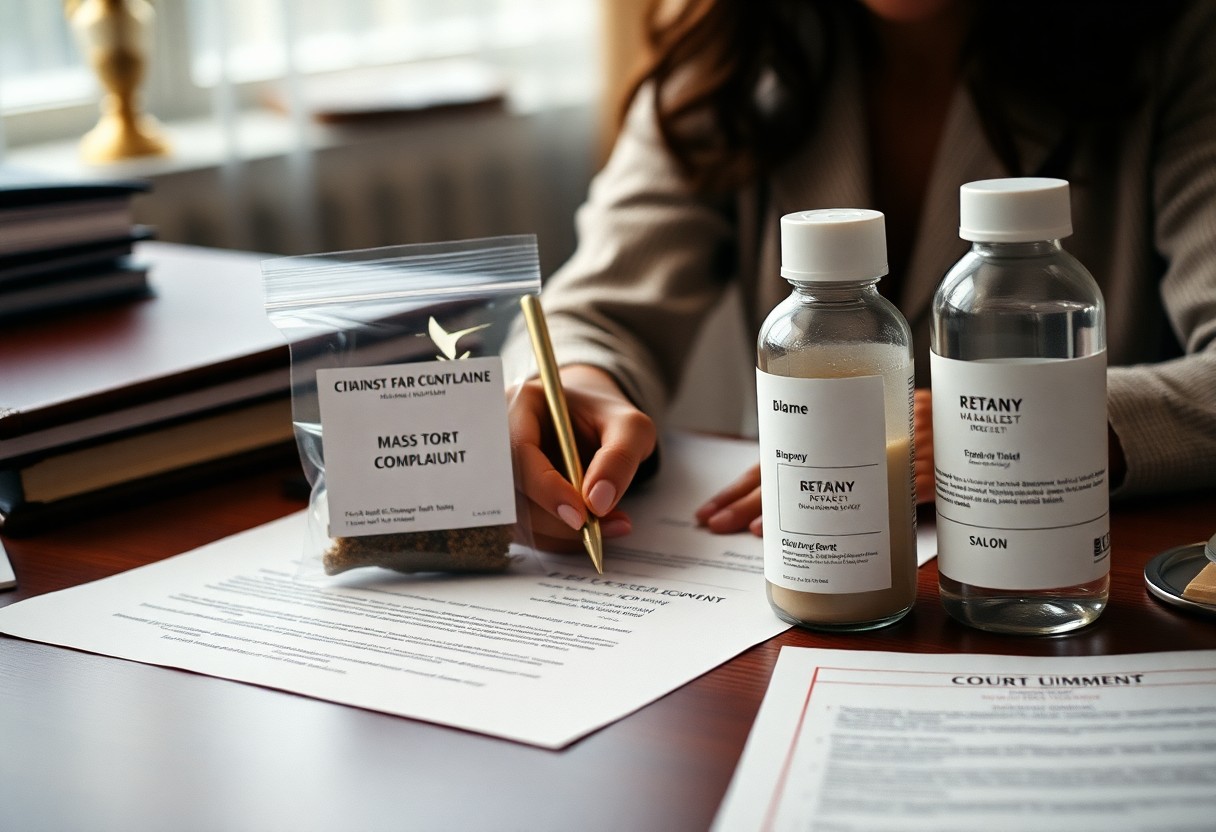
Who Can Bring a Claim, Evidence Needed, and Potential Defendants
Eligible claimants: affected women, survivors, and wrongful-death representatives
You can file if you were diagnosed after regular use of a relaxer, if you survived cancer linked to exposure, or if you represent a deceased user in a wrongful-death action; many state statutes of limitations range from 2-6 years, and some filings in MDLs cover hundreds of claimants across multiple jurisdictions.
Evidence to build a claim: medical records, diagnosis timelines, product identification, and exposure histories
You should gather medical records (pathology, oncology notes), clear timelines showing diagnosis dates, and proof of the exact product used-receipts, photos, UPC/lot numbers-or witness statements about salon or at-home use, plus detailed exposure histories such as frequency and duration (e.g., weekly for 10+ years).
Specific documents that strengthen your case include biopsy and pathology reports, operative reports, chemotherapy/radiation records, and treating-physician affidavits; epidemiologic links rely on timelines showing latency (often years to decades), and forensic product ID-bottle remnants, purchase records, salon invoices, or UPC/lot codes-lets experts test formulations for harmful ingredients.

You should also document scalp irritation or chemical burns, which often appear in plaintiff files as proximate evidence of absorption, and conscription of pharmacy, lab, and medical billing codes (ICD/CPT) accelerates claims review during case consolidation.
Identifying defendants: manufacturers, contract formulators, distributors, retailers, and advertisers
You will typically name the brand owner and its contract formulators first, but distributors, large retailers, and advertisers can also face liability for defective design, failure to warn, or misleading claims; many mass-tort complaints list multiple defendants to cover the full supply chain.
In practice, discovery targets include brand manufacturers, private-label contract chemists, bulk-chemical suppliers, national distributors, chain retailers, and marketing agencies or influencers who promoted the product; common legal theories are strict liability, negligence, breach of warranty, and fraud. Plaintiffs in recent MDLs have subpoenaed formulation records, purchase and distribution logs, and advertising metadata, while use-pattern discovery (salon appointment books, employee testimony) and laboratory analysis of retained product samples are routine ways you can tie a defendant’s conduct to your exposure.
Procedural Options, Deadlines, Damages, and Hiring Counsel
Litigation pathways: mass torts, multidistrict litigation (MDL), class actions, and individual lawsuits – pros and cons
You should weigh centralized approaches against individual control: MDLs and mass torts centralize discovery and expert work, while individual suits give you tailored trials and potentially higher per-person awards; class actions can be efficient for identical harms but often cap individual recovery.
Comparative Pros and Cons
| Pros | Cons |
|---|---|
| Consolidated discovery reduces duplicate depositions and expert costs | Centralization can slow individual resolution and court calendars |
| MDL bellwether trials test defenses and settlement values | Bellwethers may not reflect every plaintiff’s injuries |
| Mass torts increase leverage to negotiate global settlements | Global settlements can produce lower per-person payouts |
| Class actions efficiently handle identical claims and small damages | Class certification is hard when injuries and damages vary |
| Individual suits let you control strategy and settlement timing | Higher litigation costs and full risk fall on you |
| Shared litigation expenses lower upfront cost for plaintiffs | Fees and common-benefit allocations reduce net recovery |
| Coordinated expert work creates stronger causal proof | Individual issues may be sidelined in large consolidated cases |
| Potential for faster, bulk settlements for many plaintiffs | Settlement structures can limit future claims or impose release terms |
Statutes of limitations, tolling, jurisdictional considerations, and preservation of evidence
Many states set personal-injury limits at roughly 2-6 years, but latent cancers often invoke the discovery rule or tolling for fraudulent concealment; jurisdiction generally depends on where you live, where the product was purchased, or where the defendant is headquartered, and you must preserve hair samples, product containers, and medical records immediately.
When cancer appears years after exposure, the discovery rule pauses the clock until you know or should reasonably know of the injury; fraudulent concealment can extend deadlines if defendants hid risks. Tolling also applies for bankruptcy or military service. Practically, send a written preservation (litigation hold) to retailers and keep originals of products, photographs, chain-of-custody notes for hair samples, and complete medical records-spoliation can destroy claims and courts may impose sanctions.
Recoverable damages, typical settlement structures, and how to evaluate and retain counsel (fee arrangements and key questions)
You can pursue economic damages (medical bills, lost wages), non‑economic damages (pain and suffering), punitive damages where misconduct is proven, and wrongful-death awards; settlements often use global funds, individual releases, or structured periodic payments, and counsel usually works on contingency-commonly 25-40%-so ask about exact percentages and expense handling.
Ask prospective lawyers for concrete metrics: number of MDL bellwether wins, average settlement amounts, and examples of cases with similar cancer diagnoses. Clarify whether the fee is a flat contingency or a sliding scale, who pays expert and court costs up front, and how common-benefit fees are allocated in an MDL. Verify communication practices, opt-out rights, and a written retainer that specifies fee splits, settlement approval process, and whether structured settlements or lump sums are recommended based on tax and long-term care needs.
Final Words
Taking this into account, if you were harmed by hair relaxers and developed cancer, you have legal options including joining mass tort litigation, filing individual claims, pursuing settlement or trial, and seeking reimbursement for medical costs, pain, and lost income; consult an experienced product liability attorney promptly to evaluate your evidence, preserve medical records, track deadlines and protect your rights so you can pursue full compensation and accountability.
FAQ
Q: What is a hair relaxer cancer mass tort and how does it differ from a class action?
A: A hair relaxer cancer mass tort is coordinated litigation in which many individual plaintiffs who allege cancer or other injuries from hair relaxer products pursue claims against one or more manufacturers or distributors. Unlike a class action, a mass tort treats each plaintiff’s medical history, exposure, and damages separately while consolidating pretrial discovery and litigation management to improve efficiency. Mass torts commonly proceed through multidistrict litigation (MDL) or coordinated state court proceedings, use common experts to address product design, warnings, and causation, and may resolve by global settlement, individual settlements, or a series of bellwether trials that help set value ranges for claims.
Q: Am I eligible to join the mass tort and what evidence will strengthen my claim?
A: Eligibility typically requires a diagnosed injury or illness that your attorney believes can be linked to prolonged use of a specific hair relaxer product. Key evidence includes: medical records confirming diagnosis and treatment; pathology and physician statements; a history documenting brand, product name, frequency and duration of use; photographs or retained product containers and labels; purchase receipts, salon records, or witness statements; and prior testing or expert reports connecting the product’s ingredients to the alleged harm.
Early consultation with a lawyer helps preserve evidence and assess whether your facts fit the claims being pursued in the case.
Q: What are the legal steps, likely timeline, costs, and possible outcomes if I pursue a claim?
A: Typical steps are: (1) free or low-cost intake and investigation; (2) filing an individual complaint or joining consolidated MDL/state coordination; (3) fact and expert discovery; (4) bellwether trials or mediation; and (5) settlement negotiations or individual trials if necessary. Timelines vary – many mass torts take months to several years to resolve. Most plaintiffs’ firms handle cases on contingency, advancing costs and taking a percentage only if there is a recovery; confirm fee rates and expense policies in writing.
Possible outcomes include negotiated settlements, individual verdicts, or dismissal; recoverable damages may cover past and future medical bills, lost earnings, pain and suffering, and in some cases punitive damages. Litigation carries risks: defendants will contest causation and liability, and outcomes depend on evidence, expert testimony, and jurisdictional rules.


